

what are all the things i need for my wedding?
what do you actually need for your wedding?
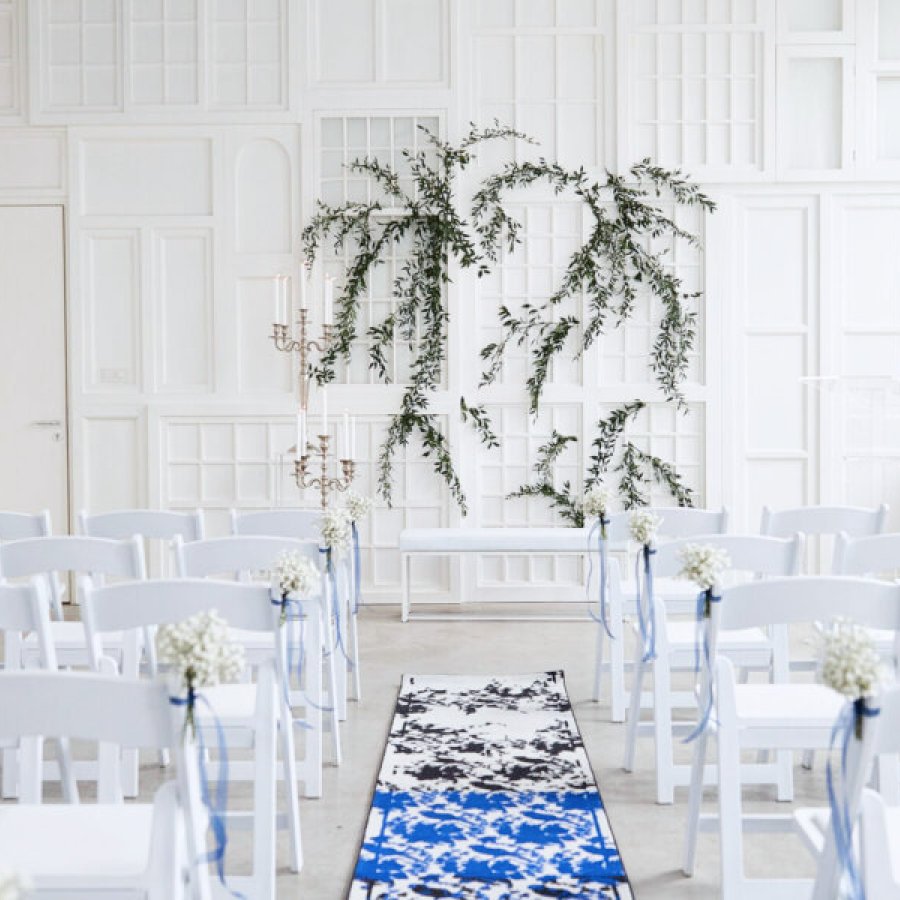
A wedding is many things at once: a legal act, a dinner, a party, a performance, sometimes a ceremony with 80 people watching, sometimes a quiet lunch with twelve. Most people start planning with a guest list and a date. That is a fine place to start. But the list of what you actually need is longer than most people expect, and the order in which you decide things matters more than the things themselves.
This guide walks through everything. Not as a checklist of products to buy, but as a sequence of decisions, each one opening or closing the next.
—
start with three decisions, not thirty
Before you look at flowers or fonts, three things shape everything else.
How many people? The difference between 20 and 120 guests is not a matter of scale. It changes the venue, the catering model, the ceremony format, the sound system, the timeline, the budget split. Decide this first.
What kind of day do you want? A formal sit-down dinner with speeches is a different operational machine than a standing reception with live music and a grazing table. Both are weddings. They need completely different things.
What is your actual budget? Not the aspirational number. The real one. Weddings in the Netherlands average between 10,000 and 25,000 euros for 50 to 100 guests, with venue and catering typically accounting for 40 to 60 percent of total spend. Knowing that ratio early prevents the very common situation of spending the entire budget on a venue and having nothing left for food.
Once those three anchors are set, every other decision has a frame.
—
the venue: more than a room
Your venue is not a backdrop. It is the structural decision of the day. It determines what kind of catering is possible, how your guests move, where the ceremony happens, whether you need a separate dinner space, and what the atmosphere will feel like without any decoration at all.
Ask these questions before you book anything:
- Can we do both the ceremony and the reception here, or do we need two locations?
- What does the venue provide: tables, chairs, AV, bar setup?
- Is catering exclusive to their kitchen, or can we bring our own?
- What is the noise curfew?
- What does the space look like without decoration?
That last question is underrated. A space with strong bones, a clear identity and interesting material choices needs almost nothing added. A blank white box needs everything.
@droog in Amsterdam is a building from 1641 that housed the Drapers’ Guild. It has been a design hotel, a gallery and a place for creative events since the early 1990s. Inside you will find the white space, a high-ceilinged room upstairs with large windows looking out over old Amsterdam rooftops and into the garden below. It seats 50 with tables, 70 in theatre setting. The flowered wallpaper in the library is based on a painting in the Rijksmuseum. The room seats ten around a long table, which makes it the right size for a private wedding dinner for close family. The grand space on the ground floor opens directly to the garden through a sliding door and fits 90 seated or 160 standing.
Rooms can be combined. Ceremony in one space, dinner in another, drinks in the garden. That kind of flexibility is what makes a multi-room building different from a single-hall venue.
—
legal requirements: the part nobody finds exciting
In the Netherlands, a legal marriage happens at a municipality (gemeente). You need to register your intention to marry (melding voorgenomen huwelijk) at least two weeks before the date, and both partners need valid ID. If one partner is not Dutch, additional documents are required. This part is not optional and has lead times that do not bend.
If you want your ceremony at a venue rather than at the town hall, a registrar (ambtenaar van de burgerlijke stand) can come to you. Not every municipality offers this; some charge an extra fee. Book this early. Registrars available on popular Saturday dates in summer fill up months in advance.
What you need legally:
- Valid passports or ID cards for both partners
- Birth certificates (extract from the civil registry)
- Proof of address (uittreksel BRP)
- If previously married: divorce certificate or death certificate of former spouse
- If one partner is not Dutch: a certificate of no impediment from the relevant country
Start this process at least three months before the date. Some documents take time to obtain, especially from abroad.
—
ceremony: what actually happens in the room
A ceremony needs a structure. Even an informal one. Without structure, the registrar fills the silence with standard text, which is fine, but it will feel like everyone else’s wedding.
Things to decide for the ceremony:
- Who speaks? Just the registrar, or also friends, family, both partners?
- Is there music, live or recorded?
- How do guests enter and take their seats?
- How long does it last? Thirty minutes is standard. Forty-five is the comfortable maximum before guests lose focus.
- Where do you sign? Is that part of the ceremony or private afterwards?
- Do you want vows you wrote yourself?
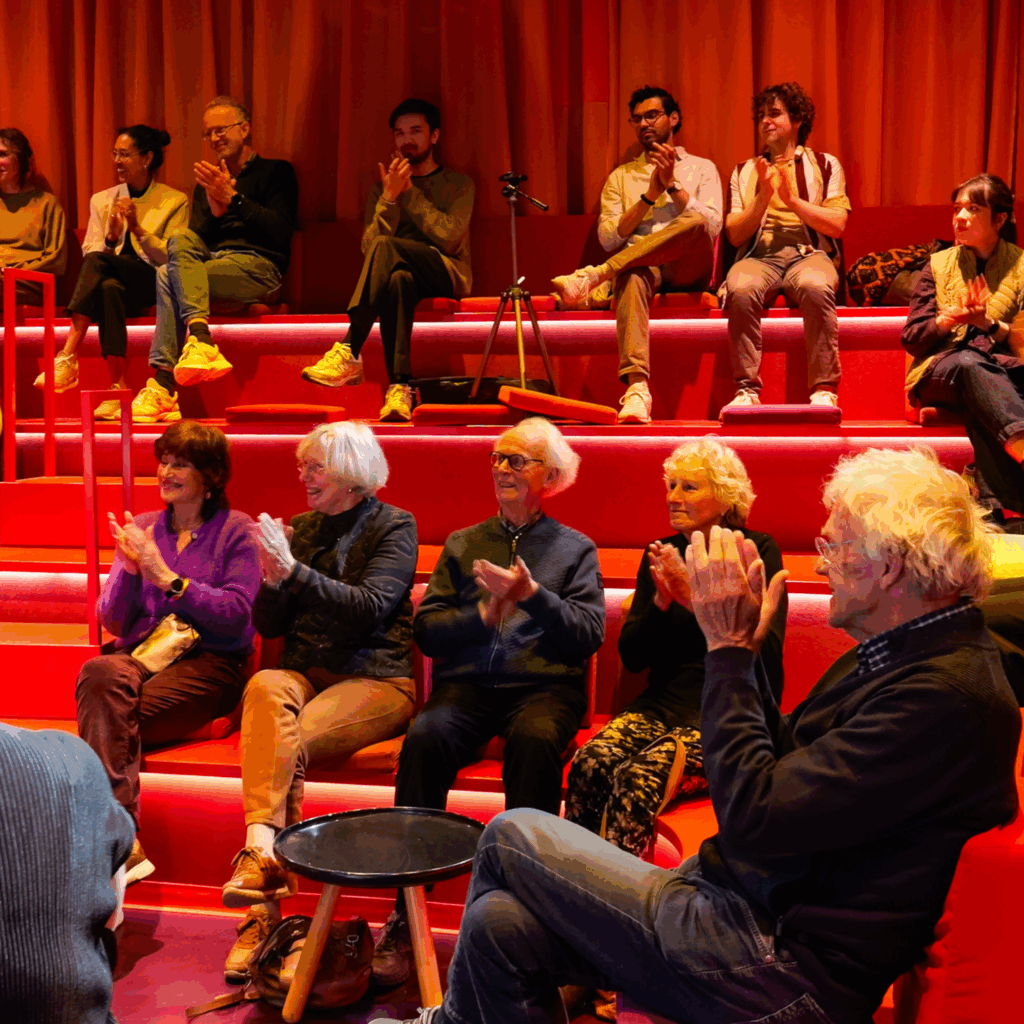
If you are having a theatre-style ceremony with an audience watching, the layout of the room matters significantly. The red space at @droog is designed exactly for this: a round, u-shaped tribune in red, orange and purple, seating up to 60 people with room to breathe, 80 shoulder to shoulder. It has a stage, professional lighting and full theatre equipment. It was built for performance. A ceremony is a performance.
—
catering: the thing guests remember most
Food and drink is almost always the largest single cost after venue. It is also what people talk about after.
Decisions to make:
- Seated dinner, buffet, walking dinner, grazing table, or a combination?
- What do you serve during drinks reception (borrel)?
- Open bar or drinks tokens?
- Wedding cake, dessert table, or neither?
- Late night snack (borrelhapjes at 11pm is a Dutch classic)?
- Dietary requirements: always ask guests in advance. Assume at least 10 to 15 percent will have one.
The cafe restaurant at @droog is the kitchen that serves lunch daily to the public, with a view over the Groenburgwal canal. The bar is curved white tile. There is a fireplace and a blue butterfly lamp that has been in the room since the beginning. The space fits 70 seated and 180 standing, which makes it the right size for a dinner that becomes a party without anyone needing to move rooms.
When choosing catering, ask whether the venue has a preferred supplier list or exclusive kitchen. Both arrangements have advantages. An in-house kitchen means coordination is simpler. An external caterer means more flexibility in style and cuisine.
—
what to book, and when
Timing is the part most people underestimate. Popular venues in Amsterdam on a Saturday between May and September book up twelve to eighteen months in advance. Photographers with a strong portfolio are often fully booked for the following calendar year by January.
A rough booking sequence:
- 12 to 18 months out: venue, date, registrar
- 10 to 12 months out: photographer, videographer, caterer (if external)
- 8 to 10 months out: live music or DJ, florist, hair and makeup
- 6 months out: invitations sent, wedding dress/suit order placed (allow time for alterations)
- 3 months out: menu confirmed, final guest numbers, seating plan started
- 6 to 8 weeks out: final fittings, rehearsal if needed, transport booked
- 2 weeks out: legal registration completed, final briefings with all suppliers
—
suppliers: who you actually need
This list assumes a mid-size wedding of 50 to 100 guests with ceremony and dinner in one location.
Non-negotiable:
- Venue
- Registrar (ambtenaar)
- Catering (food and drink)
- Photographer
Strongly recommended:
- Videographer (footage from the day is something most couples wish they had more of)
- Day coordinator or wedding planner (even a half-day coordinator changes the experience for both partners)
- Florist
- Music (ceremony and reception)
Depends on your wedding:
- Hair and makeup artist
- Cake or dessert maker
- Transport (vintage car, canal boat, bicycle rickshaw)
- Stationery designer (invitations, place cards, menus)
- Photo booth
- Sound and lighting technician (sometimes included with venue)
One practical note on coordination: the more suppliers you have, the more they need to know about each other. Your florist needs to know what time setup starts. Your photographer needs to know the timeline. Your caterer needs to know when speeches end. Without someone managing this, the day runs on optimism. With a coordinator, it runs on a plan.
—
the details that are actually decisions
Some things look like details but are really choices about what kind of day you want.
Guest table seating versus free seating. Free seating feels relaxed. It also means some guests sit alone. Assigned seating requires effort in planning but produces better conversations.
Speeches: yes or no, and how many. Best man speeches are a tradition, not a requirement. Each speech should be no longer than five minutes. Three speeches is a full program. Five speeches and guests are looking at their wine.
Phones during the ceremony. Unplugged ceremonies, where guests put phones away, produce better photographs and a more present room. Worth considering.
Children. A children-welcome wedding and a child-free wedding are both completely fine. Each has implications for timing, noise, and the shape of the evening. Decide early and communicate clearly.
Gift policy. In the Netherlands, cash gifts (into a honeymoon fund or house fund) are completely normal and guests appreciate knowing this. A gift registry is also fine. Saying nothing is also fine, but guests will ask.
—
budget: where the money goes
A rough breakdown for a 60-guest wedding in Amsterdam at approximately 20,000 euros total:
- Venue: 3,000 to 6,000
- Catering and bar: 5,000 to 9,000
- Photography: 2,000 to 3,500
- Music: 800 to 2,000
- Flowers and decoration: 1,000 to 2,500
- Clothing and styling: 1,500 to 3,000
- Stationery: 300 to 600
- Transport: 300 to 800
- Rings: variable
- Contingency (always needed): 500 to 1,000
These numbers shift depending on choices. A venue with strong character that needs little decoration saves money on flowers. A caterer with a fixed menu costs less than fully bespoke. A photographer who shoots documentary style charges differently than one who does full editorial production.
The single most reliable budget advice: decide what matters most to you, spend there, and cut elsewhere. A couple that cares deeply about food will be happier with a simpler venue and an excellent meal than the reverse.
—
faq: the questions people actually search for
How far in advance should I book a wedding venue in Amsterdam?
For a Saturday in the period May through September, twelve to eighteen months is realistic for a venue with character. Midweek or winter dates are more flexible. Some venues have cancellations, so it is always worth asking even if a date looks taken.
Do I need a wedding planner?
Not necessarily, but some form of coordination help on the day itself is worth serious consideration. A day coordinator costs between 500 and 1,200 euros on average and handles logistics so neither partner is managing suppliers during their own wedding.
Can I have both the ceremony and the party at the same venue?
Yes, and for most guests this is preferable. No transport between locations, no risk of losing people between ceremony and dinner, more time in the same space. Look for a venue with enough rooms to change the atmosphere between ceremony and reception.
What is a realistic number of guests?
The average wedding in the Netherlands has between 50 and 80 guests. Smaller weddings (under 30) allow for a more intimate dinner format. Larger weddings (over 100) require more logistical infrastructure and budget. Both work; they are just different events.
Is it possible to have a wedding in a design space that is not a traditional wedding venue?
Yes. Several spaces in Amsterdam that primarily host business events or cultural programming are available for weddings. The advantage is a space with its own visual identity that does not look like every other wedding you have attended. @droog has hosted PhD celebrations, book launches, product launches, theatre performances and dinners in the same spaces within the same week. A wedding fits naturally into that range.
What about a small wedding, just twelve people?
A small wedding has its own logic. It is a dinner with ceremony attached. A room like the library at @droog, which seats ten around a long table under a flat chandelier with flowered wallpaper from the Rijksmuseum, is designed exactly for this scale. The intimacy is the point.
—
the thing to remember
A wedding is an event with a specific legal and emotional function. Everything else, the flowers, the music, the font on the invitation, is in service of two people and the people they want around them. The list of things you need is long. The list of things that actually matter to you is shorter.
Start with the three decisions. Build from there.
If you are thinking about @droog as a location, the building has been hosting meaningful gatherings since 1993 in a structure from 1641. The rooms are different from each other, they combine well, and the kitchen opens every day. Tell us what you have in mind.