

requirements for getting married in amsterdam city hall as non dutch residents
requirements for getting married in amsterdam city hall as a non-dutch resident
Amsterdam is one of the most requested cities in the world for a civil wedding. And it makes sense. The canals, the light, the architecture, the fact that the Netherlands was the first country to legalise same-sex marriage, in 2001. People come from everywhere to say yes here.
But getting married at Amsterdam City Hall as a non-Dutch resident involves paperwork. Quite a lot of it. The requirements differ depending on your nationality, your country of residence, and whether either of you has been married before. This guide walks you through what you actually need, step by step, so you arrive prepared and not surprised.
who can get married in amsterdam as a foreigner?
Anyone can get married in the Netherlands, regardless of nationality. Dutch law does not require either partner to be a Dutch citizen or a resident of the Netherlands. What it does require is that the marriage is legally valid under the laws of both your home countries, and that you can prove it.
That last part is where most of the complexity lives.
the first step: contact the municipality
Marriages in Amsterdam are registered through the municipality, Gemeente Amsterdam. The civil wedding ceremony itself takes place at Stadsloket, the city hall office. You cannot simply show up. You need to give notice of your intended marriage, known in Dutch as ondertrouw, at least two weeks before the ceremony and no more than a year in advance.
Most couples from outside the Netherlands begin this process three to six months ahead of their wedding date. Some documents take time to obtain, and some require legalisation that adds weeks to the timeline.
documents you will need
This is where it gets specific. The exact list depends on your nationality and personal situation, but the core documents required for non-Dutch residents are generally as follows.
- A valid passport or identity document for both partners
- A birth certificate, not older than six months, for both partners
- Proof of civil status, a document confirming you are not currently married or in a registered partnership, for both partners
- If either partner has been married before: proof that the previous marriage has ended, either a divorce decree or a death certificate
- If either partner is a Dutch citizen or registered in the Netherlands: a recent extract from the Personal Records Database (BRP)
Every foreign document must be either legalised with an Apostille stamp or go through full diplomatic legalisation, depending on the country it was issued in. Documents not written in Dutch, English, French or German must be translated by a sworn translator.
apostille: what it is and why it matters
An Apostille is an internationally recognised certificate that verifies the authenticity of a public document. The Netherlands is a signatory to the Hague Convention, which means documents from other signatory countries need only an Apostille to be accepted, rather than full consular legalisation.
If your country is not part of the Hague Convention, your documents need to be legalised by your own country’s foreign affairs ministry, then by the Dutch embassy in your country. This process can take several weeks.
Check the list of Hague Convention countries early. It is the step most people underestimate.
proof of civil status: the tricky document
This document is called different things in different countries. In the UK it is sometimes called a Certificate of No Impediment, or CNI. In the US it does not exist as a standard document, which means American citizens typically need to submit a sworn affidavit instead, sometimes combined with a declaration from their embassy.
The municipality of Amsterdam will tell you exactly what they accept for your specific nationality. It is worth emailing them directly with your passport details before you start gathering documents, so you know precisely what is needed.
previously married? here is what changes
If either of you has been divorced, you need to provide the original divorce decree. If that decree was issued in a country other than the Netherlands, it must be recognised under Dutch private international law. In some cases, particularly with divorces granted in countries that are not part of the EU or certain international treaties, you may need to apply for recognition of the foreign divorce in a Dutch court before you can remarry.
This is a legal process that takes time and sometimes requires a lawyer. If this applies to your situation, start early and get specialist advice.
the ceremony itself
Once your documents are approved and your notice of marriage is registered, you choose a date and time for the ceremony. Amsterdam City Hall offers ceremonies in a dedicated room. The ceremony is conducted by a civil registrar, an ambtenaar van de burgerlijke stand, and is legally binding from the moment you sign the marriage register.
You need at least two witnesses. They must be eighteen or older and can be anyone, including friends, family, or people you have just met. They do not need to be Dutch or resident in the Netherlands.
The ceremony can be conducted in Dutch or, for an additional fee, in English. Confirm this with the municipality when you book.
A standard ceremony at Amsterdam City Hall takes approximately fifteen to thirty minutes. You can request a more elaborate ceremony if you want more time or a specific format.
same-sex marriages and registered partnerships

The Netherlands recognises same-sex marriage fully and without restriction. The requirements are identical to those for opposite-sex couples. Amsterdam also offers the option of a registered partnership, geregistreerd partnerschap, which carries most of the same legal rights as marriage but is a separate legal status. Some couples choose this route for practical or legal reasons related to their home country’s recognition policies.
If same-sex marriage is not legally recognised in your home country, marrying in the Netherlands is still valid under Dutch law. What happens when you return home is a separate legal question that depends entirely on your country of residence.
costs and fees
Gemeente Amsterdam charges fees for civil marriages. As of 2024, the cost varies depending on the day and time of the ceremony. Weekday ceremonies are less expensive than Saturday ceremonies. Free ceremonies are available on certain days for couples who meet specific conditions, but for most non-residents, fees will apply.
Budget also for document legalisation, translation costs, and if needed, legal advice on foreign divorce recognition or embassy declarations. The total administrative cost before the ceremony itself typically ranges from a few hundred to over a thousand euros, depending on your nationality and circumstances.
the timeline, realistically
- Six months out: identify which documents you need and begin obtaining them
- Four to five months out: get Apostille stamps or start diplomatic legalisation if required
- Three months out: have documents translated if needed
- Two to four months out: submit your notice of marriage to Gemeente Amsterdam and confirm availability
- Two weeks minimum before the date: the legal waiting period after submitting your notice
- On the day: bring original documents, your witnesses, and your rings
If your documents involve foreign divorce recognition through a Dutch court, add two to four months to the front of this timeline.
what happens after the ceremony
After the ceremony, you receive a Dutch marriage certificate. This is the official document issued by the Dutch state. To use it in your home country, you will likely need to have it legalised with an Apostille, then translated. Your home country’s embassy or consulate can usually advise on the exact process for recognising a Dutch marriage certificate in your jurisdiction.
planning the celebration around the ceremony
City Hall handles the legal part. What happens before or after is entirely up to you.
Many couples who marry at Amsterdam City Hall choose to hold their reception or dinner in the city on the same day. Amsterdam’s historic centre offers a range of options, from canal boat dinners to private dining rooms in buildings that have been standing since before the Netherlands existed as a modern state.
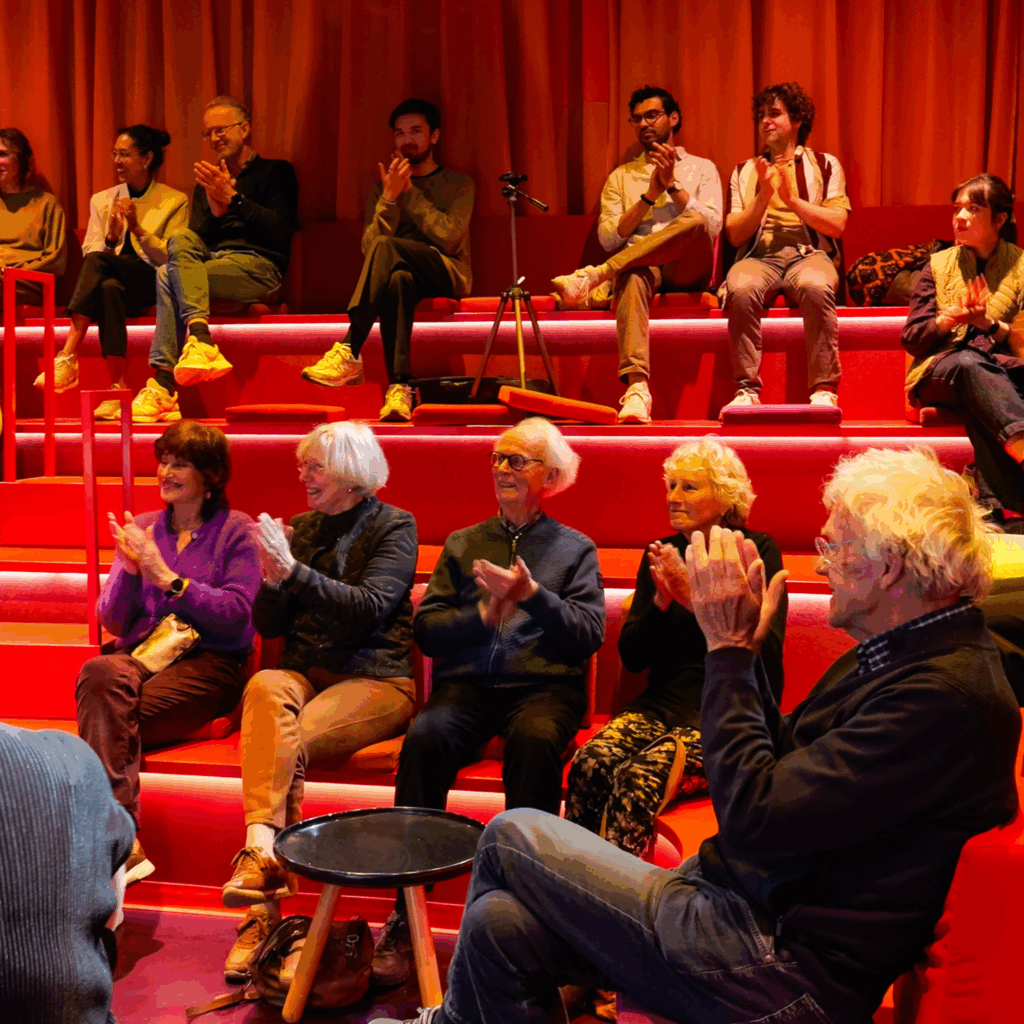
@droog sits in a building from 1641 on the Staalstraat, a few minutes from the Groenburgwal canal. The building was once home to the Drapers’ Guild. Today it houses five spaces with different characters, all available for private events.
The white space seats up to 70 in theatre setting or 50 at tables, with large white windows looking out over Amsterdam rooftops and the garden below. The cafe sits at the top of a yellow hallway staircase, with a view over the Groenburgwal canal, a fireplace, a curved white tiled bar, and a blue butterfly lamp that tends to stop people mid-sentence. It fits up to 70 seated or 180 standing. The library holds ten people around a long table, yellow chairs, and wallpaper based on a painting in the Rijksmuseum. Small room. Good table. Right for a private dinner after a small ceremony.
Events here are not limited to one space. A ceremony reception followed by dinner followed by drinks can move through the building. That tends to work well.
frequently asked questions
do both partners need to be present when submitting documents?
Not always. In many cases, one partner can submit the documents on behalf of both. However, both partners typically need to appear in person at the ceremony. Check with Gemeente Amsterdam for your specific situation, as rules can vary.
can we get married in amsterdam if we only stay for a few days?
Yes. There is no minimum residency requirement for getting married in the Netherlands. You need to be physically present for the ceremony, and at least one partner must be present when submitting the notice of marriage. Many couples combine the document submission with a short trip to Amsterdam a few weeks before the wedding date.
what if my country does not issue a proof of civil status document?
The municipality will advise you on an acceptable alternative. For American citizens, this is typically a sworn affidavit. For citizens of other countries, it may be a declaration from your embassy in the Netherlands. Contact Gemeente Amsterdam directly with your nationality and they will confirm what they accept.
can we have a symbolic ceremony in addition to the civil one?
Yes. Many couples hold a civil ceremony at City Hall and then a separate symbolic or religious ceremony elsewhere on the same day or a different day. The civil ceremony is the legally binding one. The symbolic ceremony can be held anywhere, designed however you like, with no legal requirements attached to it.
how long before the ceremony can we submit our notice of marriage?
No more than one year and no fewer than two weeks before the ceremony date. Most couples from outside the Netherlands aim for two to three months before the ceremony, which gives time to address any document issues without cutting it close.
does amsterdam city hall offer english-language ceremonies?
Yes. English-language ceremonies are available for an additional fee. French-language ceremonies may also be available. Confirm availability and cost directly with Gemeente Amsterdam when you enquire about dates.
can we hold our wedding reception at a private venue the same day as the city hall ceremony?
Absolutely. Many couples do exactly this. The ceremony at City Hall is short, typically fifteen to thirty minutes, which leaves the rest of the day open for a reception, dinner, or party at a venue of your choosing. Amsterdam has a concentration of historic buildings, galleries, and design spaces within walking distance of one another, which makes logistics straightforward.
what if one partner is already a dutch resident?
The process is somewhat simplified. The Dutch-resident partner can use their BRP registration in place of several documents that non-residents need to obtain from abroad. The non-resident partner still needs their full set of foreign documents, legalised and translated as required.
is a dutch marriage valid in our home country?
In most countries, yes. The Netherlands is a recognised state and Dutch civil marriage certificates are widely accepted internationally after legalisation. However, recognition depends on your home country’s laws. Some countries do not recognise same-sex marriages performed abroad. Others have specific procedural requirements for registering a foreign marriage. Your home country’s civil registry or a local lawyer can advise on the exact steps.
a practical note on starting
The single most useful thing you can do early in this process is send an email to Gemeente Amsterdam with both your nationalities, your countries of residence, and whether either of you has been previously married. They will respond with a specific document checklist tailored to your situation. That list is your starting point, not a generic guide like this one.
Generic guidance, including this article, gives you the framework. The municipality gives you the exact requirements. Start with the framework, confirm with the municipality, and then work through the list methodically.
Amsterdam makes getting married as a foreigner entirely possible. The paperwork is real, and the timeline is longer than most people expect. But the process is well-established. Thousands of non-Dutch couples marry here every year.
If you are also looking for a place to celebrate, @droog is a five-minute walk from Amsterdam City Hall. The grand space, the red space, the cafe, the library, and the white space are all available for private events. Tell us what you have in mind.