

unique indoor wedding locations amsterdam for small wedding under 20 people
small weddings, big ideas: indoor wedding locations in amsterdam for under 20 people
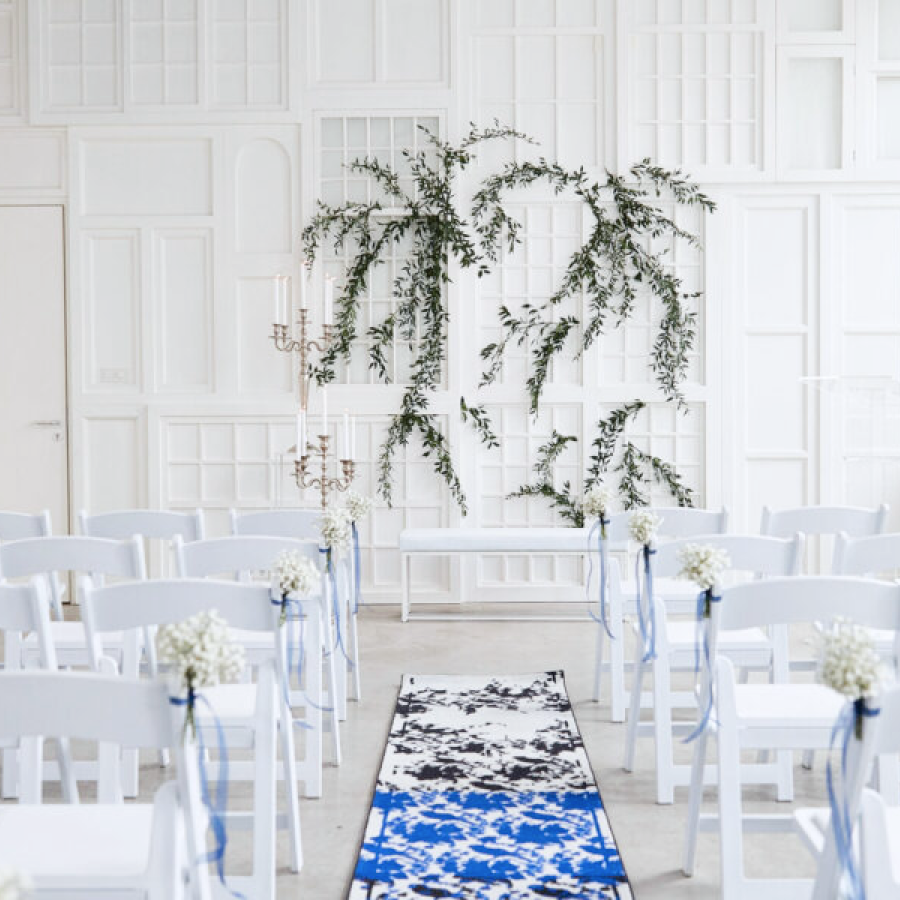
Small weddings are not a compromise. They are a choice. And if you are making that choice in Amsterdam, the city will reward you with something the big ballrooms cannot offer: a room that actually fits the people in it.
Finding the right indoor wedding location for under 20 people is harder than it sounds. Most venues are built for scale. They seat 80, 120, 200, and they will happily take your booking for 18, leaving you with empty chairs, hollow acoustics and a room that makes your guests feel like they forgot to invite someone. The search for something intimate, beautiful and genuinely designed for a small group leads most couples away from the obvious options.
This article covers what to look for, what questions to ask, and why a building from 1641 in the centre of Amsterdam might be the answer you were not expecting.
what makes a small wedding venue work
Scale is the first thing. A room designed for 80 people does not become intimate when 18 people sit in it. It becomes sparse. The right small wedding venue is one where 20 people fill the space naturally, where the table length matches the guest count, and where the architecture closes in around your group rather than dwarfing it.
Beyond scale, three things separate a memorable small wedding from a forgettable one.
- The room has a character of its own. Not decoration added for the occasion, but something built into the walls, the light, the materials. A room that looks the same before and after your florist arrives.
- The food comes from somewhere real. For a guest list under 20, the dinner table becomes the event. The kitchen matters more than the stage.
- There is no standard package. Small weddings rarely fit a template. The best venues treat your 18 people as seriously as another venue treats their 180.
amsterdam as a backdrop
Amsterdam has a specific quality that works well for intimate weddings: the city is built at human scale. The canals, the narrow houses, the bridges, all of it was designed for people on foot, not for crowds. That same quality translates into its buildings. The older ones especially have rooms that were made for gatherings of 10 or 20, not for conference capacity.
The Groenburgwal canal, one of the quieter waterways in the old city centre, runs alongside one such building. It was built in 1641 for the Drapers’ Guild. It has been many things since. Right now it is @droog, a design space and event venue that has been running since the early 1990s when Renny Ramakers and Gijs Bakker launched the design label that made the building internationally known.
The building is a labyrinth. That is not a description, it is the most accurate word for it. There are rooms on the ground floor, rooms upstairs, a garden in the middle, and a staircase painted entirely yellow that connects them. Each room is different. Each one was designed with intention.
the room that fits your wedding
For a wedding under 20 people, the library is the most logical starting point.
Small room, long table, 10 seats. The flowered wallpaper comes from a painting in the Rijksmuseum. The chairs are yellow. A flat chandelier hangs above the table and the windows look out over the garden. It is a room that does not need styling because it is already styled, permanently, by the people who built it.
For a ceremony followed by a dinner, the library seats your 10 closest people at the table. For a slightly larger group, the spaces upstairs or on the ground floor open up options that still feel considered rather than cavernous.
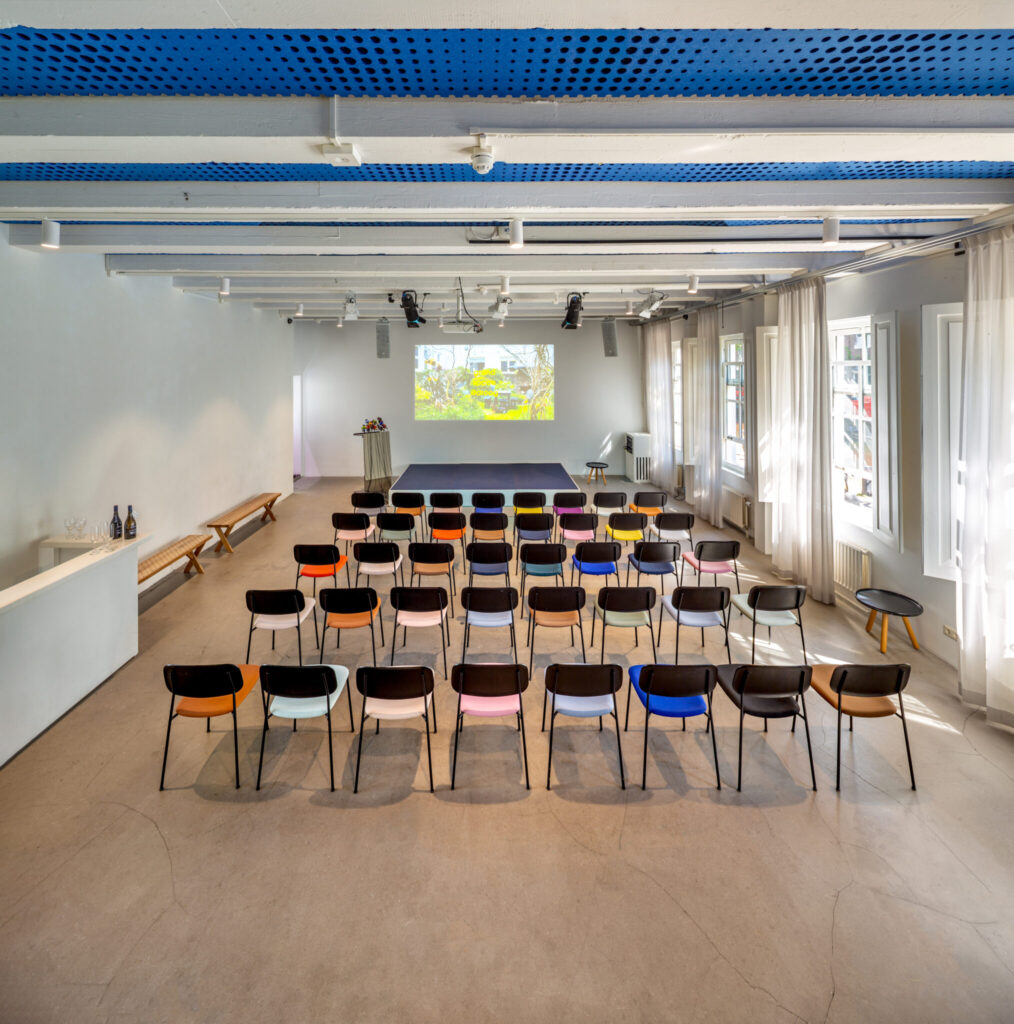
The white space is upstairs. Large white windows, views of the old Amsterdam houses and the garden below. It seats 50 with tables, but configured for 18 to 20 people it becomes something else entirely: a bright, open room with real daylight and a view of canal-side Amsterdam that most people in Amsterdam have never seen from the inside.
These two rooms can work together. Ceremony in one, dinner in the other. Or use the library for the meal and the white space for drinks before. There is no rule that says a wedding for 18 has to happen in a single room.
why design matters for a small wedding
This is the question behind the question. You are not just looking for a room. You are looking for an environment that reflects the intention behind your choice to keep things small.
@droog is built around a specific design philosophy: the idea that objects, rooms and spaces should answer a why. Nothing in the building is decorative for decoration’s sake. The Tejo Remy chest of drawers in the gallery downstairs is made from secondhand drawers held together by a rope. The blue butterfly lamp in the cafe restaurant is a piece that has been written about in design publications across Europe. The building itself was restructured using sustainable materials, with local sourcing wherever the renovation allowed it.
That approach does not disappear when you book it for a wedding. It is the room you are walking into.
For a small wedding, that matters more than it does for a large one. With 18 people in a room, everyone sees everything. The quality of the light, the texture of the wall, the object on the table. There is nowhere to hide bad choices, and no reason to make them if the room itself is already good.
food and the lunch table
The cafe restaurant at @droog has been open since 2004. It sits at the top of the yellow staircase and looks out over the Groenburgwal canal. Blue butterfly lamp overhead, a curved white tiled bar along one wall, a fireplace. It is, by most accounts, the most beautiful room in the building.
It fits 70 seated and 180 standing. For a wedding dinner of 18, it is generous. For drinks and a standing reception before a seated meal elsewhere in the building, it works exactly as it sounds: tall ceilings, canal views, a kitchen that is used to feeding people who came to sit down and stay.
The cafe uses local suppliers. The menu changes. What does not change is the premise: that a meal is worth sitting down for, and that the room you sit in while you eat is part of the meal.
practical questions for small wedding venues in amsterdam
Before you visit any venue in Amsterdam, ask these questions. The answers will tell you more than the photos will.
What is the minimum guest count the room works for? Not the maximum. The minimum. A room that looks full at 18 people is a different proposition from one that looks empty below 60.
Can we combine spaces? A ceremony room and a dinner room connected by a corridor or a garden is a completely different evening from a single-room booking. Ask whether the venue allows you to move between spaces and whether there is a cost for each one.
What is included in the catering? Some venues charge a room fee and bring in an external caterer. Others have an in-house kitchen. For a small wedding, an in-house kitchen that already knows the building is almost always the better option.
Can you bring your own officiant? In the Netherlands, the legal marriage ceremony must take place at a registered location or with a registered civil officer. A venue can host the celebration but cannot always host the legal registration. Ask early, and confirm what you need to arrange separately.
What does the room look like without anything in it? Ask for a photo of the room empty, not styled for an event. That is the room you are booking. The decoration comes later.
what a wedding at @droog looks like in practice
There is no standard format. That is the point. A small wedding for 16 people has used the library for a private dinner and the cafe restaurant for drinks after. A ceremony for 20 has taken place in the white space with the windows open over the garden and the canal visible below. The red space, which is the theatre room, complete with a u-shaped tribune and full audio-visual equipment, has been used for exactly the opposite of what it looks like: not a performance, but a conversation.
The red space deserves a mention here, even for a small wedding. It is entirely red, orange, pink and purple. The tribune seats 50 to 60 people with room to breathe, 80 if you fill every cushion. For 18 people it creates something unusual: a room that is designed for attention, for focus, for something to happen in front of you. A ceremony in that room is not a conventional one. It is a room that says something before anyone speaks.
The garden sits between the grand space and the red space on the ground floor. In good weather, it seats 60. In Amsterdam in June or July, a drink in the garden before moving inside is not a gamble, it is a reasonable plan. Nobody who has sat in that garden has ever asked for the address twice.
frequently asked questions
Can @droog host a legal wedding ceremony?
The spaces at @droog can host your celebration, your reception and your dinner. For the legal registration, you will need to arrange a registered civil officer or hold that part at a civic register office. Many couples do the legal part separately, a small signing on a different day, and use a venue like @droog for everything that matters to their guests.
What is the minimum number of guests?
The library works from 2 people to 10 at the table. Other spaces work from around 20 upward before they start to feel sparse. For a wedding under 20, the library or a combination of the library and one other space is the most honest recommendation.
Is catering included?
The cafe restaurant at @droog can provide catering for events in the building. Whether that is a seated dinner, a drinks reception or a breakfast the morning after, it is worth discussing directly. The kitchen is in-house and the menu is built around local sourcing.
Can we decorate the rooms?
Yes. The rooms are a canvas, not a museum. Flowers, candles, place settings, whatever fits the aesthetic you are going for. The rooms have their own character, which means you are working with something rather than starting from scratch.
How do we book?
The best first step is to describe what you have in mind. Guest count, preferred date, what matters most to you about the day. From there, the team at @droog can show you which combination of spaces makes sense and what is available.
Is the building accessible?
The building is a 1641 structure in a canal house row. Some areas are accessible by lift, others are not. If accessibility is important for your guests, ask specifically when you make your enquiry. It is better to know early.
What is parking like?
Amsterdam city centre has limited parking. For a wedding of 18 people, taxis, bikes and public transport are the realistic options. The building is a short walk from several tram stops and about 10 minutes on foot from Amsterdam Centraal.
Can we do a site visit?
Yes. And you should. The building does not fully communicate in photographs. The yellow staircase, the garden visible through the windows, the scale of the rooms relative to each other: these are things you understand by walking through them, not by looking at a floor plan.
alternatives worth knowing
Amsterdam has other options for small indoor weddings. A few worth knowing:
- The Dylan Amsterdam: a boutique hotel on the Keizersgracht with private dining rooms. Formal, classic, good food. Fits 10 to 30 depending on the room.
- Foam Photography Museum: for a couple with a specific connection to photography or the arts. Private hire options in a canal house setting.
- De Kas: a greenhouse restaurant in the Frankendael park. Not a venue in the traditional sense, but private dining for small groups is possible and the food is built entirely around seasonal, local produce.
- Rijksmuseum private hire: for large budgets and very small guest lists. The library or the Nightwatch room for an evening. Expensive, unforgettable, and about as Amsterdam as it gets.
Each of these serves a different intention. @droog serves the intention of a couple who want their wedding to feel like a decision, not a default.
one thing to remember
A small wedding under 20 people is not a smaller version of a big one. It is a different event. The table is longer relative to the room. The conversation carries across it. The food matters more. The room matters more. The choice of where you sit for those hours matters more than it does when you are one of 150 people moving between tables.
The building on the Groenburgwal has been hosting gatherings since 1641. It has held guild meetings, design exhibitions, pop-up stores by Charlotte Tilbury and Shiseido, theatre performances, board meetings, and lunches that ran until four in the afternoon. It knows how to hold a room. It will hold yours.
Tell us what you have in mind.