
10 tips for an event that visitors would have fomo about
10 tips for an event that visitors would have fomo about
Most events are forgotten before the taxi home. People check their phones during the keynote, grab a dry sandwich, and leave without talking to anyone they didn’t already know. That’s not a venue problem. It’s a design problem.
FOMO, the kind that makes people scroll through someone else’s event photos wishing they’d been there, doesn’t happen by accident. It’s built. Deliberately. With decisions that most event planners skip because they feel too small, too weird, or too hard to justify in a budget meeting.
These ten tips are practical. They’re based on what actually works, what guests remember, and what makes them tell someone else about it the next morning.
1. give the event a reason to exist
Not a theme. A reason. There’s a difference.
A theme is “innovation” on a banner above the registration desk. A reason is: we’re bringing 60 people together because we’re genuinely stuck on a question and we think the answer is in this room. One of these creates FOMO. The other creates lanyard waste.
Before anything else, write one sentence that explains why this event needs to happen. Not what it is. Why it exists. If you can’t write that sentence, attendees will feel it. They won’t know why, but they’ll feel it.
At @droog, every event we host starts with a conversation about intent. What shift do you want people to experience by the time they leave? That question shapes everything: the room, the format, the food, the order of the day.
2. choose a space that does some of the work for you
A neutral conference room is neutral on purpose. It’s designed not to distract. But distraction, in the right direction, is exactly what makes an event memorable.
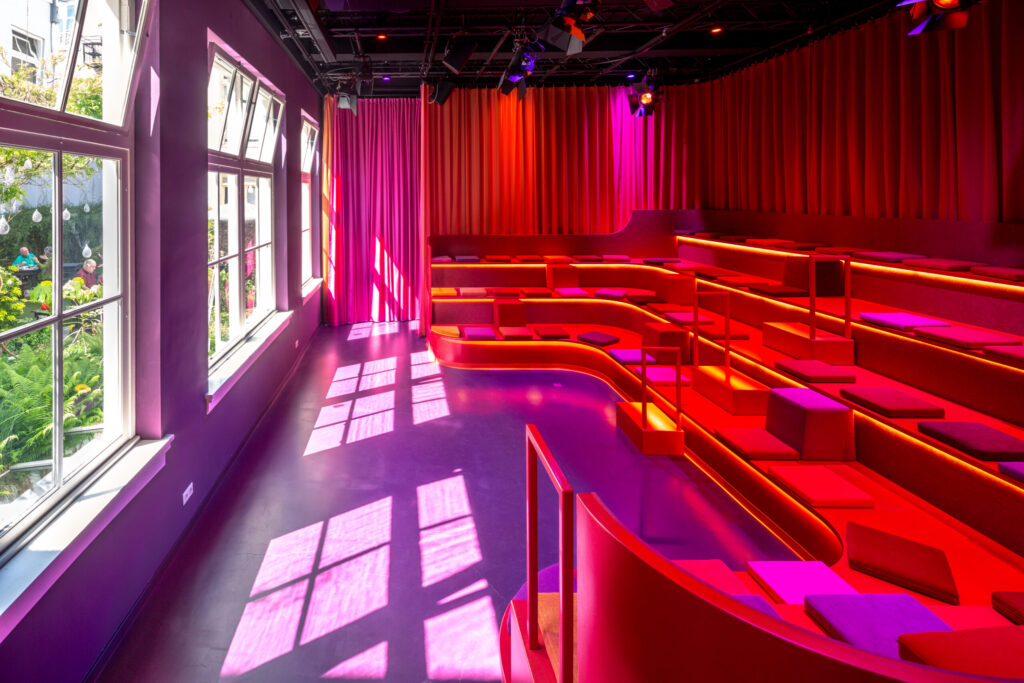
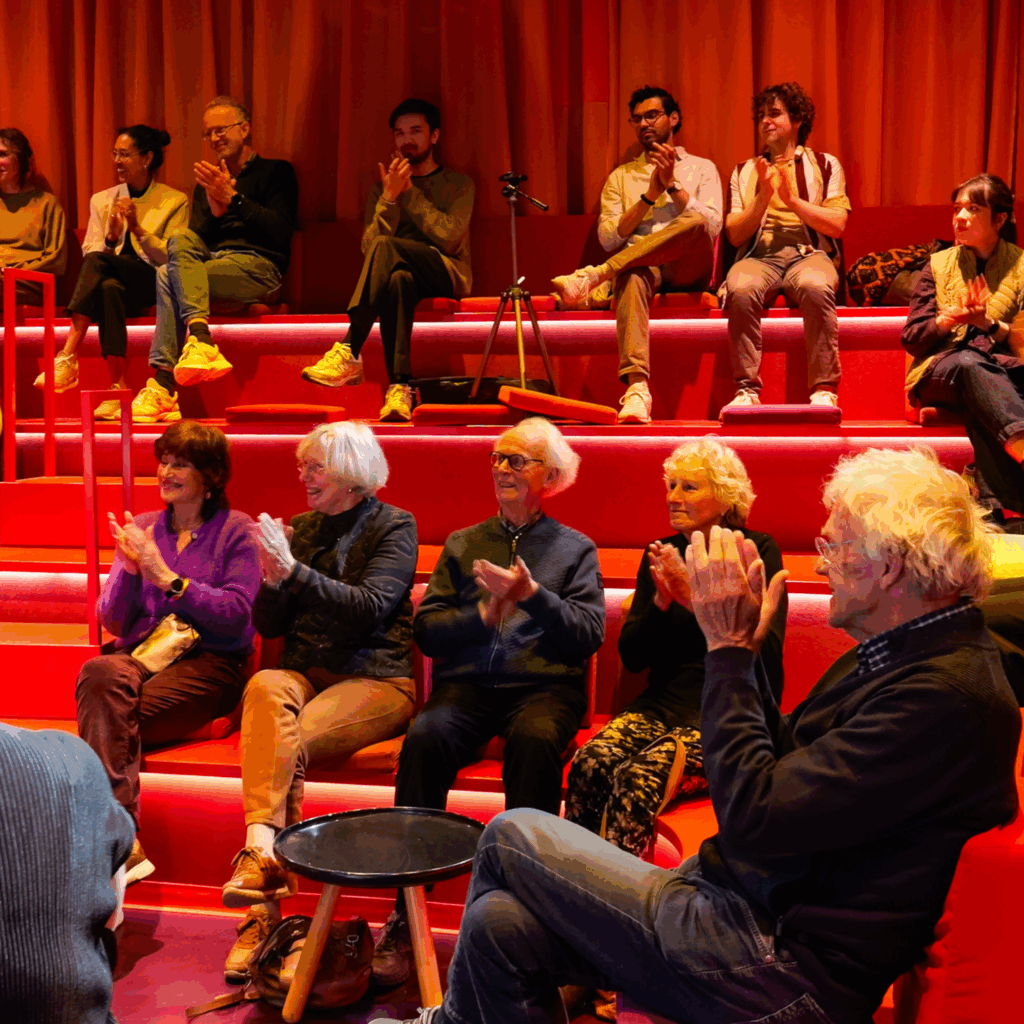
When someone walks into the red space, a fully red-pink-orange-purple theatre with a round u-shaped tribune and cushions built into the architecture, they stop talking. For a second. That pause is valuable. It says: this is different. Something here is worth paying attention to.
Spaces with history, texture, and character reduce the amount of decoration you need and increase the amount of conversation you get. People talk about the room. That’s not superficial. It’s social glue.
The building matters. Pick one that earns its place in the story.
3. design for the first five minutes
Research on event memory is consistent: people remember beginnings and endings far more than the middle. Most event budgets are spent on the middle.
What happens in the first five minutes when someone walks in? Is there something to look at, to touch, to taste, to ask about? Or is there a registration queue and a table of branded pens?
A few things that work: a person who welcomes guests by name, a single object in the centre of the room that sparks a question, a smell from the kitchen that tells people something real is being cooked. Small inputs, strong outputs.
The entrance sets the tone. Set it on purpose.
4. feed people like you mean it
Food is not logistics. It is a statement about how much you value the people in the room.
Shrink-wrapped sandwiches say one thing. A lunch built around seasonal, locally sourced ingredients, served at a table where people are expected to sit down and stay a while, says something else entirely. That difference is felt, even when it’s not named.
At @droog, the kitchen operates with a simple idea: lunch is worth sitting down for. That hasn’t changed since 2004. The café restaurant, with its curved white tiled bar, blue butterfly lamp, and view over the Groenburgwal canal, seats 70 and holds up to 180 standing. It also makes people linger. Lingering is where the real conversations happen.
If your catering could be from any hotel in any city, it’s doing nothing for your event. Make it specific.
5. build in a moment nobody expected
One. You only need one.
It can be a room reveal, an unannounced guest, a question that lands differently than anything else in the program, a shift in format that catches people off guard. The point is that the event did something the attendee didn’t see coming.
That moment is what gets described the next day. “And then they took us into this completely red theatre and…” That sentence, told at someone’s kitchen table or in a Slack channel, is worth more than any post-event email campaign.
Design one unexpected moment. Put it where energy tends to dip, usually mid-afternoon. Let it breathe.
6. make the format match the content
Theatre setting for a talk about breaking hierarchy. Round tables for a conversation about collaboration. Standing for energy. Sitting close for intimacy. These aren’t decorating decisions; they’re communication decisions.
The wrong format undermines the best content. A panel discussion in a room where the panellists are six metres away from the first row of seats creates distance, literally, and psychologically. A 90-minute lecture in a room designed for 30 that’s holding 80 creates frustration before anyone opens their mouth.
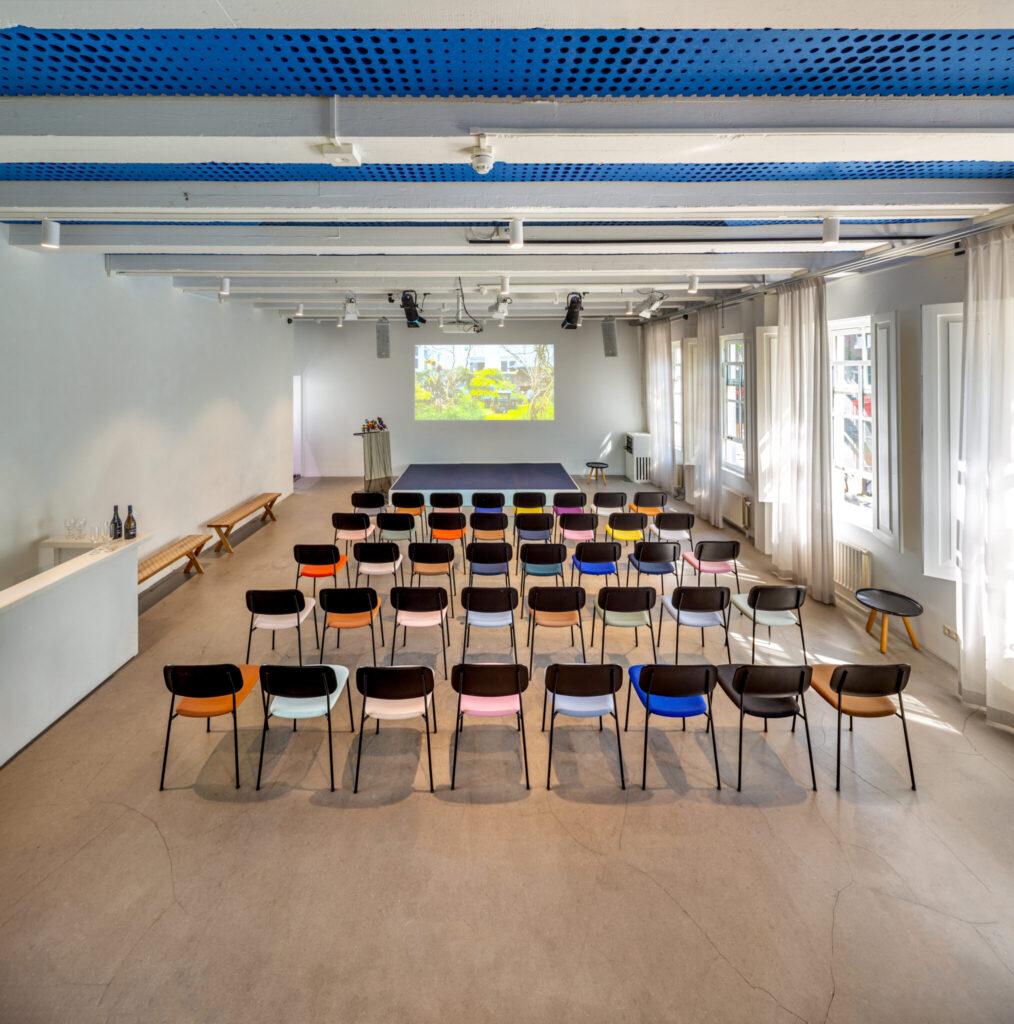
The grand space at @droog seats 90 or holds 160 standing, has a stage and a full sound system, and opens directly onto the garden. The white space upstairs fits 70 in theatre setting or 50 at tables, with large windows looking out onto old Amsterdam rooftops. The library seats exactly 10 around a long table under a flat chandelier, flowered wallpaper from a Rijksmuseum painting on the wall. Three completely different formats for three completely different conversations.
Choose the room the way you’d choose the words. Deliberately.
7. give people a reason to talk to strangers
Networking doesn’t happen because you put people in the same room and call it a networking break. It happens when there’s a shared context, a conversation starter, or a structured prompt that removes the awkwardness of the opening line.
Practical things that work: a provocative question on the table, a collaborative activity with a real output, a room layout that physically prevents people from staying in their own cluster. Even something as simple as assigned seating at lunch, mixing teams or companies, produces more cross-pollination than an hour of free-form mingling.
The goal is not more conversations. It’s one conversation that someone didn’t expect to have. That’s the one they remember.
8. use multiple spaces across the day
A single room for eight hours flattens the experience. Movement through different spaces, with different characters, different scales, different atmospheres, creates a sense of journey. The day feels longer in the good sense. More was experienced. More is remembered.
This is one of the structural advantages of a building like @droog. A plenary session in the grand space, a breakout in the library, lunch in the cafe, a show or workshop in the red space, drinks in the garden. Each space hands off to the next. The building does the pacing for you.
Even if you’re working with a simpler layout, think about transitions. A change of room is a change of register. Use it.
9. end with something people carry out
Not a tote bag. Something they carry in their head.
The best event endings leave people mid-sentence. They’re still thinking about something when they get on the train. A question that didn’t get answered. A perspective that shifted. A commitment made in a room full of people who witnessed it.
Practically: end with a provocation, not a summary. End with a question, not a conclusion. End ten minutes earlier than people expect, while the energy is still up. Don’t recap everything that happened. Trust the experience to speak for itself.
The closing moment sets what people take home. Design it with the same care as the opening.
10. document it in a way that creates envy
FOMO requires evidence. If nothing from the event is visible to the people who weren’t there, there is no FOMO. There is just an event that happened.
Documentation doesn’t mean a professional photographer wandering around with a zoom lens. It means capturing the specific, the telling detail: the red tribune full of people, the library table mid-debate, the garden at dusk with glasses still on the tables. The image that makes someone think “I should have been there.”
Make it easy for attendees to share. Give them something worth sharing. A sentence from the day that crystallises what happened. A photograph that shows the room at its best. A short video of the one moment that surprised everyone.
Organic sharing from people who were actually in the room is worth more than any campaign. It’s credible. It’s specific. And it makes next year’s event oversubscribed before the invitations go out.
putting it together: what a fomo-worthy event actually looks like
Here’s a concrete example. Sixty people. One question the organisation is genuinely trying to answer. Morning session in the grand space: talks, a panel, real disagreement on stage. Lunch in the cafe restaurant, seated, local food, mixed tables. Afternoon in the red space: a workshop format with the cushioned tribune reconfigured for groups. Late afternoon: the library for a smaller working session of ten, the rest in the garden. Closing in the white space: one final provocation, ten minutes of silence for people to write something down, then done.
No filler. No slide deck summary at the end. No branded giveaway. The day had a shape. Every room earned its place. People left mid-thought.
That’s the version that gets described at the next dinner party.
frequently asked questions
what makes an event worth talking about after?
Specificity. People don’t remember “a great conference.” They remember the unexpected moment, the conversation at lunch, the room that looked nothing like a conference room. Build at least one thing that couldn’t have happened anywhere else.
how many people do you need for a good event?
It scales in both directions. Ten people around a long table in the right room, with the right question on it, can be more impactful than 200 in a hotel ballroom. Intimacy and intention matter more than headcount. That said, for larger groups, 60 to 100 tends to be the range where serendipitous connections happen most naturally.
is it better to have one space or multiple spaces?
Multiple spaces, used with purpose. Each transition between rooms resets attention and changes the social dynamic. One room for eight hours creates a single note. Multiple spaces create a progression. The key is that each space should earn its place in the day’s structure, not just exist as an overflow option.
how far in advance should you plan an event?
For an event of 30 to 80 people with a clear program, six to eight weeks is workable if decisions are made quickly. For anything more complex, with multiple spaces, outside speakers, or a custom catering program, three to four months gives room to make it good rather than just functional. The earlier you know the intent and format, the better every other decision becomes.
what role does the venue play in making an event memorable?
A significant one. The venue sets expectations the moment people walk in. A space with character, history, and design reduces the work the program has to do and increases the emotional baseline people arrive with. It also gives attendees something to describe, which is the starting point of every word-of-mouth conversation afterward.
how do you create FOMO without overpromising?
By delivering something specific rather than claiming something general. “An unforgettable experience” is a promise anyone can make. “60 people, one question, five rooms, and a kitchen that takes lunch seriously” is a description. Descriptions create anticipation. Anticipation, when met, creates the kind of satisfaction people share.
An event worth having FOMO about is not more expensive to produce. It’s more intentional. It starts with a reason, picks a space that contributes, designs the moments people remember, and ends before the energy does.
If you’re thinking about what that could look like for your next gathering, tell us what you have in mind.