how do i organize a one day pop up shop event in a rented warehouse for 200 visitors

how to organize a one-day pop-up shop event for 200 visitors

You want to open a space for one day. Two hundred people walk in, experience something, and leave with a different idea of what your brand is. That is the ambition. The logistics are what stand between that ambition and an empty room with a few tables and no Wi-Fi.

This guide covers everything: space requirements, flow design, staffing, communication, and what changes depending on whether you are launching a product, activating a campaign, or giving something back to your community. Read it once before you book anything.

start with the why, then find the space
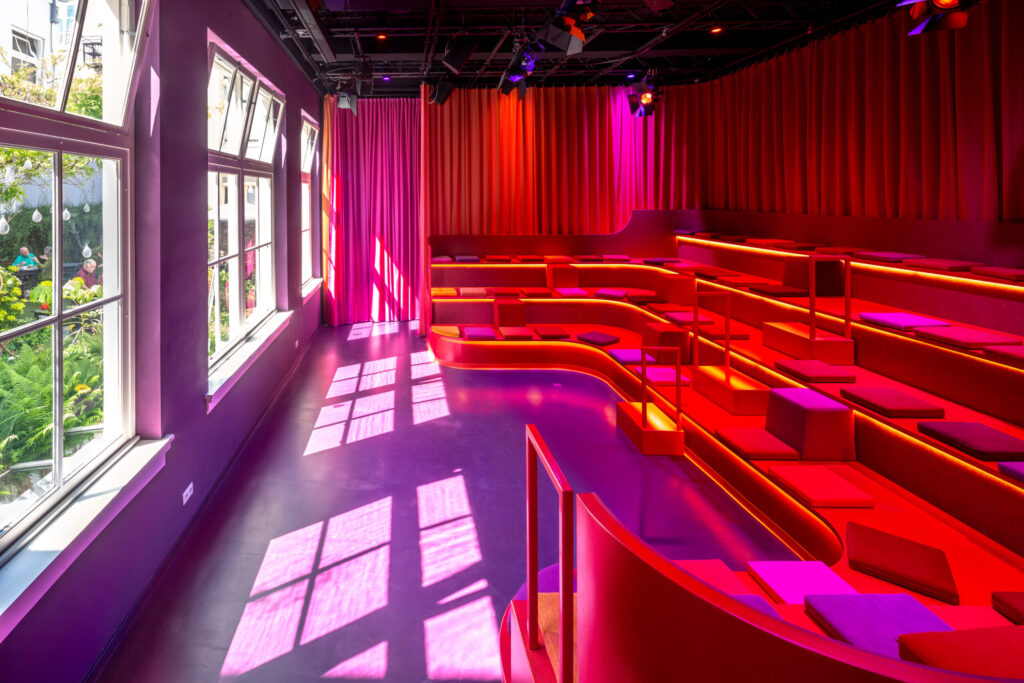
Rode ruimte (The Red Space) met de gordijnen open.

Before you search for a warehouse, answer one question: what do you want visitors to feel when they leave? Not think. Feel. That answer determines the layout, the lighting, the music, the catering, and the communication strategy.

Three common formats for a one-day pop-up, each with a different logic:

  • Product launch. You have something new. The event exists to make people understand it, touch it, and remember it. Flow matters. Every visitor should arrive at the product at the right moment, not wander past it twice and forget it.
  • Brand activation. No product to sell. You are building feeling. Dwell time is everything. People should stay longer than they planned.
  • Community event. You are giving something back. This one is the most forgiving in format, and the hardest to get emotionally right. It has to feel earned, not managed.

Decide which one you are running. Hybrid is possible, but it needs a clear primary intention or it reads as confused.

space requirements for 200 visitors in one day

Two hundred visitors in a single day does not mean two hundred people standing in a room at the same time. It means flow management. If your event runs eight hours and visitors stay an average of ninety minutes, you are looking at peak capacity of roughly fifty to sixty people at a time, with arrival waves.

That changes everything about the space you need.

For a one-day pop-up with that profile, here is what the space needs:

  • A minimum of 300-400 square metres of usable floor if you want people to move freely, with separate zones for arrival, experience and exit
  • Ceiling height of at least four metres if you want any visual impact from hanging elements, signage or lighting rigs
  • Loading access for your build, ideally the day before
  • Enough power circuits for lighting, sound, catering equipment and any interactive installations
  • At least two toilets per fifty peak visitors. This is always underestimated.
  • A clearly marked entrance and exit. Not the same door unless you have serious crowd control in place.

Warehouses often look large and empty until you fill them with structure. Build a floor plan before you sign anything. Know where the product lives, where people stand, where the queue forms, where staff are stationed, and where people go when they want to slow down.

if the space already has character, use it

Renting a blank warehouse gives you full control and zero atmosphere. That is a creative challenge. You will spend budget on things that an existing designed space gives you for free: texture, history, something to look at.

At @droog, the grand space is a ground-floor room in a building from 1641, with a giant sliding door that opens to the garden. It seats 90 or holds 160 standing. It already has walls worth photographing. That is not a small thing when you are trying to generate content from a one-day event.

A rented warehouse is neutral by design. If your brand identity is strong enough to carry a neutral space, that works. If not, budget for build accordingly. Minimum 15-20% of total event budget on set design, lighting and signage if you want a space that feels intentional rather than improvised.

the build: what you actually need on the day

This is the list that most first-time organizers underestimate. Work through it category by category.

structure and furniture

  • Display units or plinths for product (do not put products on folding tables unless that is a deliberate aesthetic choice)
  • Queue management barriers or design-led alternatives (rope, plants, floor markings)
  • Seating if dwell time is a goal
  • A staffed welcome desk or registration point near the entrance
  • At least one back-of-house area, curtained or walled, for stock, bags, staff breaks and anything operational you do not want visible

technology

  • Sound system sized for the room, with a sound check at least two hours before doors open
  • Lighting: ambient, accent and any directional lighting on the product itself
  • Payment terminals if you are selling on the day
  • Wi-Fi, stable and separate from the public network if you need it for operations
  • Screens or projections if content is part of the experience
  • A photographer and ideally a videographer, briefed in advance with a shot list

catering

  • Keep it simple. One thing done well beats four things done adequately.
  • Water always. Everything else is a choice.
  • If you have a catering team, they need their own power, water access and prep space
  • For 200 visitors across a day, budget roughly 1.2 drinks per person per hour of stay

staffing

  • One person on the door at all times
  • One person per zone in the space
  • One operational lead who does not do anything else except solve problems
  • For 200 visitors across eight hours, twelve staff is a reasonable minimum. Fewer than that and gaps show.

flow design: the thing most people skip

Flow is the sequence of experiences a visitor moves through. Without intentional flow, people cluster near the entrance, miss the main attraction, and leave before they should.

Draw the route on paper before you build. Where does someone stand sixty seconds after they arrive? What do they see first? Where is the moment of maximum engagement and how do they get there naturally?

For a product launch: the product should not be visible from the entrance. Build toward it. Give people something to discover before they reach the main event. When they arrive at it, it should feel earned.

For a brand activation: create multiple zones with different energy levels. One high-stimulation area, one quieter area where people linger and talk. The best activations feel like a neighbourhood, not a corridor.

For a community event: the flow should feel generous, not managed. People should be able to find each other, not just the brand. Enough open space for conversation, not just programmed moments.

how to communicate your event before the day

Communication strategy depends entirely on who you are trying to reach and what you want them to expect when they arrive. Here is a framework that works across all three pop-up formats.

eight weeks out

  • Lock the date, location and primary concept
  • Build a simple landing page or registration form. Even if the event is free, registration gives you a list, a number and something to send reminders to.
  • Identify the fifteen to twenty people whose attendance matters most. Invite them personally, not via a mass send.

four weeks out

  • Open broader registration or announce publicly
  • Share one image that communicates the visual world of the event, not a poster with text, an image that makes someone want to be in that room
  • Reach out to relevant press or community channels if appropriate. For a product launch, this is a media preview list. For a community event, this is the community itself.

one week out

  • Send a reminder to everyone who registered. Include exactly what they need: address, time, what to expect, what to bring if anything.
  • Brief your staff. Send a written brief, not just a verbal one.
  • Confirm all suppliers: catering, AV, security, cleaning.

the day before

  • Build if you have access
  • Sound check
  • Walk the route as a visitor. Stand at the entrance. What do you see? Is it what you intended?

the day

  • Post a story or update at doors-open time
  • Post content during the event: one or two moments, not a stream
  • Collect visitor content if that is part of your strategy. A simple hashtag, a photo moment, a reason for people to share.

after the day

  • Send a follow-up to everyone who attended within 48 hours
  • Share a photo or short film from the day
  • If you are launching something: include the clearest possible next step. Where to buy, where to sign up, where to follow.

Community events need a different post-event note. Not a sales email. Something that reflects what happened and thanks people for being there. That is the whole point of the event: now honour it in how you close the loop.

what changes by event type

product launch

The product is the host. Every other decision should serve the moment someone encounters it for the first time. Brief your staff on the product deeply, not just the features but the story, the why, the person who designed it. Visitors will ask questions that are not on the spec sheet.

Press and media need a separate moment, usually thirty to sixty minutes before public doors open. Give them access, give them a spokesperson, give them an image that is theirs to use. Do not make them share a room with two hundred people and no quiet corner.

brand activation

Dwell time is the metric. Not attendance numbers, not social impressions. How long did people stay, and what did they do while they were there? Design at least one moment that is worth photographing but not just for the camera. Something people want to do anyway, that happens to look good.

Interactive installations, workshops, live demonstrations, collaborations with other makers or artists. These are not additions to the event. They are the event.

community give-back

This is the format where most brands overcommunicate their own name. Resist it. The event should feel like it belongs to the people in the room, not the brand that organised it. That means less branding than you think, more space for conversation, and a programme that makes room for the community to actually express itself, not just receive something.

Invite community members to contribute: a talk, a demonstration, a piece of work on the wall. The best community events feel like the community organised them. That is not an accident. It takes more planning to achieve than a standard brand event, not less.

other formats worth considering

  • Trade preview: invitation-only, before public launch. Builds anticipation and gives press something exclusive.
  • Workshop day: pop-up format where visitors participate rather than observe. Higher engagement, lower footfall. Works best with capped registration.
  • Collaboration event: two or more brands sharing a space with aligned audiences. Splits cost, doubles reach. Needs clear creative direction so it does not feel like a trade fair.
  • Charity or cause event: proceeds or participation linked to something beyond the brand. Gives visitors a reason to come that is not just the brand itself.

Thinking about a one-day event in Amsterdam and want to know what a designed space can do that a blank warehouse cannot?

request quote

budget: how to think about it honestly

There is no universal number. But here is a rough allocation framework for a 200-visitor one-day pop-up in a rented space:

  • Venue and logistics: 25-35% of total budget. Includes rental, loading, cleaning, security.
  • Build and design: 15-25%. Set design, furniture, signage, lighting beyond the basic rig.
  • Catering: 15-20%. Adjust based on how central food and drink are to the experience.
  • Staffing: 10-15%. On-the-day staff, not including your internal team.
  • AV and technology: 10-15%. Sound, screens, Wi-Fi, payment systems.
  • Photography and content: 5-10%. Non-negotiable if the event needs to live beyond the day.
  • Communication: 5-10%. Design, paid promotion if relevant, email tooling.
  • Contingency: 10%. Something always costs more than you planned.

At @droog, most of the design and atmosphere comes with the building. That changes the build allocation significantly. The 1641 building in the centre of Amsterdam does not need a set designer to make it look like somewhere worth being in.

on the day: a practical timeline

  • T-4 hours: Venue access. Final build, power check, AV test.
  • T-2 hours: Staff briefing. Walk the space together. Assign zones. Go through the schedule.
  • T-1 hour: Catering setup. Final walk-through as a visitor. Fix anything that is not right.
  • T-30 minutes: Doors open to any VIPs, press or early access guests.
  • T-0: Public doors open. Someone is at the door. Someone is at every zone. The operational lead is not at any of these places; they are moving.
  • During: Check in with each zone every thirty minutes. Watch where people cluster and where they do not go. Adjust if you can.
  • T+30 minutes after close: Debrief with staff. What worked, what did not, what do you wish you had known at 9am.

frequently asked questions

how far in advance should i book the venue?

For a one-day event with 200 visitors, twelve weeks minimum. Eight weeks if you are flexible on date and the venue has availability. Less than eight weeks and you will be making compromises on space, suppliers or both.

do i need a permit for a pop-up event?

In the Netherlands, events with more than 150 visitors in a non-permitted space typically require a permit from the municipality. Check with your venue: many have standing permits that cover events up to a certain capacity. If they do not, factor four to six weeks for permit processing into your timeline.

should i charge for entry?

Paid entry creates a committed audience. Free entry creates a larger one. Paid entry with a symbolic price (5-10 euros) is often better than free for community or brand events: it filters for people who actually want to be there and reduces no-shows from registration by roughly 40-60%.

what is the best way to handle no-shows?

Overbook by 20-30% if the event is free. If you have sold tickets, no-shows are lower but still expect 15-20% of registered attendees not to arrive. Build your operations around the number you expect to show, not the number registered.

how do i make a pop-up feel designed rather than improvised?

Three things: consistent lighting throughout the space, one strong visual moment that is worth photographing, and staff who know what they are there for. Everything else can be imperfect. Those three things cannot.

can i do a pop-up in a space that already has events infrastructure?
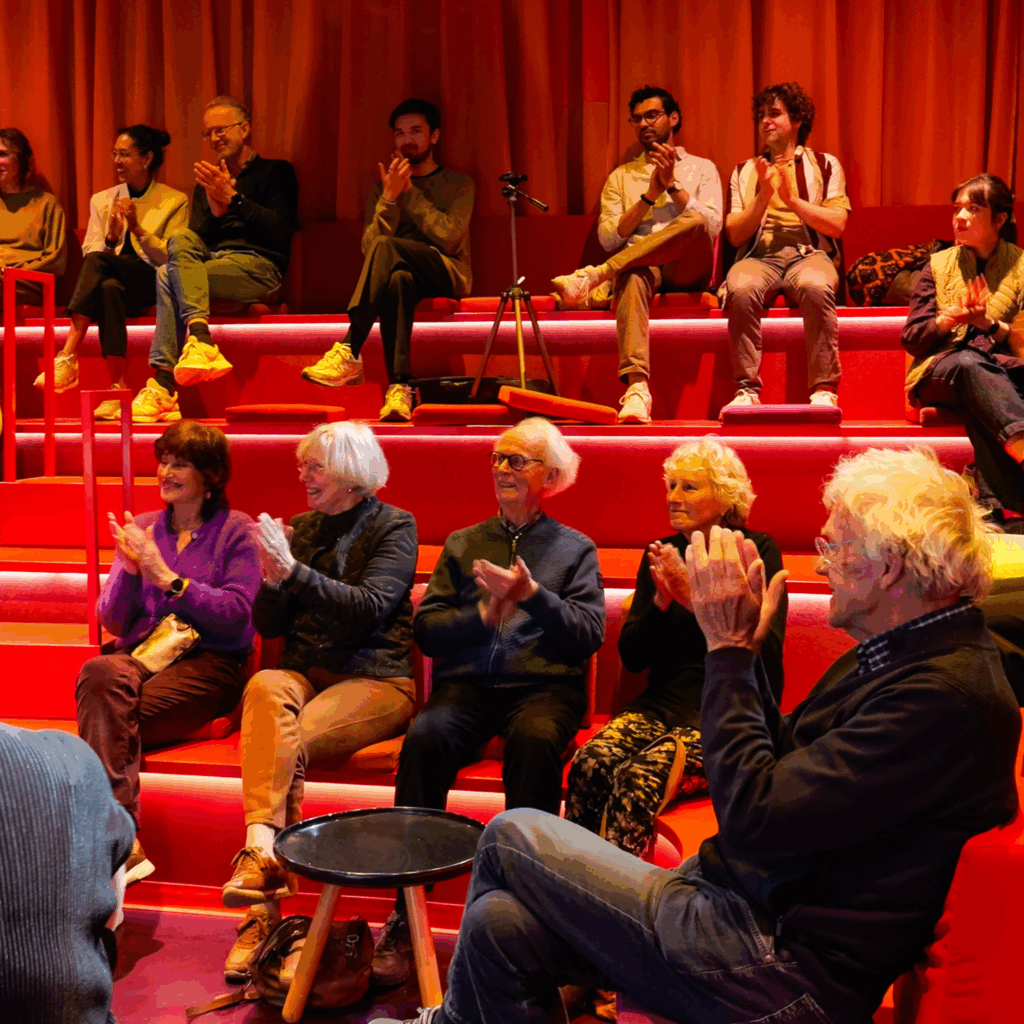
event in de red space met bezoekers

Yes, and it is usually the smarter choice for a first event. You trade flexibility for reliability. At @droog, the spaces come with sound, lighting, catering infrastructure and a team that has run hundreds of events in the building. The pop-up becomes about what you bring, not whether the AV works.

what if i want to use multiple rooms?

Multi-room pop-ups work well for 200-visitor events because they distribute the crowd naturally. Each room becomes a different chapter of the experience. At @droog, the red space connects to the grand space and the garden, which makes a natural three-zone route for a launch or activation. The library upstairs works for private press moments or a VIP activation within the same event.

what @droog brings that a blank warehouse does not

A warehouse gives you space. @droog gives you context. That is not the same thing.

The building has been in use since 1641. It housed the Drapers’ Guild. It became the home of Droog Design in the 1990s, one of the most influential design movements of that decade. The walls, the objects, the furniture, the garden with its view into four different rooms: none of that needs to be explained to a visitor. It is already there.

For a pop-up event, that means your brand does not have to do all the work alone. The space is already a point of view. You are adding to it, not building it from nothing.

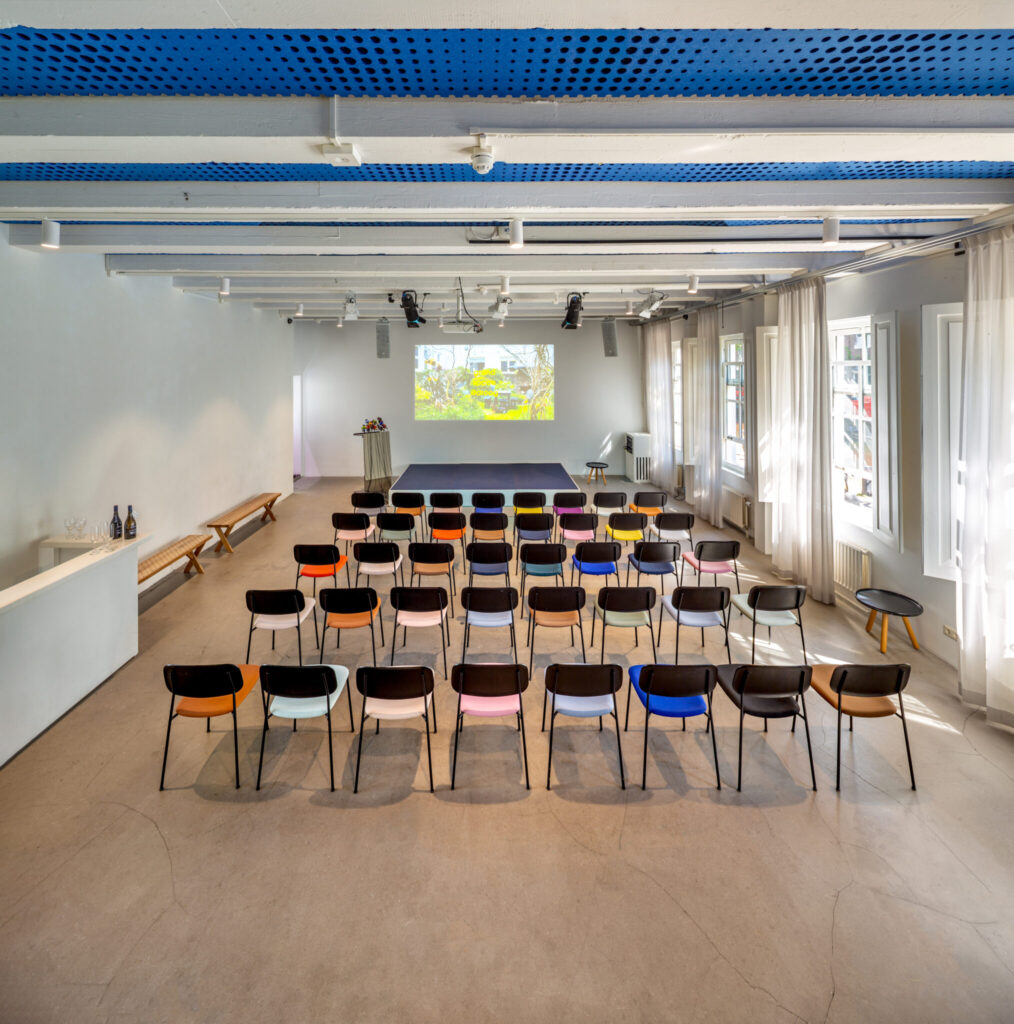
The cafe at the top of the yellow hallway staircase is available for private events too: 70 seated, 180 standing, with a blue butterfly lamp, a curved tiled bar and a view over the Groenburgwal canal. The white space upstairs fits 70 in theatre setting and has large windows over the Amsterdam houses. These are not just rooms. They are reasons to come.

Events at @droog are not limited to one space. If the event needs more room, you add more rooms. Breakouts, dinners, workshops, live-stream sessions, product reveals in one room and community conversation in another. Tell us what you have in mind and we will tell you what is possible.
request quote

checklist for organizing a pop up brand event in a city center for the first time

checklist for organizing a pop-up brand event in a city center for the first time

event in de red space met bezoekers

You have a brand. You have something to say. And now you want to say it in person, in a city, in a space that people will actually remember. Good instinct. Pop-up brand events work because they are physical, temporary, and specific. They demand a decision from the people who show up: I chose to be here.

But organizing one for the first time is a different story. There are logistics nobody warns you about, communication choices that determine who actually shows up, and venue decisions that shape everything downstream. This checklist covers all of it, in the order it tends to matter.

step one: define what kind of event you are actually running

Before you book anything, name the type. These are not the same event and they should not be treated as such.

  • Product launch. You are revealing something. The space should do what the product does, or deliberately contrast it. The experience is the first impression.
  • Brand activation. You are creating a moment of contact between your brand and a new audience. It is participatory. People do something, not just watch.
  • Community event. You are giving something back to the people who already know and support your brand. The tone is generous, not promotional. This is a thank-you, not a pitch.
  • Press or trade event. Journalists, buyers, partners. Smaller, more controlled, more information-dense. Different catering, different run of show.
  • Hybrid or live-stream event. You are playing to two audiences at once: the room and the feed. That changes your production setup entirely.

Most first-time organizers try to run all five at once. Pick one as the core. Everything else is secondary.

step two: set your numbers before you set your budget

How many people are you expecting? Be honest. Fifty people in a room built for two hundred looks like a failure even if the event was excellent. Twenty people in a room built for twenty-five feels full.

Decide on a realistic attendance target, then work backwards. That number determines your venue size, your catering quantities, your production complexity, and your communication volume. Without it, every other decision is guesswork.

step three: choose the right venue for the right reasons

In a city center, you are competing with everything around you for attention. The venue is part of your brand statement on the day. It should do some of the work for you.

Ask these questions before you sign anything:

  • Does the space fit your audience size, not just technically but experientially?
  • Can you brand or dress the space, or is it already so designed that it resists overlay?
  • Is there a separate area for catering, registration, or breakout conversation?
  • Is there natural light? Outdoor access? A garden?
  • Is the AV built in, or do you bring your own?
  • What is the load-in and load-out policy? Do you have the building the night before?
  • Is the location walkable from public transport? In a city center, this matters more than parking.

At @droog, the building from 1641 on the Groenburgwal in Amsterdam already carries a point of view. The grand space seats 90 or holds 160 standing, with a stage, a sound system, and a beamer. It opens directly to the garden. It has held pop-up stores for Charlotte Tilbury, Shiseido, and others. Next to it is the red space, a full theatre in deep reds, oranges and purples, with a u-shaped tribune for up to 80 people. Upstairs, the white space handles up to 70 in theatre setting or 50 with tables. The library seats 10 around a long table with yellow chairs and a Rijksmuseum-inspired wallpaper for the kind of meeting that should not feel like a meeting. And the cafe at the top of the yellow staircase fits 180 standing or 70 seated, with a view of the canal.

Events here are not limited to one room. If you need a plenary, a breakout, a dinner, and a drinks reception, you use the building. That is what it is for.

step four: build your run of show

A run of show is not a schedule. A schedule says what happens when. A run of show says who does what, where they stand, what they say, what plays behind them, and who is responsible if it goes wrong.

Build it in a shared document. Include:

  • Load-in start time and who oversees it
  • AV check and who signs off
  • Guest arrival window and who is on the door
  • Each segment with duration, speaker name, and tech cue
  • Catering timing (pre-event, mid-event, closing)
  • Load-out end time and who is last to leave

Add fifteen minutes of buffer after every major transition. First-time organizers underestimate how long it takes for people to move from one room to another, find their seats, or stop talking at the bar.

step five: logistics that people forget until it is too late

These are the things that cause problems on the day:

  • Registration and check-in. Who manages the guest list at the door? Is there a system, or a printed sheet? For events over 50 people, a printed sheet is not enough.
  • Badges or no badges. For community and press events, yes. For brand activations and consumer pop-ups, usually no. It depends on the tone.
  • Coat check. In a city, in winter, 80 people will arrive with coats. Where do they go?
  • Catering quantities. Rule of thumb: plan for 80% attendance of confirmed RSVPs. People cancel. Order slightly more food than you think you need. Order less alcohol than you think you need.
  • Photography and video. Brief the photographer before the event, not on the day. Send them the run of show. Tell them the three shots that matter most.
  • Permits. Some city-center venues require a permit for music above a certain decibel level, or for outdoor use of the garden. Ask the venue. Do not assume.
  • Accessibility. Is the venue step-free? Do you have a ramp, elevator access, or accessible bathrooms? This should be in your event description, not discovered on arrival.

And one more: have a point of contact who is not you. You cannot run the event and troubleshoot at the same time.

request quote

step six: how to communicate your event, depending on what it is

This is where most first-time organizers either over-communicate or go silent. Neither works.

for a product launch

Build anticipation before the date. Tease the product without revealing it. Send a save-the-date three to four weeks out. Follow up with an invitation two weeks before. Send a reminder 48 hours ahead. After the event, publish a recap quickly, within 48 hours, while the conversation is still happening.

grand space in congres setting

Channels: email to your existing list, targeted social media posts, press outreach if relevant. If the product is visual, invest in pre-event content that shows the space without showing the product.

for a brand activation

You are often trying to reach people who do not yet know you. That means paid amplification, local partnerships, or street-level promotion near the venue. The city center helps here: foot traffic is real. Consider a simple window installation or signage that draws people in without requiring prior registration.

Keep the communication low-friction. No long registration forms. A simple landing page with date, location, and what to expect is enough.

for a community event

Tone matters most here. This is not a campaign. It is a letter to people who already trust you. Write it like one. Personal, direct, specific. Tell them what you have prepared for them. Tell them why now. If your community is small enough, consider individual outreach rather than a broadcast email.

Give them enough time to plan, three weeks minimum, but do not over-remind. One invitation, one reminder, one final details email. That is enough.

for a press or trade event

Journalists are overbooked. Buyers are schedule-driven. Lead time should be four to six weeks minimum, often longer. Send a press release or formal invitation with a clear news hook. Follow up personally by phone or direct message. Confirm attendance one week before. Have a media kit or product information ready at the venue.

for a hybrid or live-stream event

Treat the online audience as a first-class audience, not an afterthought. Brief your speakers on camera presence. Test the stream setup the day before, not an hour before. Have a moderator for the online chat who is physically present in the venue. Send a recap link to online attendees within 24 hours.

step seven: on-the-day communication

Send a final details email the morning of, or the evening before for morning events. Include:

  • Exact address with a pin or map link
  • What entrance to use (city-center buildings often have multiple)
  • Arrival time versus event start time
  • What to expect when they walk in
  • A contact number for the day itself

Keep this email short. People read it on their phone on the way there.

step eight: after the event

The event does not end when people leave. What you do in the 48 hours afterwards determines how much it compounds.

  • Send a thank-you email to attendees. Not a survey with seventeen questions. A short, genuine note with one thing you want them to remember.
  • Publish your photo or video content while the event is still in public memory.
  • Follow up with specific people you met. Not a mass message, individual ones.
  • Document what worked and what did not. Write it down before you forget. Your future self will thank you.

the full checklist at a glance

Use this to work through your planning from start to finish.

before you book anything

  • Define the event type: launch, activation, community, press, hybrid
  • Set an attendance target
  • Set a total budget with a ten percent contingency
  • Confirm your date against competing events in the city

venue

  • Venue size matches your attendance target
  • AV equipment confirmed: beamer, microphone, sound system
  • Load-in and load-out times agreed in writing
  • Catering facilities or external catering permitted
  • Accessibility confirmed and communicated to guests
  • Permits identified and applied for if needed

logistics

  • Run of show document built and shared with all responsible parties
  • Registration or guest list system in place
  • Coat check solution confirmed
  • Catering quantities ordered
  • Photographer briefed with run of show
  • Day-of contact person named, not the lead organizer

communication

  • Save-the-date sent three to four weeks out
  • Invitation sent two weeks out
  • Reminder sent 48 hours before
  • Final details email sent morning of event
  • Post-event thank-you sent within 48 hours
  • Photo or video content published within 48 hours

frequently asked questions

how far in advance should I book a venue for a city-center pop-up?

For a weekend date, six to eight weeks minimum. For a weekday, four to six weeks is usually workable. Good venues in city centers book out fast, especially for Thursdays and Fridays. If you have a specific date in mind, make venue confirmation your first action, not your fifth.

how do I know if my venue is too big or too small?

Too small is a solvable problem: you manage the guest list. Too big is harder. A room that is half-full reads as unsuccessful even if everything else went well. If you are uncertain, choose the smaller option and use a waitlist. Demand is a signal worth creating.

do I need a production company for a first event?

It depends on scale and complexity. For events under 50 people with basic AV, a venue with built-in equipment and one technical contact is usually enough. For 100-plus people, a live stream, or a programme with multiple speakers and transitions, a production partner is worth the cost.

how do I get press to actually attend?

Give them a reason that is not your brand. The story has to be interesting on its own terms. A product launch in an unusual space with a specific angle is more interesting than a product launch. Send a personal note, not a mass press release. Follow up once, by phone or voice message. Make attendance easy and arrival time flexible within a window.

how do I build community events that people want to come back to?

Be specific about who it is for. A community event for everyone is a community event for no one. Make it feel like it was made for the people in the room. That means knowing who they are before the event, programming content they actually care about, and making space for them to connect with each other, not just with your brand.

what should I not do at my first pop-up event?

Do not over-programme. First-time organizers fill every minute because silence feels like failure. It is not. People need time to look around, talk to each other, and absorb what they are experiencing. Leave gaps. Trust the room.

one last thought

The best pop-up brand events feel inevitable in retrospect. The space, the guest list, the content, the timing, all of it seems like it could not have been any other way. That feeling is built in advance, in a document nobody sees, by someone who thought through every question before the guests arrived.

Start with this checklist. Adjust it to your brand, your audience, and your budget. Then tell us what you have in mind.

request quote

how do i organize a pop up event

how do you organize a pop-up event that actually lands?

Pop-up events are one of the most exciting formats in the event world right now. They are temporary, intentional, and when done well, they leave a lasting impression. Whether you are planning a product launch, a brand activation, a community gathering, or something in between, the format rewards clear thinking and bold choices.

Here is what you need to know to pull one off.

start with your reason

Before you book a space or design a flyer, ask yourself one question: why are we doing this? The answer shapes everything else. A pop-up event for a product launch is fundamentally different from one meant to give back to your brand community. And both differ from a retail activation or an exclusive press preview.

Some of the most common pop-up formats include:

  • Product launches, where the goal is to create a first impression and generate buzz around something new.
  • Brand activations, where you bring an abstract brand story to life through a physical, sensory experience.
  • Community events, where loyal customers or followers are invited to something exclusive and personal, as a way of saying thank you.
  • Retail pop-ups, where a brand sets up a temporary shop to reach a new audience or test a new market.
  • Press and influencer previews, designed to generate coverage before a wider release.
  • Collaborative showcases, where multiple brands or creatives come together under one shared concept.

Once you know your why, the rest becomes a lot easier to plan.

what you actually need to organize one

Let’s get practical. A well-organized pop-up event requires you to think across several categories at once.

a venue that works for you

The space you choose is not just a backdrop. It communicates something. A sterile conference room says something very different from an intimate design venue in the heart of Amsterdam. Think about what the walls, the lighting, and the layout say about your brand before your guests even sit down.

At @droog, the grand space is often a natural fit for pop-up events. With a large sliding door that opens directly onto the garden, a stage, built-in sound, and room for up to 160 people standing, it gives you the flexibility to go from an intimate preview to a full-scale activation without changing address. You can also combine spaces if the format calls for it. Add the red space for a show or experience moment, or use the cafe for drinks and a more relaxed social end to the day.

a clear timeline and run-of-show

Even the most spontaneous-feeling pop-up runs on a tight schedule behind the scenes. Map out every moment from setup to breakdown. Who arrives when? When do doors open? What happens in the first ten minutes a guest walks in? That first impression is everything.

your production needs

Depending on the scale of your event, you may need some or all of the following:

  • AV equipment (beamer, microphone, sound system)
  • Lighting design or mood lighting
  • Branded materials, signage, or installations
  • Catering or drinks service
  • Photography or videography
  • Registration or check-in setup
  • Staff or hosts on the floor

Some venues include these basics. Others require you to bring everything. Always confirm what is included before you build your budget.

a guest experience that has a shape

Pop-ups work best when there is a clear arc to the experience. Guests arrive, something draws them in, something holds their attention, and something gives them a reason to talk about it afterward. That does not mean overcomplicating things. It means being intentional about flow.

Think about what someone sees first, what they discover next, and what moment you want them to remember when they leave.

request quote

how do you communicate your pop-up event?

Communication is where a lot of pop-up events either build momentum or lose it entirely. The good news is that the format itself, temporary, exclusive, by-invite or limited-access, does a lot of the work for you. Scarcity and urgency are built in. Use them.

for a product launch or press preview

Keep the guest list tight and the messaging sharp. A short, well-written invitation with a clear hook works better than a long email. Lead with what is new, what is exclusive, and why this moment matters. Follow up personally where possible. Journalists and influencers respond better to direct outreach than mass sends.

for a brand activation

Here you have more room to tease. Consider a short pre-event campaign on social media that hints at the experience without giving it all away. Create a visual identity for the event that people will want to share. Make the event itself photogenic and shareable, and let the content do the post-event work for you.

for a community or loyalty event

The tone here is warmer and more personal. Your community already knows you. The invitation should feel like a genuine thank-you, not a marketing moment. Handwritten notes, personalized messages, or a simple but thoughtful email goes a long way. What matters most here is that guests feel seen, not sold to.

for a retail pop-up

Visibility is key. Local press, neighborhood social channels, paid social ads in the relevant area, and partnerships with nearby businesses can all help drive foot traffic. A clear message about what you are selling, how long you are there, and why it is worth a visit should be front and center in all your communications.

channels worth using across all formats

  • Email, still one of the most direct ways to reach your audience.
  • Instagram and LinkedIn, depending on your audience and the nature of the event.
  • WhatsApp broadcast lists, for a more personal touch with a warm audience.
  • Press and media outreach, especially for launches or activations with a wider story.
  • Event platforms, like Eventbrite or a custom RSVP page, to manage registrations cleanly.

a few things people often forget

It is worth mentioning a handful of things that tend to get overlooked in the planning process:

  • Parking and accessibility for your guests
  • A clear point of contact on the day for your venue and suppliers
  • What happens if more people show up than expected
  • How you will capture content during the event for post-event use
  • A follow-up plan, what do you send or post in the 24 hours after?

why @droog works well for pop-up events

@droog is not a blank box. It is a space built on design thinking, and that already gives your event a layer of meaning before you add a single branded element. The building in Amsterdam is rooted in Droog Design principles, and the spaces reflect that. From the white space upstairs with its large windows overlooking old Amsterdam houses, to the library for smaller and more intimate moments, every room has its own character.

Events here do not need to be dressed up to feel special. The environment does a lot of the heavy lifting, which means your content and your people can do the rest.

If you are planning a pop-up and looking for a venue in Amsterdam that supports your concept rather than just housing it, we would love to hear what you have in mind.

request quote

location for pop up spaces in amsterdam city center

the best location for pop-up spaces in amsterdam city center

Finding the right location for a pop-up in Amsterdam city center is not always easy. You want a space that has character, flexibility, and a story to tell. A place that does more than just hold people, it shapes the experience. That is exactly what @droog offers.

Situated on the Staalstraat in the heart of Amsterdam, @droog is a design-rooted venue with a collection of spaces that are as versatile as they are visually striking. Whether you are launching a product, hosting a brand activation, or creating an immersive retail experience, there is a space here that fits.

why amsterdam city center is the right choice for your pop-up

Location matters. A pop-up in Amsterdam city center puts you right where people already are. Tourists, locals, professionals, creatives. The foot traffic, the cultural density, and the proximity to the canal district make it one of the most desirable spots in the Netherlands for temporary brand activations and events.

But a central location alone is not enough. The space itself needs to carry meaning. @droog, every room has been designed with intention. The building reflects a commitment to sustainable design, local sourcing, and a philosophy rooted in Droog Design. That context adds depth to any event or pop-up held here.

the grand space: your pop-up canvas

The grand space is the most obvious choice for a pop-up activation. Located on the ground floor, it features a large sliding door that opens directly to the garden, creating a seamless indoor-outdoor flow. The space fits up to 90 people seated or 160 standing, making it ideal for product launches, brand pop-ups, and networking events.

It comes equipped with a beamer and sound system, and a stage for speakers or presenters. The open layout gives you full freedom to design the space around your concept. You can dress it up, strip it back, or let the design of the building do the talking. It is a blank canvas with strong bones.

combining spaces for larger activations

One of the real advantages of @droog is that events are not limited to a single room. If your pop-up needs more space, you simply add more rooms. The red space, directly accessible from the grand space and the garden, is a fully equipped theatre with a distinctive red, orange, and purple palette. It seats up to 80 people on a curved tribune and is perfect for presentations, screenings, or live performances that run alongside your main activation.

Upstairs, the white space offers a bright, airy setting with large white windows overlooking the old Amsterdam canal houses and the garden below. This space works well as a breakout zone, a private meeting area, or a secondary room for workshops and trainings during your event. It fits up to 70 in theatre setting or 50 seated with tables.

request quote

intimate spaces for curated experiences

Not every pop-up needs scale. Sometimes the most impactful experiences are the most intimate ones. The library is a beautifully detailed meeting room upstairs, with yellow chairs around a long table, flowered wallpaper based on a painting from the Rijksmuseum, and windows looking out over the garden. It fits up to 10 people and is perfect for press previews, private client moments, or curated brand dinners.

For something more open and social, the cafe restaurant at the top of the yellow hallway staircase is arguably the most beautiful space in the building. With the blue butterfly lamp, a curved white tiled bar, a fireplace, and views over the Groenburgwal canal, it holds up to 180 people standing and 70 seated. It opens to the public daily for lunch and coffee, which means it naturally draws people in, a built-in audience for any pop-up activation you run there.

what makes @droog different as a pop-up venue

There are plenty of event spaces in Amsterdam city center. What sets @droog apart is the design DNA running through every room. This is not a neutral white box. It is a venue where the space itself communicates something, about creativity, about purpose, about quality. For brands that care about how they show up in the world, that context matters.

The team at @droog works with a philosophy of intentional decision-making. Every element in the building has been chosen or built with environmental responsibility in mind. That aligns well with brands that want their pop-up to reflect more than just a product, they want it to reflect values.

Practically speaking, the central location, flexible room configurations, solid AV equipment, and in-house catering options make the logistics manageable. You focus on your concept. The space handles the rest.

who is a pop-up at @droog suitable for

Pop-ups at @droog work well for a wide range of organisations and moments. Think of fashion or lifestyle brands wanting a short-term retail presence in a design-forward setting. Think of publishers doing a book launch, or a creative agency hosting a client event. Think of a startup doing a product reveal, or a larger company running an internal brand activation for their team.

Because the spaces can be combined and configured in different ways, the venue scales with your needs. A small intimate gathering in the library feels just as intentional as a full building takeover using the grand space, the red space, and the cafe together.

practical details for booking a pop-up at @droog

@droog is located at Staalstraat 7b in Amsterdam, a short walk from the Waterlooplein metro station and easily reachable by bike, tram, or on foot from anywhere in the city center. The building is open for events on flexible dates throughout the year, and the team is experienced in helping you find the right setup for your specific goals.

If you are still in the early stages of planning and want to understand what is possible, reaching out directly is the best first step. The team can walk you through the different spaces, help you think through the configuration, and give you a clear picture of what your pop-up could look like at @droog.

request quote

Botanical Pop-Up

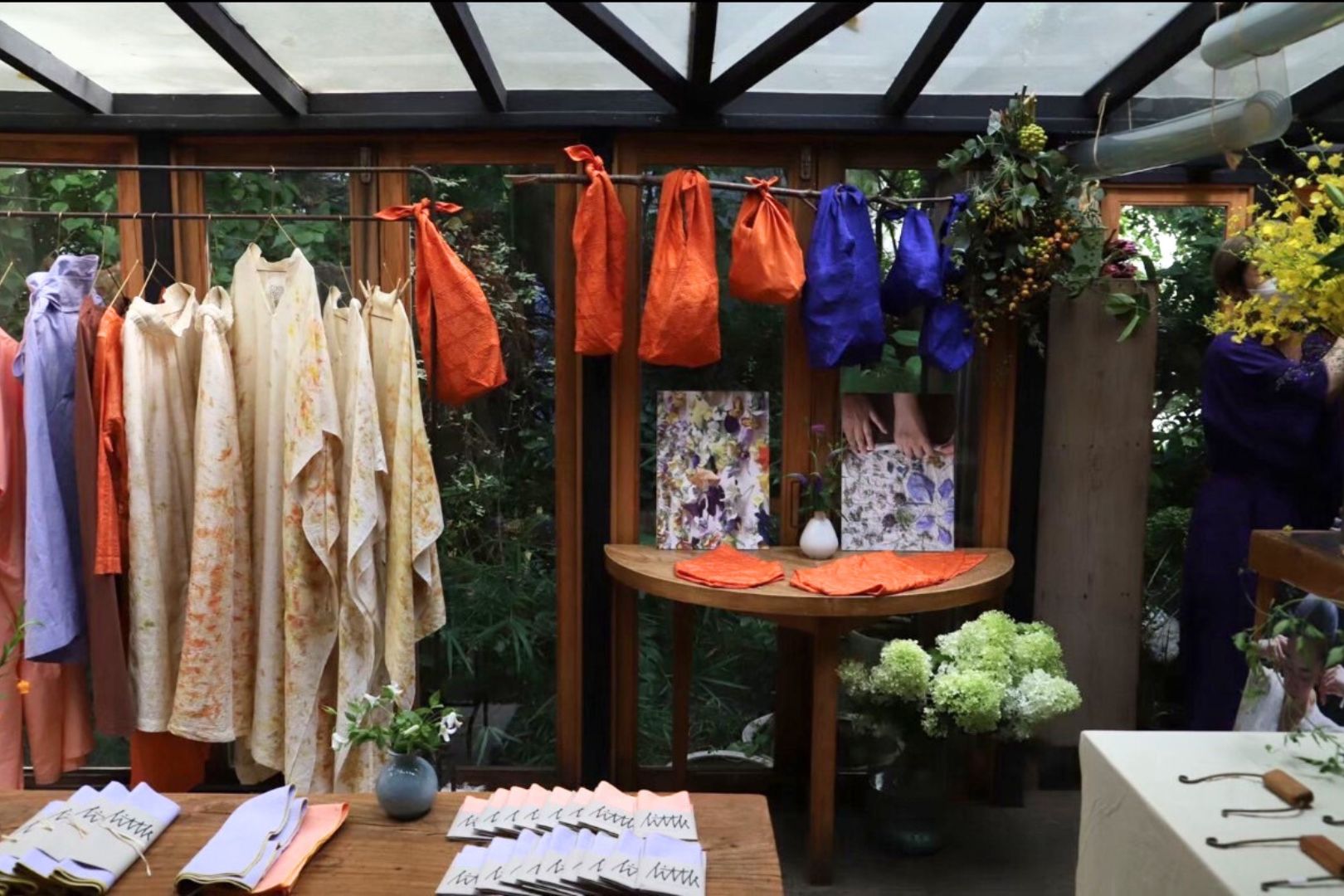
For the first time in Amsterdam, The Little Shop of Flowers and WONDER FULL LIFE bring their celebrated Japanese collaboration to The White Space @droog.

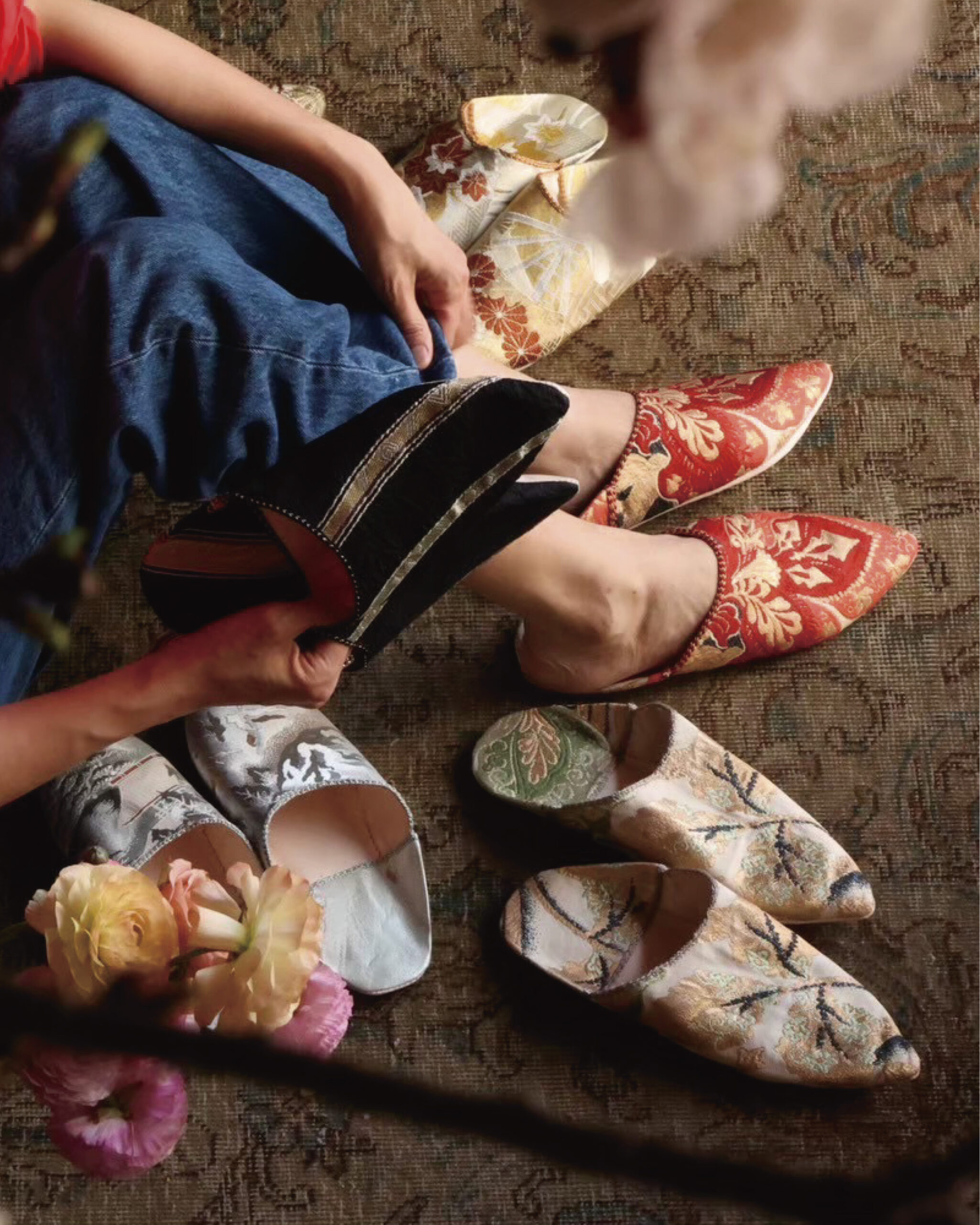
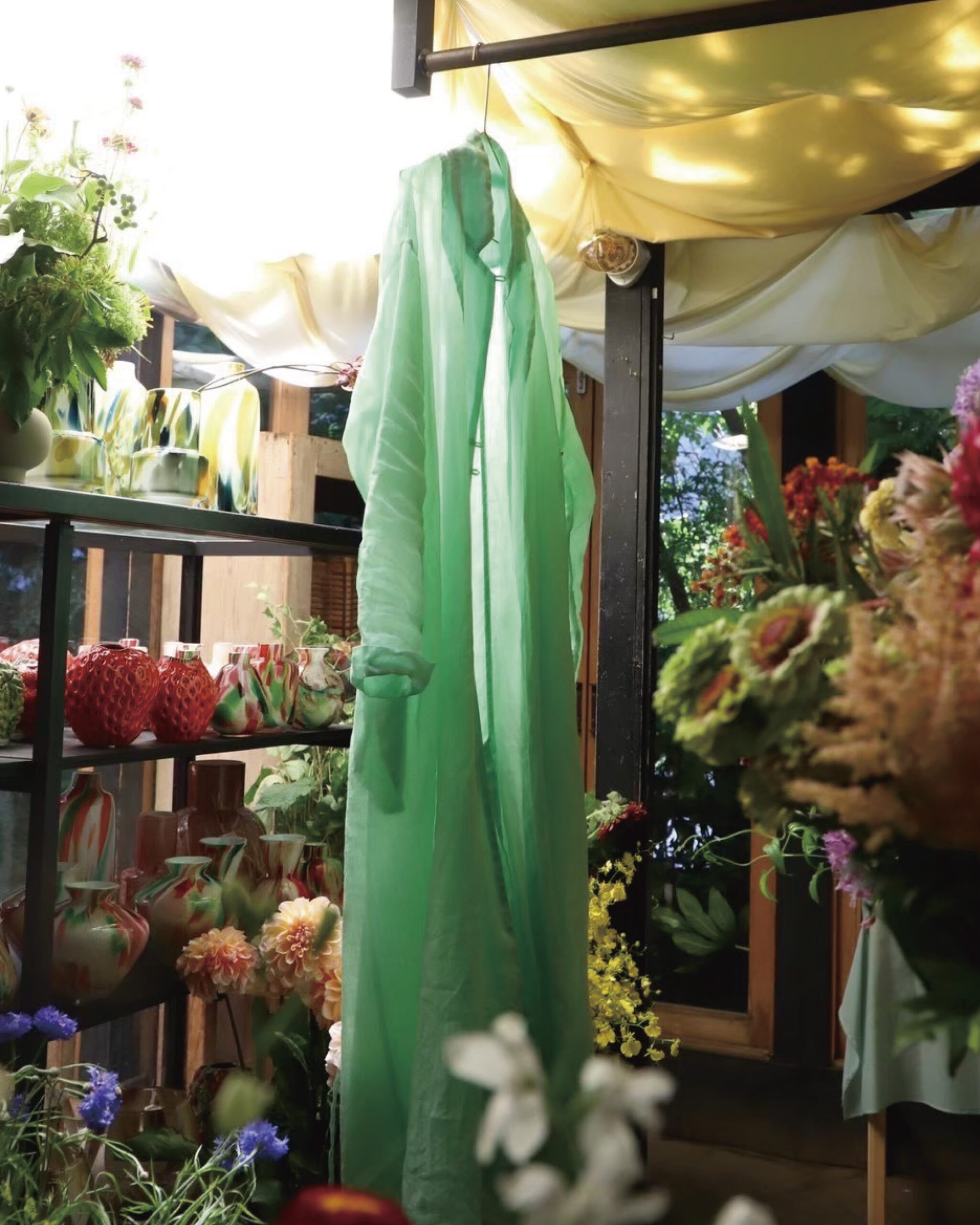
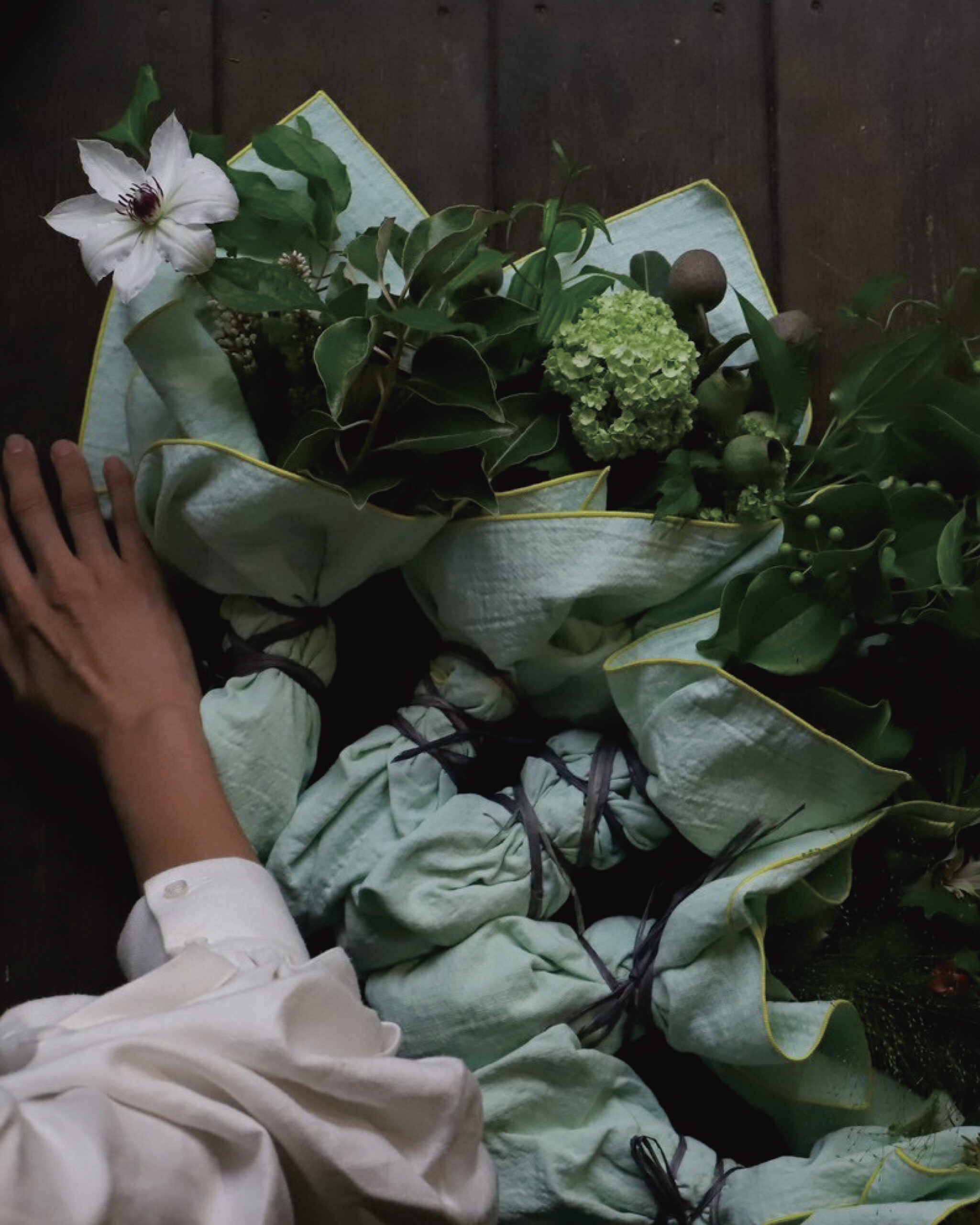
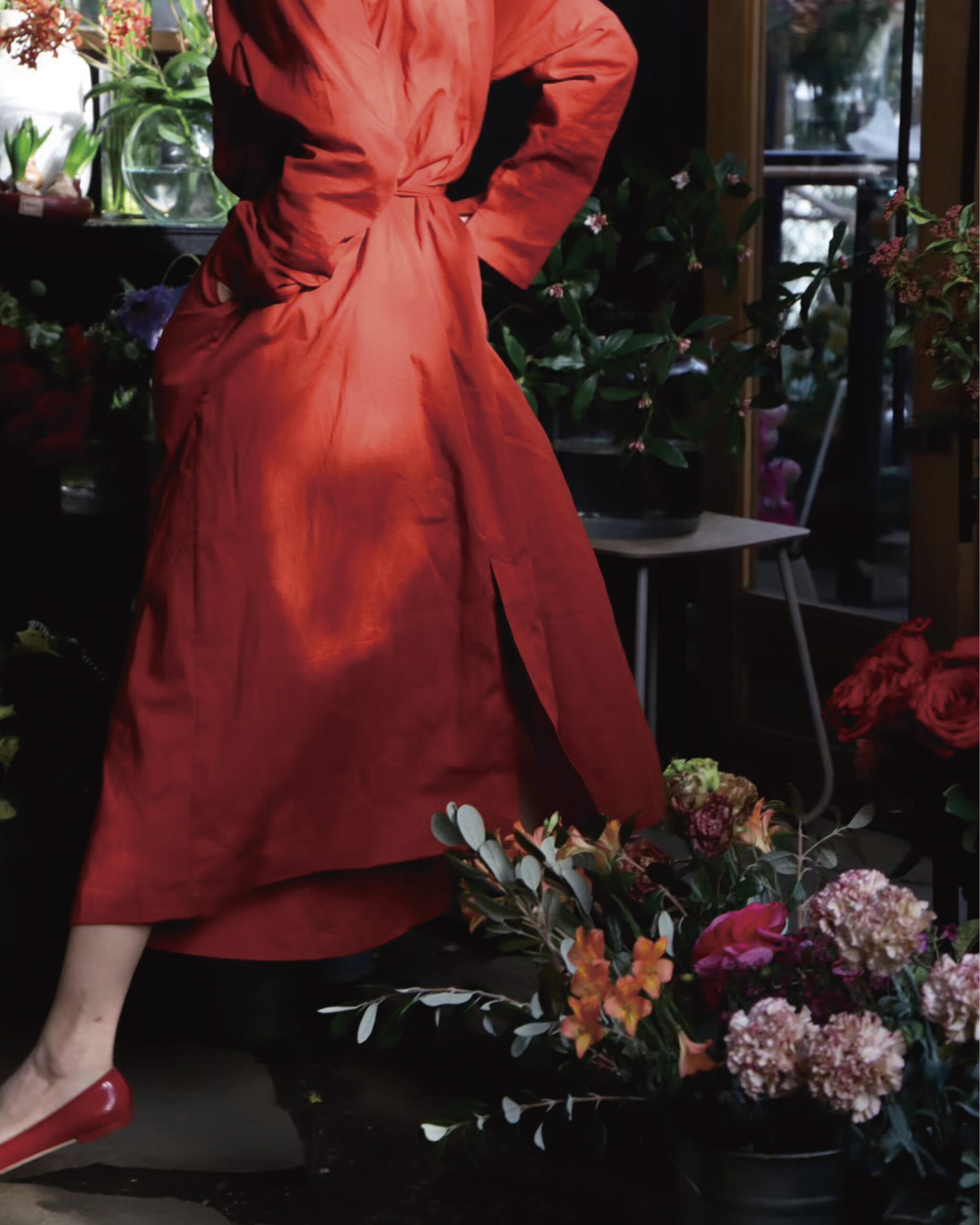
Discover a unique collection of garments made with traditional botanical dyeing techniques, using pigments extracted from repurposed flower petals. Each piece – dresses, shirts, coats – subtly shifts colour in the light, capturing the natural essence of the flowers they came from.

In addition to the pop-up, join us for a special creative workshop and live performance inspired by ikigai—the Japanese philosophy of living with purpose. 

Ikebana Workshop (13:00-14:30)

Learn the art of Ikebana, traditional Japanese flower arrangement, led by THE LITTLE SHOP OF FLOWERS TOKYO

More info & (limited) tickets

Bundle Dye Performance (15:00-17:00)

Witness a live bundle dyeing performance by Chikako Owaki, presenting the beauty and symbolism behind Japanese botanical arts.

Join us on the 28th of June at Droog cafe to celebrate transformation, creativity, and the sustainable beauty of nature.

About

The Little Shop of Flowers 

Based in Shibuya and Yutenji, Tokyo, we are a florist inspired by the Japanese themes of clothing, food, and shelter. We handle Japanese and Western flowers, plants, and gifts. Traditional Japanese life was deeply rooted in plants, living in harmony with their natural cycles long before the word “sustainability” existed. We believe that by cherishing a flower’s life from beginning to end, we can bring a positive transformation to our own daily lives. In addition to in-store sales, we offer regular floral arrangements, styling, weddings, and product development. Leftover flower materials are never discarded; instead, their pigments are extracted and revived using Japan’s unique botanical dyeing technique called Botanical Dye. This special dye captures the changing seasons in colours, which we use to create dyed cloths, bags, dresses, scarves, and more. Our seasonal gift collections are released quarterly, allowing you to enjoy the passage of flowers once again. Our shop name is a playful reference to the movie The Little Shop of Horrors.

Yukari Iki

Founder of THE LITTLE SHOP OF FLOWERS, she began her career in interior design and PR before opening her Tokyo-based floral atelier in 2010. Blending the quiet elegance of Japanese Wabana with Western blooms, her work spans floral design, styling, and workshops. She also repurposes discarded flowers into natural dyes, offering them as poetic gifts for daily life. Since April 2025, she has been based in Amsterdam, sharing the Japanese sensibility of space, simplicity, and the deep connection between flowers and everyday living.

WONDER FULL LIFE

WONDER FULL LIFE is a creative journey led by Chikako Oowaki, woven together with makers from diverse disciplines. Guided by reverence for materials, the hands that shape them, and the invisible threads of memory and history, we follow the path of traditional garments and crafts from around the world. Through quiet transformation, we breathe new life into these inheritances—shaping them into forms that gently speak to the rhythms of modern living.

Chikako Owaki

Studied spatial design at Musashino Art University. After working at ISSEY MIYAKE, she launched her own fashion brand and later founded WONDER FULL LIFE in 2016. Her work bridges fashion, craft, and art through collaborations with makers across disciplines such as dyeing, ceramics, brass, lacquer, and textiles.

store.thelittleshopofflowers.jp

Instagram: @Wonderfulllife_archives & @LittleFlowerShop

Pop-Up: YSL Beauty Light Club

De YSL Beauty Light Club verwelkomt je van donderdag 17 tot en met zaterdag 19 april, waar je de nieuwste producten van het merk kunt verkennen. Verwacht make-up touch-ups, een live dj, een ‘geurende’ dansvloer, een lipbar en nog veel meer verrassingen.

Entree via Groenburgwal 44.
Gratis toegang.

Pop-up: Charlotte Tilbury’s parfumcollectie

House of Tilbury: een uitnodiging tot betovering

Charlotte Tilbury, de onbetwiste koningin van de beautyindustrie, heeft haar allereerste parfumcollectie, Fragrance Collection of Emotions, onthuld. Geïnspireerd door haar diepe passie voor zelfexpressie en emoties, belooft deze collectie een betoverende reis door de meest bijzondere geuren.

Ontdek de wereld van Charlotte Tilbury’s nieuwe parfumcollectie tijdens de pop-up House of Tilbury @droog. Leer de geheimen achter haar geuren tijdens de aura capture en geurenmasterclass. Wil je je make-upvaardigheden perfectioneren? Doe dan mee aan de exclusieve PRO Masterclass geleid door Kirstie Murphy, een van ‘s werelds meest vooraanstaande make-upartiesten die haar expertise heeft laten zien bij evenementen zoals de Victoria Fashion Show en het Cannes Film Festival.

Pop-up House of Tilbury @droog is geopend van 7 tot en met 12 mei van 11:00-17:00 uur.

Boek nu een van onze meesterlijke Masterclasses of loop binnen bij de pop-up store bij @droog om het parfumavontuur te ervaren:

7 mei 17.00     Love Frequency + Magic Energy
8 mei 17.00     Cosmic Power + Joyphoria
11 mei 10.00   Love Frequency + Magic Energy
11 mei 13.30   Cosmic Power + Joyphoria
11 mei 17.00   Calm Bliss + More Sex
12 mei 10.00   Love Frequency + Magic Energy
12 mei 13.30   Cosmic Power + Joyphoria
12 mei 17.00   Calm Bliss + More Sex

Boek hier je Masterclass

*De masterclass duurt 2,5 uur en kost 100,-, dit bedrag is na afloop volledig inwisselbaar voor Charlotte Tilbury producten.

Pop-Up: Unpeeled by Interloop x Simply Suzette

Waste, or a canvas of creative elegance? The UNPEELED collection by Interloop x Simply Suzette takes you through the journey of transforming discarded banana stem waste and cotton into the fabric of conscious fashion.

It’s a celebration of the circular economy, utilising what is typically discarded, providing farmers with an additional income stream, and birthing fashion that’s stylish, functional, and kind hearted.

Each garment, meticulously crafted from Loomshake fabric – an 80:20 blend of cotton and banana fiber, narrates the story of our relationship with nature, communities, and the unending cycles of life.

Unpeel the layers of farm to fashion with Interloop at @droog.

About Unpeeled

“Unpeeled” is a collection presented by Interloop x Simply Suzette. Unpeeled is a fashion parable of this very world. Each of the pieces in the collection unveils a layer of our existence, telling the story our relationships — with nature, with each other, with the cycles of growth and decay, with beauty, and with change.

Free entrance.
www.interloop-pk.com

pop-up – Bas Kosters: Boek lancering “100MJ’

vrijdag 13 mei 17:00-22:00
gratis toegang
www.baskosters.com
informatie via [email protected]


Tijdens “Art is where the heart is” presenteert Bas Kosters zijn nieuwste boek “100MJ” waarvoor hij vorig jaar een crowdfunding campagne heeft georganiseerd. Het boek bevat honderd portretten gebaseerd op het beeld van Michael Jackson en de originele tekeningen zullen hier eenmalig als groep worden gepresenteerd.


pop-up – Bas Kosters: Art is where the heart is

woensdag 4 mei – zondag 29 mei
open: din-zon van 11:00-18:00
gratis toegang
www.baskosters.com 
informatie via [email protected]


Bas Kosters presenteert Art is where the heart is. De Grand Space wordt de hele maand Mei een liefdevol huis vol kunst. Een expositie met verzameld werk van kunstenaar Bas Kosters uit de periode 2017 tot 2022. Voor Bas zijn de redenen voor het maken van zijn werken het communiceren van gedachten, verhalen en emoties.
De allernieuwste projecten worden hier getoond, projecten over veiligheid, transformatie en vreugde. Ook zijn sommige werken hier slechts eenmalig te zien.

In de maand Mei wordt er in de Grand space ook gewerkt door Bas Kosters en team aan nieuwe kunstwerken, kom een kijkje nemen tijdens het werkproces.

De aanleiding van de expositie is een hele speciale serie tekeningen, het project 100MJ.
Van dit project wordt op 13 Mei zijn nieuwste boek “100MJ” gelanceerd.