small amsterdam theatre venue with stage and seating for 30 people

a small amsterdam theatre venue where things actually happen

Most venues in Amsterdam will hand you a floor plan and a catering menu. @droog hands you a programme. Film screenings, live music, theatre, comedy nights, workshops, and talks, all happening in a building from 1641 that once housed the Drapers’ Guild on the Groenburgwal canal.

If you are looking for a small Amsterdam theatre venue with a real stage, proper seating, and an audience of around 30 people, you have probably already noticed how rare that combination is. Most spaces are either too big, too corporate, or just a repurposed meeting room with a borrowed projector. the red space at @droog is none of those things.

what the red space actually is
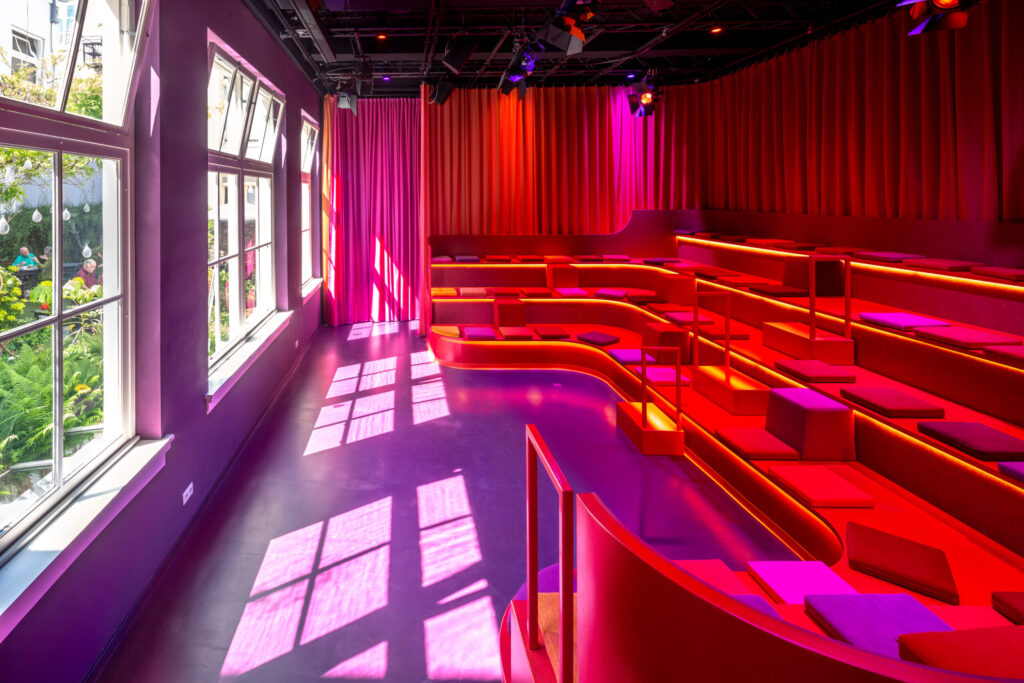
Rode ruimte (The Red Space) met de gordijnen open.

Red, orange, purple, deep pink. The theatre room at @droog is not shy about colour. It was designed as a professional performance space, and it reads that way the moment you walk in from the garden or through the grand space next door.

Inside you find a round, u-shaped tribune with movable cushions and full theatre equipment. It seats up to 80 people shoulder to shoulder. For a group of 30 to 50, this is the right room: everyone has space, sightlines are good, and the atmosphere is intimate without feeling sparse. Fewer than 20 people and the room starts to feel empty. Thirty is a number that works well here.

The space comes with the technical setup you need to actually run a show: sound, lighting, the kind of equipment that belongs in a theatre and not in a corporate meeting room. You do not need to bring your own rig.

the programme: what happens here

@droog is not just available for hire. The cultural agenda runs year-round, and the red space is central to it. Here is what that looks like in practice:

  • film screenings with curators, directors, or thematic programmes that use the theatre setting to give cinema a different weight
  • live music in a room that was built to carry sound, not fight it
  • theatre performances, both from established companies and emerging makers who want a stage that takes their work seriously
  • comedy, stand-up and otherwise, for audiences who want something more considered than a bar night
  • workshops and masterclasses, where the u-shaped tribune becomes a learning environment rather than a passive one
  • talks and panel discussions that benefit from a theatrical frame

The programme shifts constantly. That is the point. @droog does not repeat the same format week after week because the building itself resists that. The 1641 structure, the design history, the rooms that each carry a different logic, they all push against routine.

the building around the theatre

The red space sits inside a larger whole. On the ground floor, the grand space opens onto the garden with a sliding door wide enough to let the outside in. Upstairs, the white space faces old Amsterdam houses through floor-to-ceiling white windows. the library has yellow chairs, flowered wallpaper taken from a painting in the Rijksmuseum, and a long table under a flat chandelier.

At the top of the yellow hallway staircase, the cafe opens every day for lunch and coffee, with a view over the Groenburgwal canal. The blue butterfly lamp, the curved tiled bar, the inside-out cafe arrangement, this is the room that surprises people the most. It fits 70 seated and 180 standing, depending on what the evening calls for.

The point is that a visit to @droog rarely stays in one room. A screening in the red space often becomes a drink in the garden. A workshop in the white space flows into lunch at the cafe. The building encourages movement between spaces, which is not something you can design into a floor plan after the fact.

why a theatre with 30 seats is harder to find than it sounds

Amsterdam has large venues. It has concert halls, cinemas, festival sites, conference centres. What it does not have in abundance is an intimate theatre space, purpose-built, with professional equipment, in a historic building, in the city centre, for an audience of 30 to 60 people.

That gap is real. Emerging theatre makers, independent filmmakers, small music acts, workshop facilitators who want something more alive than a classroom, they all run into the same problem. The right-sized room either does not exist, or it exists in a context that strips the work of its atmosphere.

The red space at @droog exists inside a design institution with a track record that goes back decades. The Droog Design label, founded in 1993, changed how Dutch design was understood internationally. The building on Staalstraat carries that history in its walls, literally: the structure dates from 1641. The cultural programme that runs through it today is not a side activity. It is continuous with everything @droog has been.

design thinking runs through everything

The events that work best at @droog tend to have a question behind them. Not just a subject, but an angle that the format serves. A film screening that wants the audience to talk back. A music performance that uses the theatre’s shape as part of the composition. A comedy night where the intimacy of 30 people in a u-shaped tribune changes what the performer can do.

This is not an accident. @droog was built around design thinking, which means asking why before deciding how. That logic runs through the programme, through the way the spaces are used, and through the decisions about what goes on the agenda and what does not.

Sustainability sits alongside that. Local sourcing wherever possible. A building that was constructed and maintained with environmental responsibility as a real criterion, not a communication strategy. The people who come to events here tend to notice that the material decisions have been thought through. They usually cannot say exactly why. That is how it is supposed to work.

what makes 30 people the right number for a theatre event

Thirty people in the right room is not a small audience. It is a specific one. The kind where a performer knows the room, where a filmmaker can take a risk, where a workshop facilitator can read the energy and adjust. Eighty people is a crowd. Thirty is a conversation.

The red space works at that number because the tribune is round and the u-shape means everyone faces slightly toward each other, not just toward the stage. That geometry does something to the event. It is harder to be passive. It is easier to respond. The room produces participation without asking for it explicitly.

That is also why talks and panel discussions land differently here than in a standard conference layout. The audience is part of the shape of the room, not arranged against it.

request quote

faq: small amsterdam theatre venue

what is the minimum audience size for the red space?

Fewer than 20 people and the room starts to feel empty. The sweet spot is between 30 and 60 people, where the tribune reads as full without being crowded. Eighty is the maximum, seated shoulder to shoulder.

does the red space have a stage?

Yes. The space is a professional theatre with a stage, sound system, and lighting equipment built into the room. It is not a room that has been adapted. It was designed for performance.

what kinds of events run on the @droog cultural programme?

Film screenings, live music, theatre performances, comedy nights, workshops, masterclasses, and talks. The programme is varied and changes regularly. @droog does not run the same format on repeat.

is it possible to attend an event as an individual visitor?

Yes. The cultural programme at @droog is open to individual visitors. The cafe on the top floor is open to the public every day for lunch and coffee, and the gallery at the entrance is free to enter. Events are listed on the programme page.

where exactly is @droog in amsterdam?

On Staalstraat, in the city centre, on the Groenburgwal canal. The building dates from 1641 and housed the Drapers’ Guild. It is in the old centre, within walking distance of the major landmarks, but on a quieter canal street rather than a main tourist route.

can the red space be combined with other rooms for a longer event?
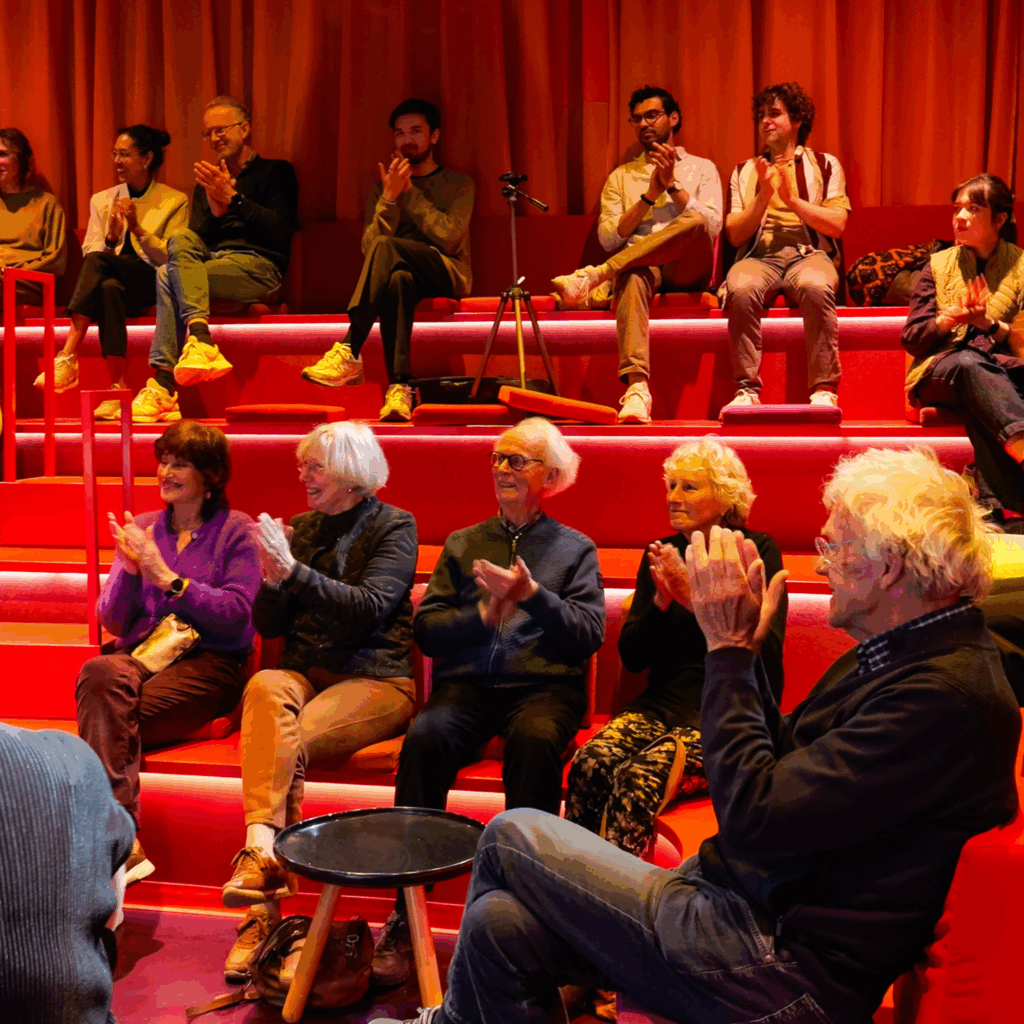
event in de red space met bezoekers

Yes. The red space connects directly to the garden and the grand space on the ground floor. Events that need a second room for a break, a drink, or a dinner can extend into the garden or into other spaces in the building. The programme often works this way.

is the building accessible?

The ground floor spaces, including the red space and the grand space, are accessible. Upstairs spaces involve a staircase. If accessibility is a requirement for your visit, get in touch and we will tell you exactly what is possible.

what is the connection between @droog and droog design?

Droog Design was founded in 1993 and became one of the most recognised names in Dutch design internationally. @droog is the physical manifestation of that project: a building, a programme, a cafe, spaces and a gallery that carry the same design thinking into how events are made and how the building is run.

come and see what’s on

The programme is the best argument. A building from 1641, a theatre room in red and purple, a cafe with a canal view, and an agenda that is genuinely different from what you find anywhere else in Amsterdam.

Thirty people in the red space. That is the number. It works.

Check the programme, or tell us what you have in mind.
request quote

affordable small theatre rental amsterdam under 100 seats with good acoustics

a small theatre in amsterdam, built for what actually happens on stage

Finding a theatre space in Amsterdam that seats under 100 people, sounds right, and does not feel like a hotel ballroom with curtains is harder than it should be. Most venues offer a room. @droog offers a stage, a tribune, and a programme that uses both.

The building dates from 1641. It started as the headquarters of the Amsterdam Drapers’ Guild. Today it holds five event spaces, a canal-side restaurant, a gallery, and a cultural agenda that runs through the year. Film screenings, live music, stand-up comedy, theatre performances, workshops, and talks. Not as an afterthought. As a reason to come.

the red space: where the programme lives

event in de red space met bezoekers

The room most people are looking for is the red space. Completely red themed, in shades of red, pink, orange, and purple. It is accessible through the grand space or directly from the garden. Inside you find a professional theatre setup with all the technical equipment needed to run a real show.

The tribune is round and U-shaped, with movable cushions. It seats up to 80 people shoulder to shoulder. At 50 to 60, there is breathing room. Under 20, the space starts to feel too empty for most formats. The sweet spot is 30 to 70 people, which is exactly the scale that works for independent theatre, intimate concerts, comedy nights, and film followed by conversation.

Acoustics matter here. The space was not retrofitted for performance. It was designed with it in mind. That changes what a performer can do on stage, and what an audience takes home.

what actually happens here

The cultural programme at @droog covers a lot of ground without losing focus. A few things that have taken place in the red space and across the building:

  • Film screenings with director Q&A sessions
  • Live music, from solo acoustic sets to small ensembles
  • Stand-up comedy nights
  • Theatre productions, both Dutch and international
  • Workshops on design, craft, sustainability, and creative process
  • Talks and panel discussions on culture, business, and ideas
  • PhD promotions and academic presentations
  • Book launches

The format does not have to be one thing. An evening can begin with a performance in the red space, move to dinner in the cafe restaurant, and end with a conversation in the garden. The building supports the whole arc of an event, not just the main act.

the building as context

Context matters for cultural programming. A performance in a generic conference room is a different experience than the same performance in a building with 400 years of history, Droog Design objects on every floor, and a courtyard garden in the middle of Amsterdam’s city centre.

@droog is rooted in design thinking. The approach that Renny Ramakers and Gijs Bakker brought to Droog Design in 1993, the idea that everyday objects can carry new meaning when you look at them differently, is still present in how the building is run. The spaces are not decorated. They are considered. That consideration shapes what happens in them.

Sustainability is part of it too. Local sourcing, responsible materials, and a building that was not gutted but restored. What you see is largely what was there. That honesty in the space tends to create honesty in the events that happen inside it.

other spaces that work for cultural events

The red space is the obvious choice for seated performance. But it is not the only option.

The white space is upstairs, with large white windows looking out over old Amsterdam rooftops and the garden below. It seats 70 in theatre setting, or 50 with tables. Good light, flexible layout, and a calm atmosphere that works well for workshops, readings, film, and smaller concerts. A tiny concert here sounds exactly as intimate as it should.

The grand space on the ground floor connects directly to the garden and the red space. A sliding door opens the interior to the outside. For standing events, it holds 160 people. For a programme that needs movement between spaces, it functions as the connector. Talks, panels, and networking moments work well here before or after a performance next door.

The cafe at the top of the yellow staircase is a different kind of room entirely. The blue butterfly lamp, the tiled bar, the fireplace. It opens daily for lunch and coffee. For events, it seats 70 and holds 180 standing. The view over the Groenburgwal canal is part of what makes an evening here feel different from an evening anywhere else in the city.

The library upstairs, with flowered wallpaper based on a painting in the Rijksmuseum and yellow chairs around a long table, fits 10. For small masterclasses, intimate dinners after a performance, or a private workshop, it works exactly because it is the right size and not one seat larger.

Rode ruimte (The Red Space) met de gordijnen open.

who comes to @droog for cultural programming

The people who book the cultural programme are not all event professionals. Many are artists, musicians, directors, and organisers looking for a space that brings its own identity to the work. The building does not disappear behind the event. It participates in it.

Independent theatre makers find in the red space a venue that takes their work seriously without requiring a 300-seat venue budget. Musicians find acoustics that do not fight them. Film makers find an audience room that creates the right intimacy for a screening and conversation format. Comedy nights find a room where the U-shaped tribune means no one is sitting too far to the side.

Corporate teams looking to add a cultural dimension to a day programme also find this useful. A morning of workshops in the white space, lunch in the cafe, an afternoon performance in the red space. The building holds the whole day without anyone needing to move to a second location.

frequently asked questions

what is the maximum capacity of the theatre space at @droog?

The red space seats up to 80 people on its U-shaped tribune. For most performances and cultural events, 50 to 70 people is the range where the space works best. Below 20 it can feel sparse; above 70 it is full but manageable.

does @droog have good acoustics for live music or theatre?

Yes. The red space was designed with performance in mind, not adapted afterward. The room handles spoken word, acoustic music, and amplified sound well. For specific technical requirements, the space has professional equipment included.

what kind of cultural events take place at @droog?

Film screenings, live music, theatre productions, comedy nights, workshops, talks, panel discussions, book launches, PhD promotions, and more. The programme is mixed and runs throughout the year. Individual organisers also bring their own events to the spaces.

can i combine multiple spaces for a cultural evening?

Yes. The building holds five spaces across multiple floors. A typical evening might use the red space for performance, the grand space or garden for reception, and the cafe for dinner. There is no extra charge for movement between spaces; it is how the building is meant to be used.

is @droog suitable for independent artists and smaller productions?

It is. The scale of the red space, under 100 seats, makes it accessible for productions that do not need or want a large commercial venue. The design environment and the history of the building add something to the work that a generic space cannot offer.

how do i find out about the current cultural programme?

The programme runs through the year and covers film, music, comedy, workshop formats, and more. Contact the team or check the current agenda to see what is coming up. If you have your own event in mind, the spaces are available for external bookings alongside the in-house programme.

where is @droog located in amsterdam?

On the Groenburgwal canal in the centre of Amsterdam, inside a building from 1641 that was originally the home of the Drapers’ Guild. Central by foot, by bike, and by public transport.

does the venue support sustainability?

Yes. Sustainability is core to how @droog operates. Local sourcing, responsible materials, and a building that was restored rather than reconstructed. The kitchen sources locally. The spaces were built with environmental responsibility in mind. That is not a marketing note; it is how decisions are made here.

what sets this apart from other small theatres in amsterdam

Amsterdam has no shortage of performance spaces. What is harder to find is a space that sits under 100 seats, has professional acoustic and technical infrastructure, carries its own design identity, and connects directly to a restaurant and garden within the same building.

The building from 1641 is not a backdrop. It is part of what makes an evening here feel different from the same evening somewhere else. The Droog Design thinking behind every object and material choice creates a coherent environment that performers and audiences notice, even when they cannot name exactly what they are noticing.

The programme runs because the spaces are good enough to host it. Film nights, comedy, theatre, music, workshops. Come for one, stay for the building.

If you are thinking about bringing a cultural event here, or curious about what is already on the programme, the team can help you figure out which space fits the work and which evening fits the calendar.

historic cosy theatre amsterdam for corporate event with catering

a theatre in amsterdam that actually has something to say

Most corporate venues look like airports. Clean, neutral, forgettable. the red space at @droog is none of those things. It is a fully equipped theatre, round and red and built into a canal house from 1641, and it has hosted comedy nights, film screenings, live music, and philosophical debates, sometimes in the same week.

This is not a rental page. It is an invitation to understand what kind of place @droog actually is, and why the combination of a historic building, a working theatre, and a serious kitchen changes what a corporate event can feel like.

the building first

The building on the Groenburgwal in Amsterdam was constructed in 1641 as the home of the Amsterdam Drapers’ Guild. Four centuries of use have left their mark, not as decay but as character. The staircase is yellow. The ceilings are tall. The rooms lead into each other in a way that no modern conference centre would ever permit, because modern conference centres are designed for efficiency, not for encounters.

@droog moved in and kept the bones. The design that was added on top, furniture by Tejo Remy, a chandelier that sits flat above a long table, a bar tiled in curved white ceramic, a butterfly lamp in blue, is not decoration. It is a position. Every object in this building is here because someone made a deliberate decision about it. That is a different thing from a venue that bought a job lot of Eames replicas and called it design-led.

When your team walks in here, they notice. That noticing is where the event starts.

the red space: what a theatre can be

event in de red space met bezoekers

The theatre at @droog is round, red, and unexpected. The tribune is a u-shape with movable cushions in deep reds, pinks, oranges, and purples. It seats up to 80 people, though 50 to 60 gives everyone room to breathe. The lighting, sound, and technical setup are professional grade, built for performance, not just presentations.

The space is used for the @droog cultural programme: film screenings, stand-up comedy, music performances, theatre productions, workshops, and talks. It is not a meeting room that happens to have a stage. It is a theatre that also works for your event, and that distinction matters. The atmosphere of a real performance space does something to an audience that a lecture hall cannot.

For a corporate event, that means your keynote speaker stands in a room that takes the act of speaking seriously. Your panel discussion feels less like a slide deck and more like a conversation worth having. Your product launch lands differently when the room is built for drama.

The red space connects directly to the grand space on the ground floor and to the garden. Open the sliding door and the event expands. Close it and the theatre holds its own world.

the cultural programme at @droog

@droog runs a year-round agenda of public and private cultural events. Film. Music. Theatre. Comedy. Workshops. Lectures. These are not occasional add-ons. They are how the building stays alive between Monday morning and Friday afternoon.

That programme is the reason the spaces feel different from conventional event venues. The red space is tuned by regular use. The acoustics are tested weekly. The crew knows the room. When you bring your corporate event here, you inherit that infrastructure and that institutional knowledge.

The cultural agenda also sets a tone. @droog is not neutral. It has a point of view about design, about ideas, about the kind of conversations worth having. If your event wants to borrow some of that credibility, it can. If your event wants to challenge it, that works too. The space can hold both.

catering that is part of the thinking

The kitchen at @droog is at the top of the yellow staircase, inside the cafe restaurant that opens to the public every day for lunch. The view is over the Groenburgwal canal. The room has a fireplace, a curved white tiled bar, and a blue butterfly lamp that people photograph every time they see it. It holds up to 180 standing or 70 seated, depending on how the tables are arranged.

The catering is not outsourced to a separate operation. It comes from the same kitchen that serves lunch to gallery visitors and neighbourhood regulars. Local sourcing is not a marketing claim here. It is how the kitchen runs. Sustainability and proximity to the source are core to how @droog operates, and the food reflects that.

For a corporate event with catering, this means a dinner in a room that is already extraordinary, served by a team that knows the space. It means a lunch break that people do not spend staring at their phones, because the room gives them something to look at. It means coffee at the bar that was designed by someone who thought carefully about what a bar should look like.

The cafe can anchor a programme on its own, or connect to the other rooms for a full day. Theatre in the red space, break-out sessions in the white space, dinner upstairs in the cafe. The building is a labyrinth. That is a feature, not a problem.

request quote

the other spaces: when one room is not enough

Events at @droog are not limited to a single room. The building has five spaces, each with a different character, all connected by the same design logic.

The grand space seats 90 or holds 160 standing, with a stage, beamer, and sound system. It opens to the garden through a sliding door. Pop-up stores have been set up here. Charlotte Tilbury did it. Shiseido did it. Conferences, plenary sessions, and networking drinks work equally well in the same room.

The white space is upstairs. Large white windows look out over the old Amsterdam rooftops and into the garden. It seats 70 in theatre setting or 50 with tables. Trainings, workshops, book launches, and small concerts all fit. A PhD promotion happened here once. So did a wedding.

the library is the meeting room. Ten people around a long table, yellow chairs, flowered wallpaper taken from a painting in the Rijksmuseum, a flat chandelier overhead, windows toward the garden. It is small enough to be intimate and designed well enough to make a ten-person meeting feel like something worth attending. It also works as a private dining room.

Rode ruimte (The Red Space) met de gordijnen open.

These rooms can run simultaneously or sequentially. Break-out groups, recording sessions, live-streams, symposiums, training days, celebrations. The programme adapts. The building does not need to.

why design thinking changes the event

@droog was founded in 1993 by Renny Ramakers and Gijs Bakker. The name was a statement: droog means dry in Dutch, and dry humour, dry wit, and precision were the founding values of the design label they built. Those values are still in the walls.

Design thinking as a practice asks the same question the building asks: why does this have to be this way? A conference in a hotel ballroom is this way because that is how conferences are done. A day at @droog interrupts that assumption. The room itself asks the question before you do.

That is not incidental. It is the point. When the goal of a corporate event is to shift how a team thinks about a problem, the environment matters as much as the agenda. A room that was designed with deliberate reasoning, where every object answers a why, gives the people in it permission to ask the same question about their work.

Guests leave differently. That is the ambition. Not that they had a good lunch or that the AV worked without a glitch. Those things are expected. The ambition is that something shifted.

what the programme looks like in practice

A morning session in the red space for a keynote and panel discussion, with the theatre crew running the technical side. A lunch in the cafe restaurant, local produce, canal view, fireplace on in winter. An afternoon workshop in the white space while a smaller group uses the library for a closed working session. A drinks reception in the grand space with the garden open, if the weather cooperates.

That is one version. There are others. A single evening in the theatre for a company screening, with drinks in the grand space before and a dinner in the cafe after. A full day training in the white space with catering brought up from the kitchen below. A comedy night for a team that has been through a difficult quarter and needs to laugh at something that is not a PowerPoint.

The building is flexible. The design is not negotiable. Both of those things are true at once, and that combination is what makes @droog different from a venue that will do anything you ask as long as you sign the contract.

frequently asked questions

is the red space only for theatre performances?
No. It is built for performance but it works for any event that benefits from a proper stage, good acoustics, and a room that takes the audience seriously. Panel discussions, keynotes, screenings, workshops, and talks all work well in this space.

how many people does @droog accommodate in total?
Across all spaces, the building holds several hundred people for a mixed programme. The grand space alone holds 160 standing. The cafe restaurant holds 180 standing. For seated events the numbers vary by room: 80 in the red space, 70 in the white space and the cafe, 10 in the library, 90 in the grand space.

is catering included or do we bring our own?
@droog has its own kitchen and cafe restaurant. Catering is provided in-house, with local sourcing as a priority. You do not need to arrange external catering. Tell the team what the event needs and they will build a programme around it.

can we combine the cultural programme with a private corporate event?
Yes. @droog runs a public cultural agenda of film, music, comedy, theatre, and workshops. Corporate events can be designed to include elements of that programme, whether a curated screening, a performance, or a workshop led by someone from the creative community around @droog. This is not a standard add-on. It is a conversation. Tell the team what you are trying to achieve and they will suggest what makes sense.

is the building accessible?
The building is a 1641 canal house. It has history, which means it also has stairs. If accessibility is a requirement for your group, mention it early in the conversation so the team can advise on the best configuration of spaces.

what is the neighbourhood like?
@droog is on the Groenburgwal, one of the quieter canals in the centre of Amsterdam. The gallery is at street level and open to the public. The Zuiderkerk is nearby. It is a working part of the city, not a tourist corridor, which is part of the reason it feels like Amsterdam rather than a version of Amsterdam designed for visitors.

do you host events on evenings and weekends?
Yes. The cultural programme runs regularly in the evenings. Corporate events can be scheduled across the week and at weekends. The calendar fills up, so the earlier the conversation starts, the more room there is to design something properly.

what makes @droog different from other historic venues in amsterdam?
Most historic venues in Amsterdam preserve the building and rent the rooms. @droog uses the building as a live argument for a way of thinking. The design, the programme, the kitchen, and the events team are all part of the same position. The building is from 1641. The thinking is current. That gap is where the interesting things happen.

a note on sustainability

Sustainability at @droog is not a policy document. It is how decisions get made. The building itself reflects decades of considered choices about materials, sourcing, and construction. The kitchen sources locally. The objects in the rooms are selected, not accumulated. Nothing is here by default.

For a corporate event, that means the venue itself is already aligned with a values position that most organisations spend considerable effort trying to communicate. The building does some of that work before the agenda starts.

come and see it

A floor plan does not explain the yellow staircase. A capacity table does not explain what the red space feels like when the lights are right and there are 60 people in the tribune. The library makes no sense on paper and complete sense the moment you sit down at the table.

The best way to understand whether @droog is right for your event is to walk through it. Tell the team what you have in mind. They will show you what the building can do with it.

request quote

cosy black box theatre amsterdam city centre for private event

a cosy black box theatre in amsterdam city centre, and what happens inside it

Not every private event needs a glass-walled conference room or a hotel ballroom with a drop ceiling. Some things demand something stranger. A space that already has a point of view before your guests walk in. A room that tells them, without any words, that what is about to happen here is not the usual.

The red space at @droog is that room. It is completely red. Not accent-red, not red-as-a-nod. Red cushions, red walls, pink and orange and deep purple folded into one another across a round, U-shaped tribune that wraps around a central stage. It was designed to be a black box theatre in everything but colour. The blackout capacity is total. The acoustics are professional. The equipment is already there.

It seats 80, shoulder to shoulder. Fifty to sixty people have a little more room to breathe. Below twenty, the space starts to feel like a rehearsal rather than an event. That is useful to know before you plan.

@droog has been running a cultural programme inside this room for years. Film, music, theatre, comedy, workshops, talks. Not as a side project. As the point.


what the cultural programme actually looks like

The programme at @droog is built around the idea that a venue has a responsibility to its neighbourhood and its field. Design thinking is the foundation, but that does not mean every evening is a lecture about chairs.

Film nights happen in the red space. The room goes dark, the projection fills the back wall, and the city outside disappears entirely. Amsterdam has cinemas. This is not a cinema. It is a room where thirty people watch something together and then stay to argue about it over a drink in the café upstairs.

Live music here tends toward the intimate and the unexpected. A string quartet, an electronic composer performing alongside a visual artist, a jazz session that started as a workshop. The U-shaped tribune means every seat faces the same direction. Nobody is behind a column.

Comedy works in this room for a reason that is less obvious than it sounds. The round seating puts the audience close. Close audiences laugh differently. Comedians who have performed here tend to notice it within the first two minutes.

Theatre, spoken word, lectures with a performance element, and hybrid formats that do not have a clean category yet. Those happen here too. The space was designed by people who believed that form should follow content, so the content here has a wide brief.

Workshops in the red space tend to be physical or participatory. The cushions on the tribune are movable. The floor is usable. A workshop on body language, a drawing session, a guided design sprint with a cultural framing. The room adapts.


the building around it

The red space does not exist in isolation. It is accessible via the grand space on the ground floor, or directly from the garden. That matters for events that use more than one room, which is most of the ones that end up being memorable.

The building itself dates to 1641. It housed the Drapers’ Guild. The current configuration, with its sliding doors and garden courtyard and interconnected rooms across three floors, is the result of decades of decisions made by designers who treated the building as a project rather than a property.

Droog Design, the movement that gave this place its name and its logic, was never a movement that explained itself too much. It made things that were recognisably ordinary and quietly strange at the same time. A chest of drawers assembled from found drawers. A lamp made from used milk bottles. The building operates on the same principle. You can have a meeting here and not fully understand why it went better than the last one.

Sustainability is structural here, not a talking point. Local sourcing, considered construction, materials with a traceable history. That is true of the food that comes out of the kitchen in the café upstairs, and it is true of the decisions made about the programme.


private events inside a cultural space: how that works

The cultural programme at @droog is public. The red space is also available for private events that fit within the spirit of what happens here. That is a meaningful distinction.

A private film screening for a company. A product launch with a performance element. A team workshop that begins with a comedy warm-up and ends with a structured creative session. A book launch with a reading and a conversation. A corporate anniversary that does not feel like a corporate anniversary.

These are the kinds of events that work here. An awards dinner for four hundred people does not. Not because the building could not technically host it, but because the building would be indifferent to it, and that indifference shows.

The red space fits up to 80 for a performance format. It connects to the grand space, which fits 160 standing or 90 seated, for the parts of your event that need more room. The white space upstairs fits 70 in theatre setting and has large windows looking out onto the old Amsterdam houses and the garden below. The library, also upstairs, seats 10 around a long table under a flat chandelier, with flowered wallpaper based on a painting in the Rijksmuseum. The café restaurant at the top of the yellow hallway staircase fits 180 standing, 70 seated, and overlooks the Groenburgwal canal.

Events here often move between rooms. That movement is part of what makes them work.

request quote


why amsterdam city centre, and why this building specifically

The address is in the heart of Amsterdam’s old city. The Groenburgwal is a canal you have probably photographed without knowing its name. The building is a few minutes’ walk from the Waterlooplein metro and close enough to Central Station that guests arriving from outside the city do not need to plan around it.

There are other black box theatres in Amsterdam. There are other venues in the city centre. There are very few places where both of those things are true simultaneously, and fewer still where the building has been making considered decisions about design and culture for more than thirty years.

That history is not decorative. It is the reason the red space feels like it does when you walk in. The design decisions made by Renny Ramakers and Gijs Bakker in the early 1990s, when Droog Design first articulated its approach to everyday objects and their meaning, echo through the room. Not literally. But the principle that things should be honest about what they are, and interesting because of that honesty rather than despite it, is present in the space.

A black box theatre in Amsterdam city centre for a private event is a specific thing to look for. The red space at @droog is a specific answer.


what to expect when you plan an event here

The team at @droog approaches events the way the building approaches design. With a question about purpose before a conversation about logistics. What is this event for? What should the people who attend it feel when they leave? What would make this different from the last time your organisation gathered people in a room?

Those are not rhetorical questions. They are the starting point for working out which combination of spaces, which programme elements, which catering setup, and which sequencing of the evening will actually serve the event.

The kitchen at the café sources locally. The food is seasonal. Lunch is worth sitting down for, and dinner in the library or the café has been the part of more than a few events that guests remember most clearly.

Technical equipment in the red space includes full theatre lighting and a professional sound system. The projection is built in. The tribune cushions are movable. The room can be reconfigured within the constraints of the U-shape, which is most of the constraints you will encounter.

Events are not limited to one space. If there is a need for more rooms, you add more rooms. Breakouts, dinners, training sessions, symposiums, live streams, recording sessions, celebrations. The building has a logic to it, and events that follow that logic tend to be better than events that fight it.


frequently asked questions about the red space and @droog’s cultural programme

Rode ruimte (The Red Space) met de gordijnen open.

how many people does the red space hold?

Up to 80 on the U-shaped tribune, shoulder to shoulder. Fifty to sixty people is comfortable. The space starts to feel underused with fewer than 20. For standing formats or mixed use, the configuration can be discussed based on the specific event.

is the red space only for theatre and performance events?

event in de red space met bezoekers

No. Film screenings, workshops, panel discussions, comedy nights, music performances, and hybrid formats all happen here. The room is equipped for a wide range of formats. The common thread is that the event should have a reason to be in a theatre, rather than a meeting room.

can i combine the red space with other rooms at @droog?

Yes. The red space is accessible via the grand space and the garden. Events regularly move between two, three or more rooms. Dinner in the café, programme in the red space, breakout in the library: that is a typical multi-room structure for a full evening event.

does @droog have its own cultural programme, or is the space only available for private events?

Both. @droog runs its own programme of film, music, theatre, comedy and workshops throughout the year. The space is also available for private events that fit within the cultural and design-led spirit of the building. The public programme and the private events coexist.

where is @droog located in amsterdam?

On the Groenburgwal canal in Amsterdam’s historic city centre. Close to Waterlooplein metro and within walking distance of Central Station. The building dates to 1641.

is catering included?

The café restaurant at @droog provides food and drink for events. The kitchen sources locally and seasonally. Catering arrangements are discussed as part of the event planning process.

what makes @droog different from other event venues in amsterdam city centre?

The building has a design philosophy. Droog Design’s approach to objects and spaces, developed by Renny Ramakers and Gijs Bakker from 1993 onwards, is present in every room. The events that work best here are the ones that have a purpose beyond gathering people in a room. That is not a marketing position. It is a practical observation about what the space does well.

is the red space accessible for guests with mobility considerations?

The red space is accessible via the grand space on the ground floor. For specific accessibility requirements, it is worth discussing these during the planning process so the team can give accurate information based on your group’s needs.


one more thing worth knowing

The red space at @droog has held a theatre performance and a corporate workshop in the same week. It has been a cinema for one evening and a comedy club for the next. It has seated philosophers and fashion brands and pharmaceutical researchers and secondary school students watching their first live performance.

The room does not change for any of them. The room is the room. What changes is the content inside it, and the people who made the decision to put that content in a place that already has something to say.

If you are looking for a cosy black box theatre in Amsterdam city centre for a private event, film night, music performance, comedy evening, workshop or anything else that benefits from a room with a point of view, this is a straightforward suggestion.

Tell us what you have in mind.

request quote

small intimate theatre venue amsterdam for 50 people with bar

a small intimate theatre in amsterdam, with a bar, for 50 people

Not every show needs a grand stage. Some of the best ones happen in a red room, shoulder to shoulder, with nowhere to hide and no distance between the performer and the audience. That is exactly what @droog offers, not as a rental listing, but as a living cultural programme.

@droog is a building from 1641 on the Staalstraat in Amsterdam. It used to house the Drapers’ Guild. Now it houses the red space, one of the most unusual intimate theatre rooms in the city, a cafe restaurant with a view over the Groenburgwal canal, and a programme of film screenings, live music, theatre, workshops, comedy nights and more. No two weeks look the same.

the red space: 50 people, completely red, professionally equipped

event in de red space met bezoekers

The room is red. Not subtly, not as an accent. Think deep red, coral pink, burnt orange, dusty purple. The tribune is round, u-shaped, with movable cushions. It seats up to 80 people if you pack them in, but the sweet spot is 50 to 60. At that number, everyone has room to breathe, to shift, to lean over and whisper something to the person next to them. That is the kind of intimacy most venues can only describe. Here it is a structural fact.

The red space has a professional theatre setup: lighting, sound, the kind of technical backbone that lets a director, musician or comedian walk in and actually work. It is accessible through the grand space or through the garden, which means arrivals feel like an event in themselves.

When the show is over, or before it starts, the cafe is upstairs.

the cafe: where the evening continues

At the top of the yellow hallway staircase, the cafe opens every day for lunch and coffee. On programme nights, it becomes something else entirely. A place to gather before the show, to decompress after, to keep the conversation going. The room has a fireplace, a curved white tiled bar, a blue butterfly lamp designed by Droog, and tall windows over the canal. It seats 70 and fits 180 standing. It is, by most accounts, the most beautiful room in the building.

The combination of an intimate theatre and a bar in the same building is rarer than it sounds. Most small venues in Amsterdam either have the room or the bar. @droog has both, in a building that was already old when Rembrandt was painting.

what kind of programme happens here

The cultural agenda at @droog is built around one idea: that design thinking and creative experience belong together. That does not mean every event is about design. It means every event is chosen with intention.

Film screenings happen in the red space with the lights low and the cushions rearranged. Live music works because the acoustics in a round, upholstered room are forgiving and warm. Comedy works because 50 people laughing together in a small red theatre is a completely different experience than 500 people in a black box. Theatre performances, workshops, book launches, artist talks, PhD promotions, a small festival, a one-night-only showcase: all of these have happened here, and all of them have felt like they belonged.

The programme changes. The principle does not.

why 50 people is the right number

Fifty people in the red space is not a compromise. It is the design. At that scale, a performer can see the audience. The audience can see each other. The energy in the room is shared rather than broadcast. This is why intimate theatre works differently from large-scale performance: the stakes feel higher for everyone involved, including the people watching.

Research into audience experience consistently shows that smaller venues produce stronger emotional responses and better retention of the material, whether that material is a comedy set, a film, or a lecture from a designer. The reason is proximity. You cannot check your phone when the performer is five metres away and the room seats 50.

@droog is built around that principle. The red space was not designed to scale. It was designed to concentrate.

Rode ruimte (The Red Space) met de gordijnen open.

the building as part of the experience

Arriving at @droog on the Staalstraat is part of the programme. The building announces itself without trying: a 17th-century facade, a gallery at the entrance, a staircase that takes you past objects and furniture you were not expecting to see. By the time you reach the red space or the cafe, you are already in a different mode of attention. That is not accidental. It is the Droog design philosophy made physical.

Sustainability is embedded in the building itself. Materials were selected with environmental responsibility in mind. Local sourcing is standard practice. The food in the cafe follows the same logic. None of this is written on a sign. It is just the way the building was put together.

The other rooms contribute to the whole. The grand space on the ground floor opens onto the garden via a large sliding door. The white space upstairs looks out over the Amsterdam roofline. The library has yellow chairs, a long table, and wallpaper based on a painting from the Rijksmuseum. Each room is its own thing. Together they make a building that does not behave like a venue.

want to be part of the programme?

If you are a filmmaker, musician, comedian, theatre maker, educator, or anyone else with something to show to 50 people in a red room with a bar upstairs, @droog is interested in hearing what you have in mind. The programme is built through conversation, not through a form. Tell us what you are making and why it belongs here.

request quote

frequently asked questions

how many people does the intimate theatre at @droog seat?

The red space seats up to 80 people on its round u-shaped tribune, but works best at 50 to 60. Below 20 people, the space starts to feel empty. At 50, it is exactly right.

is there a bar at @droog?

Yes. The cafe restaurant is on the upper floor and is available before and after events. It has a full bar, a kitchen, a fireplace, and a view over the Groenburgwal canal. It seats 70 and fits 180 standing.

what kind of events does @droog programme?

Film screenings, live music, comedy, theatre, workshops, artist talks, book launches and more. The programme is built around design thinking and creative practice, which means the events are chosen for a reason, not filled in by category.

where is @droog located?

@droog is on the Staalstraat in Amsterdam, in a building from 1641 that used to house the Drapers’ Guild. It is in the centre of the city, close to the Waterlooplein and the Rembrandtplein.

can the red space be combined with other rooms?

Yes. The red space connects to the grand space and the garden. For events that need a reception area, a breakout space, or a separate dinner room, the building has several options. Everything is available to discuss.

is @droog only for large organisations?

Not at all. The programme includes independent makers, small companies, artists and researchers. If you have something worth showing to 50 people, the scale of your organisation is not the point.

how do I propose a programme idea to @droog?

Start with what you have in mind. Use the button below to get in touch. The team will respond to understand what you are making and whether it fits the programme. There is no fixed template for what belongs here.

50 people, one red room, one bar upstairs

That is the short version. The longer version is that @droog has been running a cultural programme in a 1641 building in Amsterdam for years, with a theatre room that concentrates attention rather than dilutes it, and a cafe that turns the end of a show into the beginning of a conversation. If that sounds like the right setting for what you are making, the next step is simple.

request quote

the best small cosy theatre venues in amsterdam

the best small cosy theatre venues in amsterdam

Amsterdam has no shortage of cultural venues. But finding one that is small, cosy, and actually worth the visit? That is a different story. Whether you are looking for an intimate theatre experience, a live music set in a room that feels like someone’s living room, or a comedy night where you can almost touch the stage, the city has a handful of hidden gems that deliver exactly that.

This guide walks you through what makes a great small theatre venue in Amsterdam, and why @droog, tucked away on the Staalstraat in the city centre, belongs on that shortlist.

what makes a small theatre venue special?

There is something about a small venue that a big theatre can never replicate. When the room holds 50 to 80 people, the energy between performer and audience becomes something entirely different. You feel the tension. You feel the laughter. You feel the silence.

The best small theatre venues in Amsterdam share a few things in common:

  • Intimacy that puts you close to the performance
  • A distinct character and atmosphere that adds to the experience
  • A programme that takes risks and champions unexpected talent
  • A location or building that is interesting in its own right
  • A sense that you are discovering something, not just attending something

With that in mind, let us look at what Amsterdam has to offer, and what makes @droog stand out.

@droog: a design venue with a living cultural programme

Most people discover @droog through its design store, gallery, or restaurant. But fewer people know that it also runs a cultural agenda that spans theatre, film, live music, comedy, workshops, and more. This is not a venue that rents out its rooms and calls it culture. @droog curates experiences that are rooted in the same design thinking that drives everything it does.

The building itself is located at Staalstraat 7b, steps away from the Waterlooplein and the Groenburgwal canal. It is a converted historic Amsterdam building that has been redesigned with purpose at every corner. When you walk in, you already feel that something thoughtful has happened here.

the red space: a proper theatre in the heart of amsterdam

Rode ruimte (The Red Space) met de gordijnen open.

If you are specifically looking for a theatre experience in an intimate setting, the red space is hard to beat. Fully red, with tones of pink, orange and deep purple, this room is a theatre in every sense. It has a professional setup with all the equipment you need to run a show. A round, u-shaped red tribune with movable cushions seats up to 80 people shoulder to shoulder, or around 50 to 60 people with comfortable breathing room.

What makes it special is exactly its size. With 50 to 60 people in the room, you are never far from what is happening on stage. Whether it is a one-person theatre show, a stand-up comedy set, a spoken word performance, or a short film screening, the room wraps around the performance in a way that makes it feel shared. It is not something you watch from a distance. You are part of it.

The space is accessible via the grand space or through the garden, which also adds a nice flow to any evening programme that involves more than one room.

what’s on at @droog?

The cultural agenda at @droog is genuinely varied. Here is a sense of what kind of events you might find:

  • Film screenings: Curated evenings with short films, documentaries or independent cinema, often followed by a conversation with the filmmaker
  • Live music: Intimate concerts in the red space or cafe restaurant, where the acoustics and the atmosphere create something you rarely find at a regular venue
  • Theatre and performance: Small productions, experimental work, and solo performances that benefit from the closeness of the space
  • Comedy nights: Stand-up and improv in a setting where every joke lands differently when the audience is right there
  • Workshops and talks: Creative workshops, design-led discussions, and talks that sit somewhere between education and inspiration
  • Exhibitions and openings: The gallery space on the ground floor regularly hosts new work, with openings that spill into the rest of the building

The programme is not constant, so it is worth checking the website or following @droog to see what is coming up. When something is on, it tends to be worth going.

the cafe restaurant: cosy culture with a canal view

One of the most surprising spaces in the building is the cafe restaurant on the top floor. Reached via a yellow hallway staircase, this is arguably the most beautiful room in the building. It has a blue butterfly lamp, a fireplace, curved white tiled bar, and tall windows with a view over the Groenburgwal canal.

For cultural evenings, this space adds something special. Imagine a small acoustic set before dinner, or a post-screening conversation over drinks while looking out over the water. The cafe can hold up to 70 people seated and 180 standing, which makes it flexible enough for all kinds of cultural programming that benefit from a social, relaxed atmosphere.

It also opens daily for lunch and coffee to the public, so if you want to get a feel for the space before attending an event, you can just walk in.

the white space and beyond: culture across multiple rooms

Wedding/trouwerij met blauwe loper in white space

Not every cultural event fits neatly into one room. @droog has the advantage of being a multi-room building where spaces can be combined. The white space upstairs is a bright, airy room with large windows overlooking old Amsterdam rooftops and the garden below. It fits up to 70 people in theatre setting and has been used for book launches, talks, screenings, and small concerts. Its white walls and natural light make it feel like a completely different world from the red space below, which adds variety to any multi-programme evening.

The library is the most intimate room of all. With its flowered wallpaper inspired by a Rijksmuseum painting and yellow chairs around a long table, it feels like a setting from a novel. For smaller gatherings, private dinners after a performance, or reading events, it creates a mood that is almost impossible to manufacture.

And then there is the grand space on the ground floor, which opens onto the garden via a large sliding door. For festival-style evenings, outdoor screenings, or events that move between inside and outside, this combination creates a flow that most Amsterdam venues simply cannot offer.

request quote

why design thinking changes the cultural experience

@droog is not just a venue that happens to host cultural events. Design thinking is baked into how every experience is shaped. This means that the question is never just “what are we showing?” but also “why does it matter?” and “how does the space support the experience?”

That might sound abstract, but in practice it means that the room is never just a backdrop. The red of the theatre, the light in the white space, the warmth of the library, the view from the cafe restaurant, these are not coincidences. They are choices. And they shape how you feel inside the experience.

For anyone who has ever sat in a generic theatre with uncomfortable seats and fluorescent lighting, the difference is immediately clear. At @droog, the space itself is part of the performance.

sustainability as a cultural value

Amsterdam has a growing audience that cares about where they spend their time and money. @droog’s commitment to sustainability goes beyond its physical building. Local sourcing, responsible construction, and an ethos of purpose-driven design mean that coming to an event here is consistent with those values.

This is increasingly relevant for cultural audiences who want the values of the organisations they support to match their own. A comedy night in a sustainably designed venue, hosted by a team that thinks carefully about every detail, sits differently than a show in a random hired hall.

frequently asked questions about small theatre venues in amsterdam

what is the best small theatre in amsterdam for intimate shows?

For truly intimate shows with a strong design-led atmosphere, the red space at @droog is one of the best options in the city. With its u-shaped red tribune and professional theatre setup, it seats 50 to 80 people in a room that wraps the audience around the performance.

does @droog have a public cultural programme?

Yes. @droog runs a cultural agenda that includes film screenings, live music, theatre, comedy, workshops and talks. The programme changes regularly, so checking the website or signing up for updates is the best way to stay informed.

where is @droog located in amsterdam?

@droog is located at Staalstraat 7b in the centre of Amsterdam, near the Waterlooplein and the Groenburgwal canal. It is easily reachable by tram, metro or bike.

can you visit @droog without attending an event?

Absolutely. The gallery is open to visitors and the cafe restaurant opens daily for lunch and coffee. It is a great way to explore the building and get a feel for its character before attending an evening event.

how many people fit in the red space theatre?

The red space can hold up to 80 people on its u-shaped tribune when fully packed. For a more comfortable experience, 50 to 60 people is ideal. The space feels empty with fewer than 20 people, so it works best for small to mid-sized audiences.

is @droog suitable for comedy nights and live music?

Yes. The red space is well suited to comedy, spoken word and theatre, while the cafe restaurant with its fireplace and canal view works beautifully for acoustic music sets and relaxed cultural evenings. Both have been used for exactly these kinds of events.

what other small theatre venues exist in amsterdam?

Amsterdam has a range of smaller cultural venues worth exploring. Theaters like Frascati, De Brakke Grond, and Studio/K each offer their own take on intimate programming. But for a venue that combines design culture, a multi-room building, and a genuine curatorial voice, @droog occupies a unique position in the city’s cultural landscape.

finding your kind of culture in amsterdam

Amsterdam’s cultural scene is one of the richest in Europe, and its smaller venues are often where the most interesting things happen. The big institutions set the agenda, but the small spaces take the risks. They programme the debut show, the emerging musician, the experimental film, the workshop that does not fit anywhere else.

@droog does all of this within a building that is itself a cultural statement. From the red theatre to the canal-view cafe, from the library to the garden, there is always something to discover. The cultural agenda reflects the same values as the space: design-led, purpose-driven, and genuinely curious about what an experience can be.

If you are looking for small, cosy theatre venues in Amsterdam that offer more than just a seat in the dark, this is a place worth knowing. Check what is on, come for a coffee first if you like, and see what the building does to you. Most people leave feeling like they have found something they want to come back to.

request quote

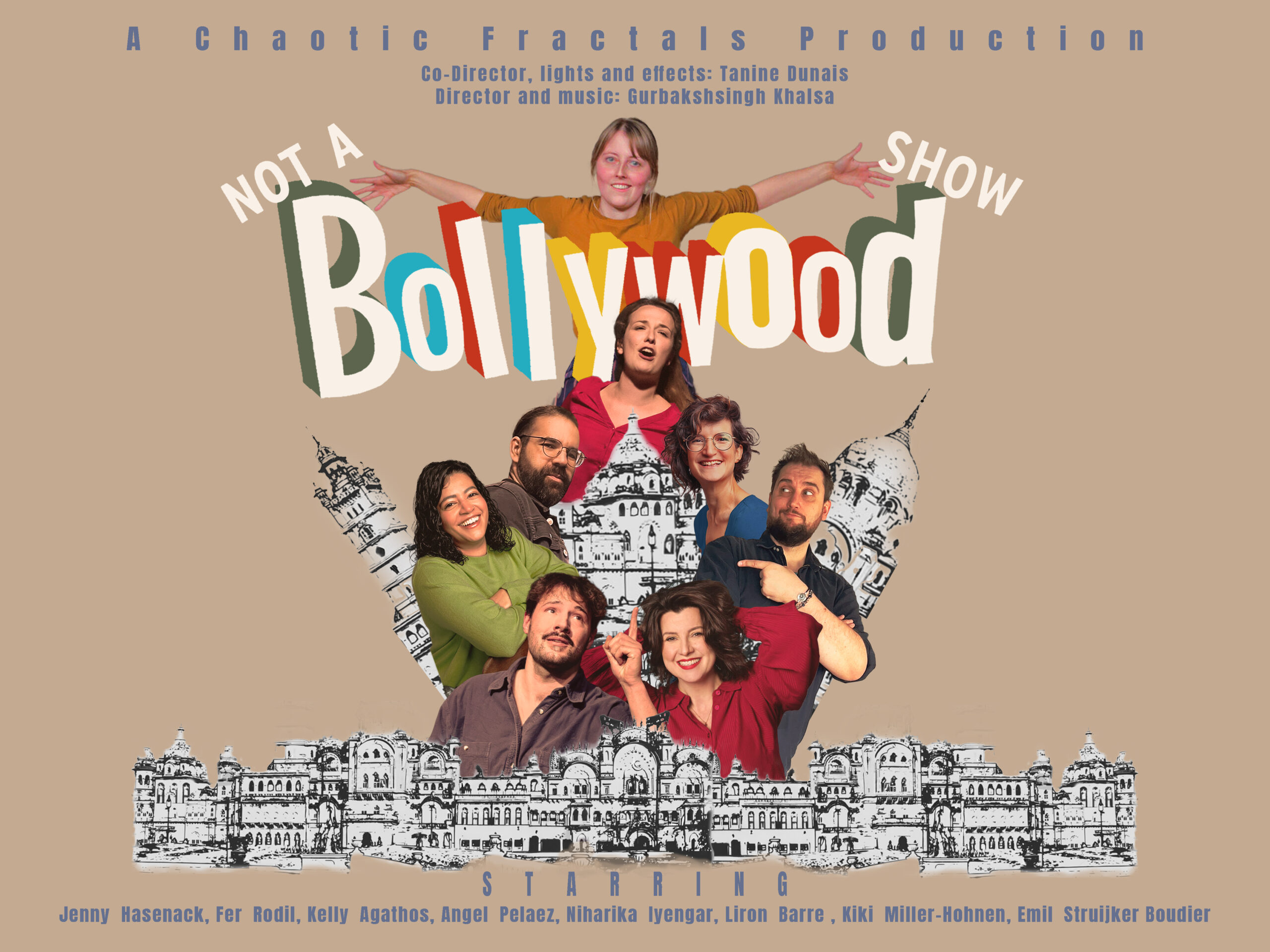
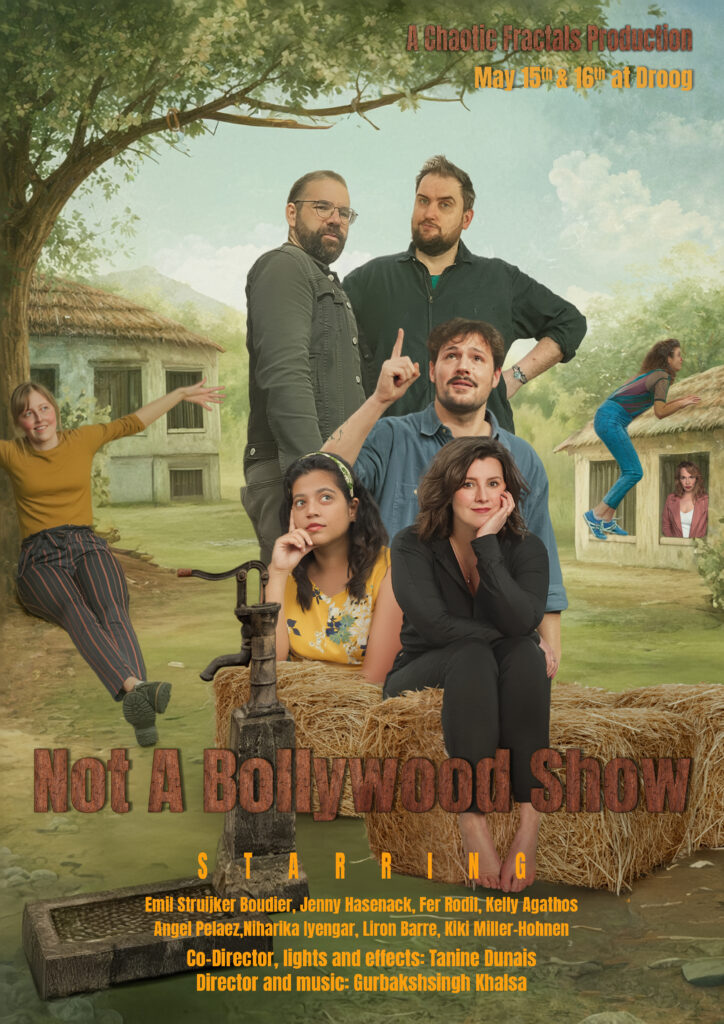
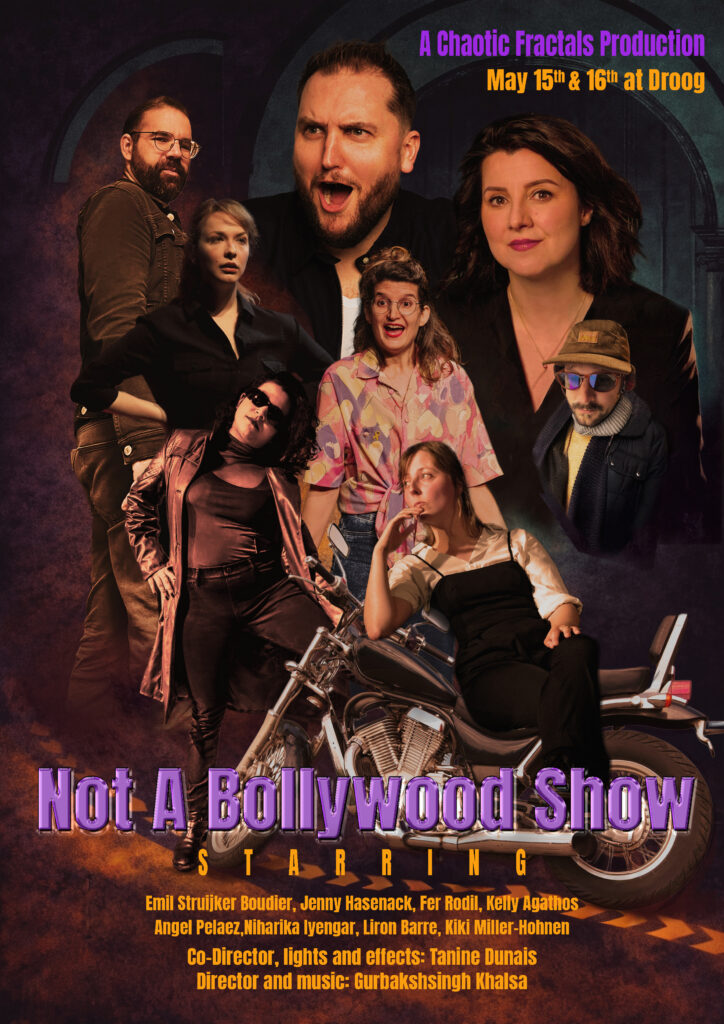
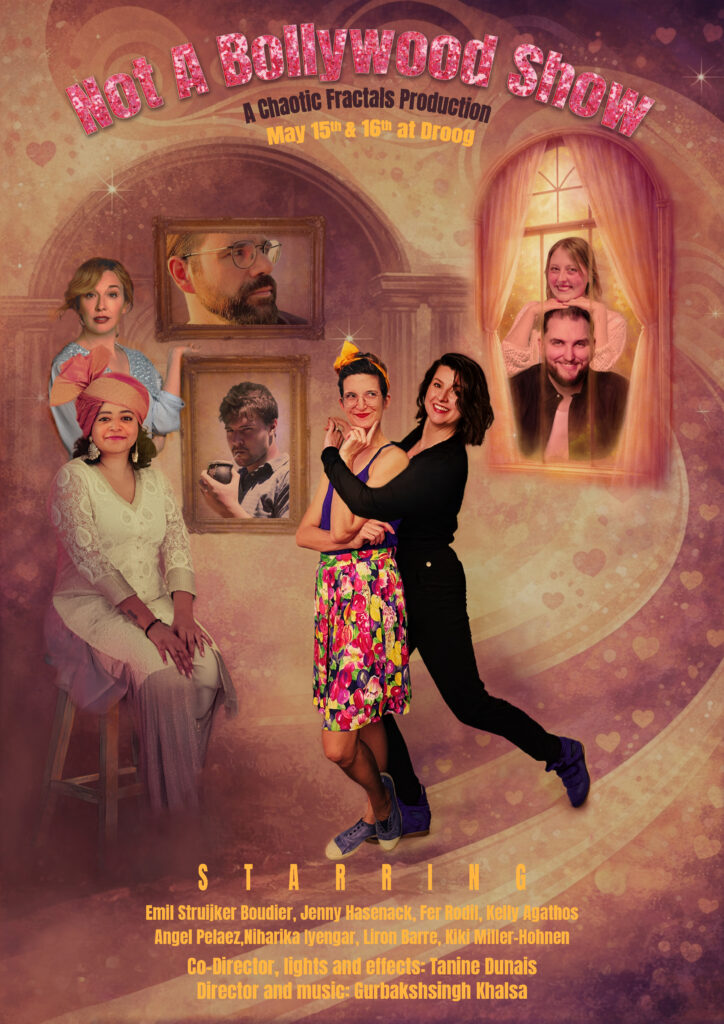
Not a Bollywood Masala Show

Bollywood (from Bombay Hollywood) is the Hindi-language film industry based out of Mumbai (Bombay)
Improv (from Improvisational theatre) is a form of theatre, in which most or all of what is performed is unplanned or unscripted, created spontaneously by the performers.

After years (at least 2) of trying to bring these 2 loves of theirs together, the creators realised it is not possible to showcase what an entire film-industry has to offer within a show (or 2, or even 3).

Instead, in this run of 3 shows (which are categorically NOT Bollywood shows), we will provide a taster for what makes (and breaks) some genres of Bollywood (and Tollywood, Kollywood).

Prepare to fall in love in `Not a Bollywood RomCom show` taking inspirations from Imtiaz Ali and Aditya Chopra – 15th May 19:30

Then re-prepare to fall, off a cliff?, a tower?, a moving helicopter? — in `Not a Bollywood Action show`, inspired by Siddharth Anand, Lokesh Kanagaraj and Atlee – 16th May 15:00

And finally, prepare to fall for anything and everything, all at once in `Not a Bollywood Masala show`, drawing from Farah Khan, Rajinikanth and Vijay movies. – 16th May 19:30
Featuring: Angel Pelaez, Emil Struijker Boudier, Fer Rodil, Jenny Hasenack, Kiki Miller-Hohnen, Liron Barre, Niharika Iyengar, Kelly Agathos
Co-director, lights and effects: Tanine Dunais
Director and music: Gurbakshsingh Khalsa

Not a Bollywood Action Show

Bollywood (from Bombay Hollywood) is the Hindi-language film industry based out of Mumbai (Bombay)
Improv (from Improvisational theatre) is a form of theatre, in which most or all of what is performed is unplanned or unscripted, created spontaneously by the performers.

After years (at least 2) of trying to bring these 2 loves of theirs together, the creators realised it is not possible to showcase what an entire film-industry has to offer within a show (or 2, or even 3).

Instead, in this run of 3 shows (which are categorically NOT Bollywood shows), we will provide a taster for what makes (and breaks) some genres of Bollywood (and Tollywood, Kollywood).

Prepare to fall in love in `Not a Bollywood RomCom show` taking inspirations from Imtiaz Ali and Aditya Chopra – 15th May 19:30

Then re-prepare to fall, off a cliff?, a tower?, a moving helicopter? — in `Not a Bollywood Action show`, inspired by Siddharth Anand, Lokesh Kanagaraj and Atlee – 16th May 15:00

And finally, prepare to fall for anything and everything, all at once in `Not a Bollywood Masala show`, drawing from Farah Khan, Rajinikanth and Vijay movies. – 16th May 19:30
Featuring: Angel Pelaez, Emil Struijker Boudier, Fer Rodil, Jenny Hasenack, Kiki Miller-Hohnen, Liron Barre, Niharika Iyengar, Kelly Agathos
Co-director, lights and effects: Tanine Dunais
Director and music: Gurbakshsingh Khalsa

Not a Bollywood RomCom Show

Bollywood (from Bombay Hollywood) is the Hindi-language film industry based out of Mumbai (Bombay)
Improv (from Improvisational theatre) is a form of theatre, in which most or all of what is performed is unplanned or unscripted, created spontaneously by the performers.

After years (at least 2) of trying to bring these 2 loves of theirs together, the creators realised it is not possible to showcase what an entire film-industry has to offer within a show (or 2, or even 3).

Instead, in this run of 3 shows (which are categorically NOT Bollywood shows), we will provide a taster for what makes (and breaks) some genres of Bollywood (and Tollywood, Kollywood).

Prepare to fall in love in `Not a Bollywood RomCom show` taking inspirations from Imtiaz Ali and Aditya Chopra – 15th May 19:30

Then re-prepare to fall, off a cliff?, a tower?, a moving helicopter? — in `Not a Bollywood Action show`, inspired by Siddharth Anand, Lokesh Kanagaraj and Atlee – 16th May 15:00
And finally, prepare to fall for anything and everything, all at once in `Not a Bollywood Masala show`, drawing from Farah Khan, Rajinikanth and Vijay movies. – 16th May 19:30
Featuring: Angel Pelaez, Emil Struijker Boudier, Fer Rodil, Jenny Hasenack, Kiki Miller-Hohnen, Liron Barre, Niharika Iyengar, Kelly Agathos
Co-director, lights and effects: Tanine Dunais
Director and music: Gurbakshsingh Khalsa