
what would be the best day to plan my wedding?

what is the best day to plan your wedding?
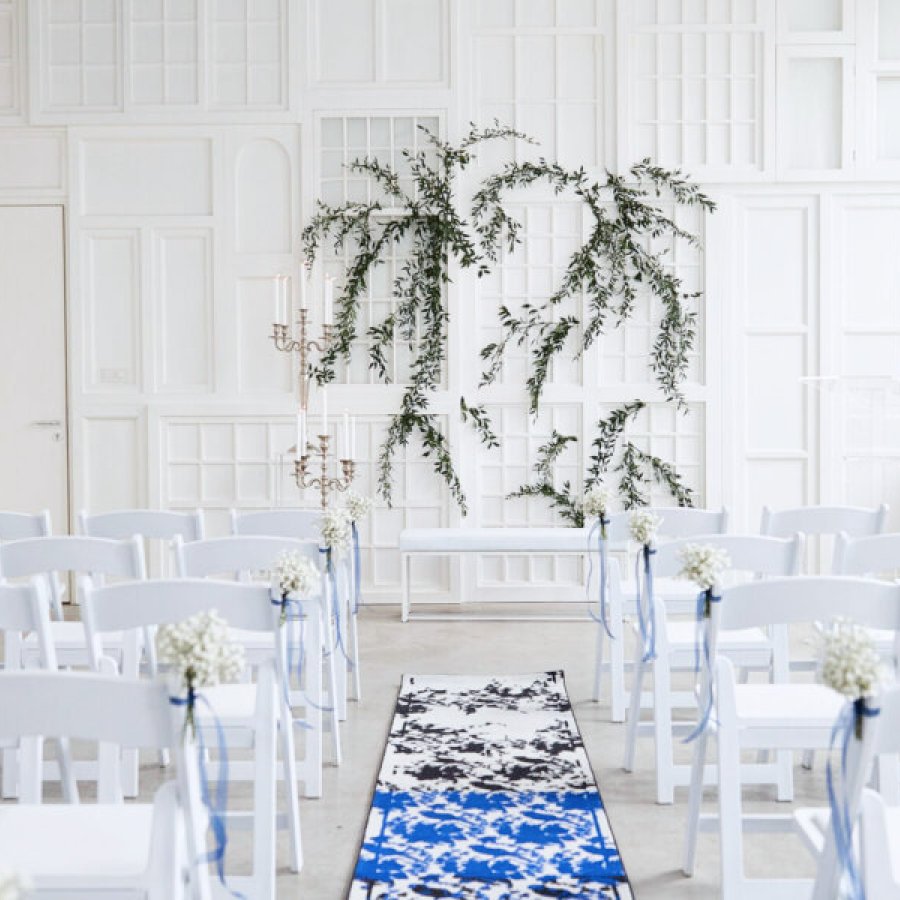
Wedding/trouwerij met blauwe loper in white space

It depends. That is the honest answer, and it is worth unpacking. The best day for your wedding is not a universal truth printed in a planner somewhere. It is the intersection of your priorities, your guest list, your budget, and the kind of experience you want to create. Some couples want a Saturday in June with 120 people and a long dinner. Others want a Tuesday in October with 30 close friends and no speeches. Both are correct.

What follows is a practical guide to help you think it through, from the logic of weekdays versus weekends to seasonal considerations, venue availability, and the one question most couples forget to ask until it is too late.

saturday is popular for a reason

Saturday is the most requested wedding day in the Netherlands and across most of Europe. The logic is simple: guests do not have to take a day off work, they can travel on Friday evening, and they recover on Sunday. For couples with a large guest list, particularly one that includes people travelling from abroad, Saturday removes a practical barrier.

The downside is equally simple. Saturday is the most expensive day to get married. Venues, caterers, photographers, florists and musicians all charge a premium for Saturday, because demand is highest. In Amsterdam, a Saturday booking at a city centre venue can cost anywhere from 20 to 40 percent more than the same space on a weekday.

friday and sunday: the middle ground

Friday weddings have grown significantly in popularity over the past decade. Guests can take a single day off work, the atmosphere tends to be slightly more relaxed than a Saturday, and pricing is usually lower. A Friday evening ceremony followed by a dinner and dancing works well logistically: no pressure to wrap up because the weekend is just beginning.

Sunday weddings work best when the guest list is local. A Sunday afternoon ceremony with a long lunch, ending by early evening, is a format that suits an intimate group well. The risk is that guests with a commute or an early Monday morning will feel time pressure as the evening progresses. For a small, close gathering, that pressure rarely materialises. For a large group with mixed circumstances, it can shorten the night.

weekday weddings: the underrated option

Wednesday and Thursday weddings are increasingly common among couples who prioritise budget flexibility and venue availability over convenience for guests. The savings can be substantial. A weekday booking often frees up budget for better catering, a longer venue hire window, or simply a less stressful planning process.

The trade-off is real: some guests will not be able to attend. If your guest list includes people with inflexible work schedules, young children, or long travel times, a weekday may mean a smaller celebration than you originally imagined. For some couples, that is exactly what they wanted.

what month should you get married?

In the Netherlands, June, July and September are the most requested months for weddings. The reasons are practical: daylight is long, the weather is reasonable, and outdoor elements become possible. August can be beautiful but it is also peak holiday season, which means guests may already have travel plans and accommodation in Amsterdam fills up fast.

May and early October are increasingly popular alternatives. Mild temperatures, fewer competing events, and better venue availability at lower rates. A wedding in October in Amsterdam, with the canal light changing colour in the late afternoon, is not a compromise. It is a choice.

Winter weddings, from November through February, are the least common and often the most affordable. They require a venue that carries itself indoors without depending on outdoor space or natural light. Not every venue can do that. Some can do it exceptionally well.

the venue shapes the day

Before you settle on a date, settle on a venue. Or at least narrow it down. The venue’s availability will define your options more than any other single factor. A venue that is only available on Sundays in your preferred month changes the calculation entirely. A venue that is closed for private hire during the summer changes it again.

At @droog, the building itself is worth understanding before you plan around it. The space dates from 1641, originally built for the Drapers’ Guild. It is in the centre of Amsterdam, on the Staalstraat, a few minutes from the Rembrandtplein. It is not a traditional wedding venue. It is a design space that happens to be available for weddings, which means the experience it creates is quite different from a hotel ballroom or a converted warehouse.

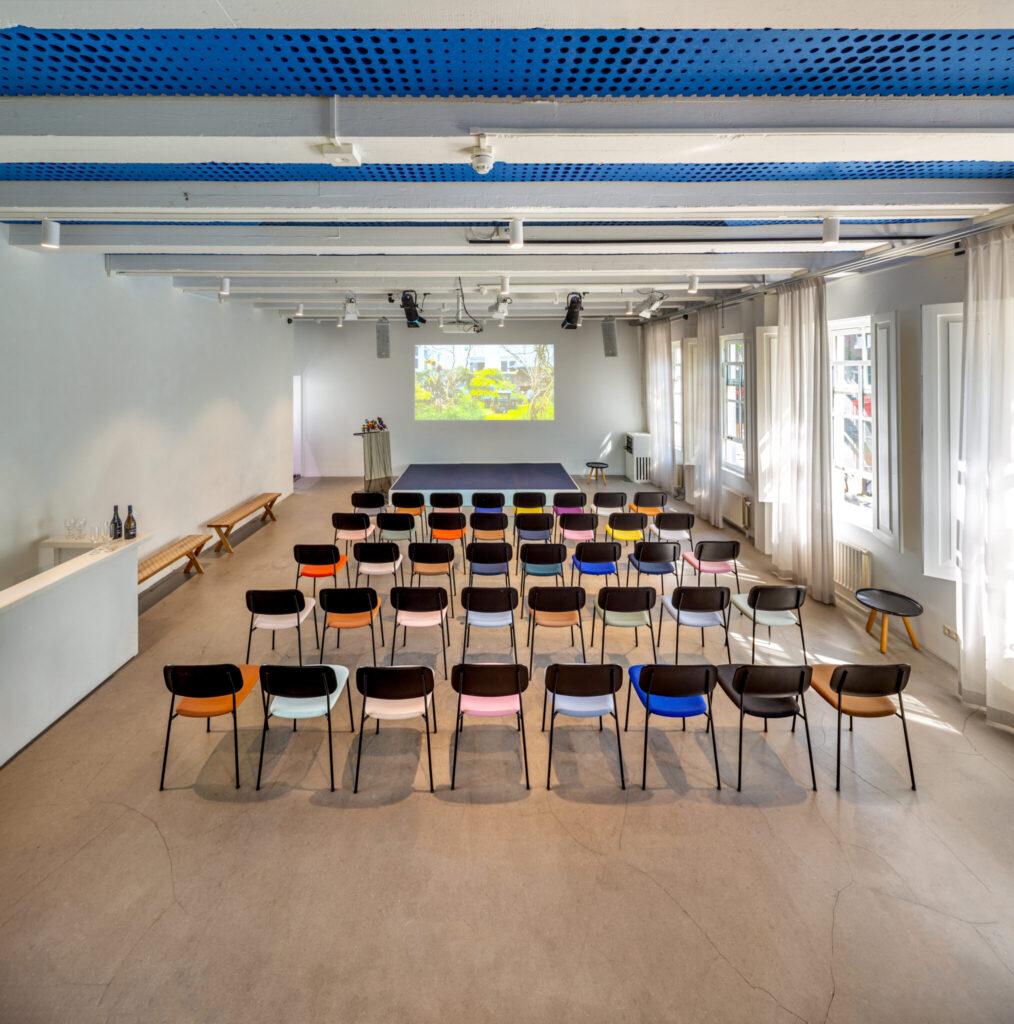
the white space is the room most couples use for ceremonies and seated dinners. It sits upstairs, with large white-framed windows looking out over the old Amsterdam canal houses and the garden below. It fits up to 70 in a theatre setting, or 50 seated with tables, depending on configuration. A PhD promotion has taken place there. So has a book launch and a small concert. A wedding fits easily.

For the reception or drinks, the grand space on the ground floor opens up to 160 people standing, with a sliding door that connects directly to the garden. For an intimate dinner after the ceremony, the library seats up to 10 around a long table, surrounded by flowered wallpaper based on a painting in the Rijksmuseum and yellow chairs under a flat chandelier.

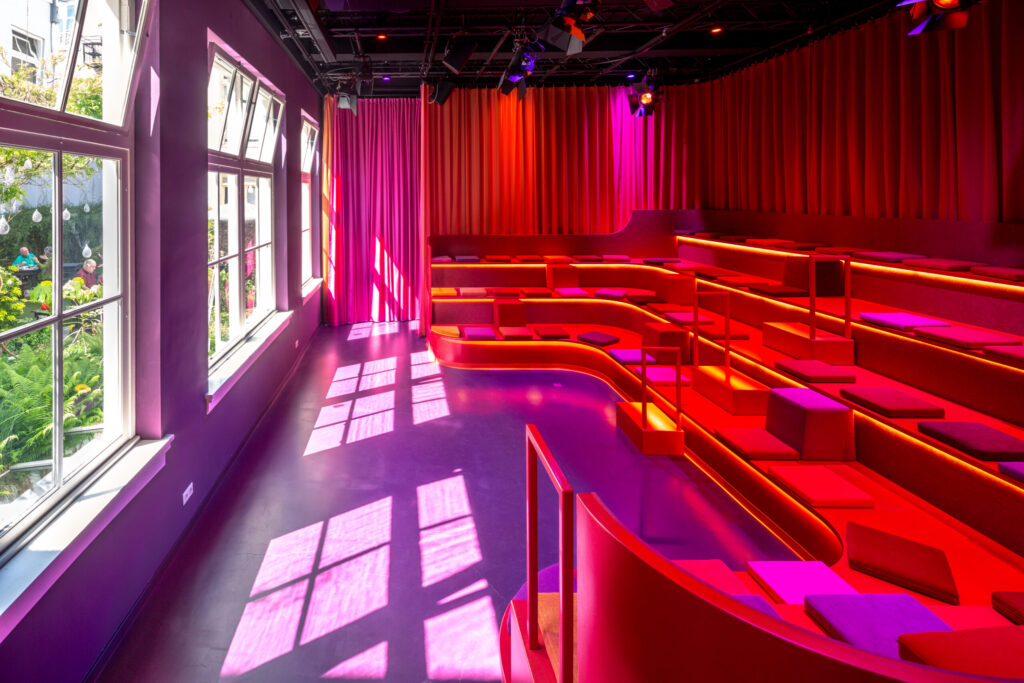
If you want something more theatrical, the red space is the venue’s theatre room: completely red, pink, orange and purple, with a u-shaped tribune that seats up to 80. Nobody has ever described it as neutral.

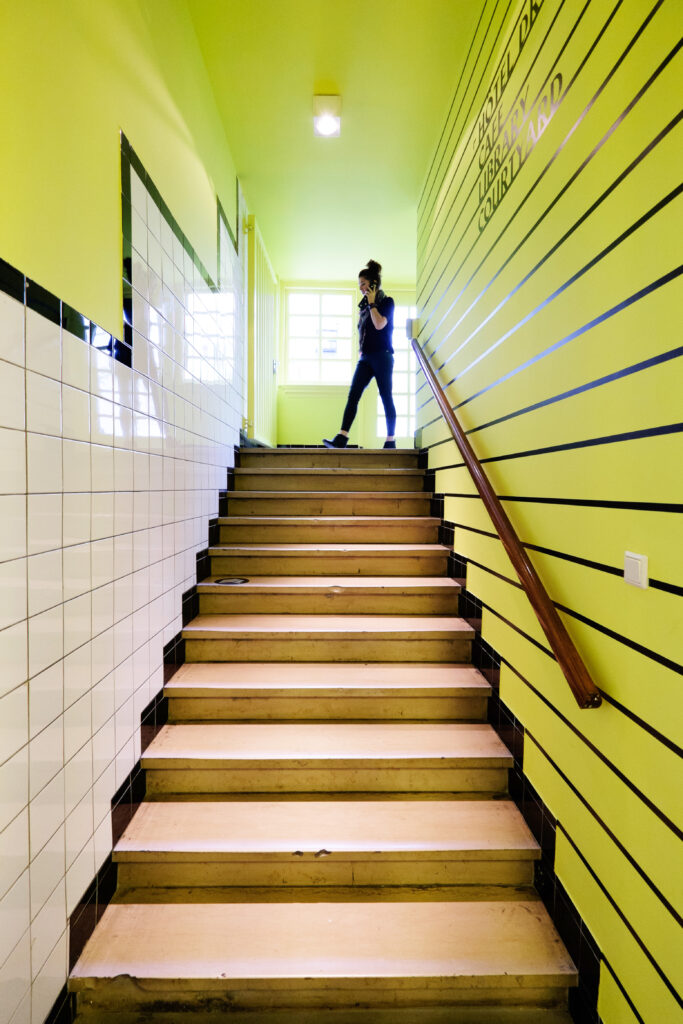
And at the top of the yellow hallway staircase, the cafe restaurant looks out over the Groenburgwal canal. Blue butterfly lamp, a fireplace, white curved tiles, and a kitchen that treats lunch as something worth sitting down for. It fits up to 70 seated and 180 standing. It is also the room most people remember longest.

Rooms can be combined. A ceremony in the white space, drinks in the grand space and garden, dinner in the cafe restaurant. Or something else entirely. The building has enough rooms and enough flexibility to build a day with a real sequence to it, not just a single room you enter and leave.

request quote

how far in advance should you book?

For a Saturday in June or September, 12 to 18 months is a reasonable planning window in Amsterdam. Popular venues in the city centre are booked that far in advance, sometimes further. If you have a specific date in mind, start with the venue enquiry before anything else. Before the florist, before the photographer, before the caterer.

For a weekday, or a month outside peak season, 6 to 9 months is usually sufficient. That said, earlier is always better. Availability does not improve as your preferred date approaches.

the question most couples forget

What do you want guests to feel when they leave?

Not what they should see or eat or hear. What they should feel. That question shapes every other decision, including the day of the week and the time of year. A high-energy Saturday evening celebration creates one kind of memory. A long Sunday lunch in a space full of design and natural light creates another. Neither is better. They are just different experiences, and the day you choose is part of how you build that experience.

At @droog, the working assumption is that a wedding should do something. Not just happen. The design of the space, the history of the building, the quality of the food, and the way rooms connect to each other are all part of that. Guests tend to notice. They also tend to ask about the chair, the lamp, or the wallpaper, which is not an accident.

practical checklist: choosing your date

  • Check venue availability first, before any other supplier
  • Consider your guest list: how many people need to travel, and from where?
  • Set a realistic budget before you choose a day of the week, Saturday costs more
  • Think about the time of year in terms of light and temperature, not just tradition
  • Check for public holidays, local events, and school holidays on or near your preferred date
  • Build in time: a minimum of 6 months for weekdays, 12 to 18 months for peak Saturdays
  • Ask the venue what works best in their space, some venues genuinely shine in specific seasons or configurations

frequently asked questions

is saturday always the most expensive day for a wedding?

In almost every case, yes. Saturday commands the highest rates from venues, caterers, and suppliers because demand is highest. Friday and Sunday usually sit in the middle range. Weekdays offer the most flexibility on price.

how many guests is considered a small wedding?
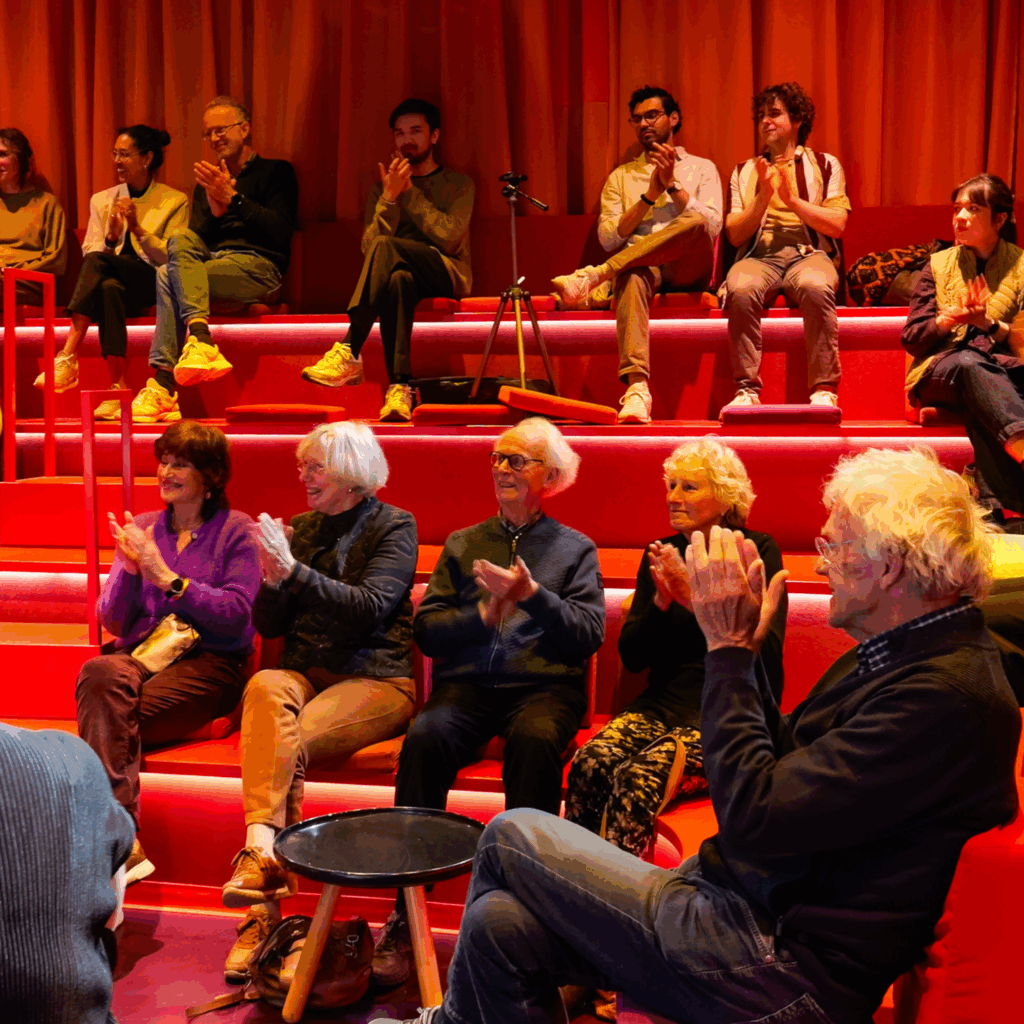
event in de red space met bezoekers

Definitions vary, but anything under 40 guests is generally considered a small or intimate wedding. Under 20 is micro. The room you choose should match the number: a space designed for 120 feels cold with 20 people in it, and a room that fits 10 creates a different kind of occasion entirely.

can you get married on a monday or tuesday in amsterdam?

Yes. The municipality of Amsterdam registers civil marriages on weekdays. If you want a civil ceremony followed by a private celebration, a Monday or Tuesday is legally straightforward. Some couples hold the legal ceremony midweek and the celebration on the nearest weekend.

what is the least busy wedding month in the netherlands?

January and February see the fewest weddings. November and March are also quieter than average. Budget and availability are generally more favourable in these months, and venues that work well indoors can offer an experience that summer weddings cannot.

is it possible to hold a wedding ceremony and reception in the same venue in amsterdam?

Yes, and it is often the more seamless approach. When ceremony, drinks, and dinner all take place in the same building, guests are not managing transport between locations. The flow of the day is easier to control, and the experience feels more coherent. At @droog, the building has enough distinct rooms to host each part of the day in a different space without anyone needing to leave.

does @droog host weddings?

Yes. The white space is well suited for ceremonies and seated dinners. The grand space and garden work for receptions and drinks. The library is available for a private dinner. The cafe restaurant seats up to 70. Rooms can be combined depending on the scale and format of the day. @droog is a design space first, which means the rooms carry character without requiring decoration to fill them.

thinking about @droog for your wedding?

Tell us what you have in mind. The building has been here since 1641. It has seen a lot. A wedding fits well.
request quote

what are all the things i need for my wedding?

what do you actually need for your wedding?

Wedding/trouwerij met blauwe loper in white space

A wedding is many things at once: a legal act, a dinner, a party, a performance, sometimes a ceremony with 80 people watching, sometimes a quiet lunch with twelve. Most people start planning with a guest list and a date. That is a fine place to start. But the list of what you actually need is longer than most people expect, and the order in which you decide things matters more than the things themselves.

This guide walks through everything. Not as a checklist of products to buy, but as a sequence of decisions, each one opening or closing the next.

start with three decisions, not thirty

Before you look at flowers or fonts, three things shape everything else.

How many people? The difference between 20 and 120 guests is not a matter of scale. It changes the venue, the catering model, the ceremony format, the sound system, the timeline, the budget split. Decide this first.

What kind of day do you want? A formal sit-down dinner with speeches is a different operational machine than a standing reception with live music and a grazing table. Both are weddings. They need completely different things.

What is your actual budget? Not the aspirational number. The real one. Weddings in the Netherlands average between 10,000 and 25,000 euros for 50 to 100 guests, with venue and catering typically accounting for 40 to 60 percent of total spend. Knowing that ratio early prevents the very common situation of spending the entire budget on a venue and having nothing left for food.

Once those three anchors are set, every other decision has a frame.

the venue: more than a room

Your venue is not a backdrop. It is the structural decision of the day. It determines what kind of catering is possible, how your guests move, where the ceremony happens, whether you need a separate dinner space, and what the atmosphere will feel like without any decoration at all.

Ask these questions before you book anything:

  • Can we do both the ceremony and the reception here, or do we need two locations?
  • What does the venue provide: tables, chairs, AV, bar setup?
  • Is catering exclusive to their kitchen, or can we bring our own?
  • What is the noise curfew?
  • What does the space look like without decoration?

That last question is underrated. A space with strong bones, a clear identity and interesting material choices needs almost nothing added. A blank white box needs everything.

@droog in Amsterdam is a building from 1641 that housed the Drapers’ Guild. It has been a design hotel, a gallery and a place for creative events since the early 1990s. Inside you will find the white space, a high-ceilinged room upstairs with large windows looking out over old Amsterdam rooftops and into the garden below. It seats 50 with tables, 70 in theatre setting. The flowered wallpaper in the library is based on a painting in the Rijksmuseum. The room seats ten around a long table, which makes it the right size for a private wedding dinner for close family. The grand space on the ground floor opens directly to the garden through a sliding door and fits 90 seated or 160 standing.

Rooms can be combined. Ceremony in one space, dinner in another, drinks in the garden. That kind of flexibility is what makes a multi-room building different from a single-hall venue.

request quote

legal requirements: the part nobody finds exciting

In the Netherlands, a legal marriage happens at a municipality (gemeente). You need to register your intention to marry (melding voorgenomen huwelijk) at least two weeks before the date, and both partners need valid ID. If one partner is not Dutch, additional documents are required. This part is not optional and has lead times that do not bend.

If you want your ceremony at a venue rather than at the town hall, a registrar (ambtenaar van de burgerlijke stand) can come to you. Not every municipality offers this; some charge an extra fee. Book this early. Registrars available on popular Saturday dates in summer fill up months in advance.

What you need legally:

  • Valid passports or ID cards for both partners
  • Birth certificates (extract from the civil registry)
  • Proof of address (uittreksel BRP)
  • If previously married: divorce certificate or death certificate of former spouse
  • If one partner is not Dutch: a certificate of no impediment from the relevant country

Start this process at least three months before the date. Some documents take time to obtain, especially from abroad.

ceremony: what actually happens in the room

A ceremony needs a structure. Even an informal one. Without structure, the registrar fills the silence with standard text, which is fine, but it will feel like everyone else’s wedding.

Things to decide for the ceremony:

  • Who speaks? Just the registrar, or also friends, family, both partners?
  • Is there music, live or recorded?
  • How do guests enter and take their seats?
  • How long does it last? Thirty minutes is standard. Forty-five is the comfortable maximum before guests lose focus.
  • Where do you sign? Is that part of the ceremony or private afterwards?
  • Do you want vows you wrote yourself?

If you are having a theatre-style ceremony with an audience watching, the layout of the room matters significantly. The red space at @droog is designed exactly for this: a round, u-shaped tribune in red, orange and purple, seating up to 60 people with room to breathe, 80 shoulder to shoulder. It has a stage, professional lighting and full theatre equipment. It was built for performance. A ceremony is a performance.

catering: the thing guests remember most

Food and drink is almost always the largest single cost after venue. It is also what people talk about after.

Decisions to make:

  • Seated dinner, buffet, walking dinner, grazing table, or a combination?
  • What do you serve during drinks reception (borrel)?
  • Open bar or drinks tokens?
  • Wedding cake, dessert table, or neither?
  • Late night snack (borrelhapjes at 11pm is a Dutch classic)?
  • Dietary requirements: always ask guests in advance. Assume at least 10 to 15 percent will have one.

The cafe restaurant at @droog is the kitchen that serves lunch daily to the public, with a view over the Groenburgwal canal. The bar is curved white tile. There is a fireplace and a blue butterfly lamp that has been in the room since the beginning. The space fits 70 seated and 180 standing, which makes it the right size for a dinner that becomes a party without anyone needing to move rooms.

When choosing catering, ask whether the venue has a preferred supplier list or exclusive kitchen. Both arrangements have advantages. An in-house kitchen means coordination is simpler. An external caterer means more flexibility in style and cuisine.

what to book, and when

Timing is the part most people underestimate. Popular venues in Amsterdam on a Saturday between May and September book up twelve to eighteen months in advance. Photographers with a strong portfolio are often fully booked for the following calendar year by January.

event in de red space met bezoekers

A rough booking sequence:

  • 12 to 18 months out: venue, date, registrar
  • 10 to 12 months out: photographer, videographer, caterer (if external)
  • 8 to 10 months out: live music or DJ, florist, hair and makeup
  • 6 months out: invitations sent, wedding dress/suit order placed (allow time for alterations)
  • 3 months out: menu confirmed, final guest numbers, seating plan started
  • 6 to 8 weeks out: final fittings, rehearsal if needed, transport booked
  • 2 weeks out: legal registration completed, final briefings with all suppliers

suppliers: who you actually need

This list assumes a mid-size wedding of 50 to 100 guests with ceremony and dinner in one location.

Non-negotiable:

  • Venue
  • Registrar (ambtenaar)
  • Catering (food and drink)
  • Photographer

Strongly recommended:

  • Videographer (footage from the day is something most couples wish they had more of)
  • Day coordinator or wedding planner (even a half-day coordinator changes the experience for both partners)
  • Florist
  • Music (ceremony and reception)

Depends on your wedding:

  • Hair and makeup artist
  • Cake or dessert maker
  • Transport (vintage car, canal boat, bicycle rickshaw)
  • Stationery designer (invitations, place cards, menus)
  • Photo booth
  • Sound and lighting technician (sometimes included with venue)

One practical note on coordination: the more suppliers you have, the more they need to know about each other. Your florist needs to know what time setup starts. Your photographer needs to know the timeline. Your caterer needs to know when speeches end. Without someone managing this, the day runs on optimism. With a coordinator, it runs on a plan.

the details that are actually decisions

Some things look like details but are really choices about what kind of day you want.

Guest table seating versus free seating. Free seating feels relaxed. It also means some guests sit alone. Assigned seating requires effort in planning but produces better conversations.

Speeches: yes or no, and how many. Best man speeches are a tradition, not a requirement. Each speech should be no longer than five minutes. Three speeches is a full program. Five speeches and guests are looking at their wine.

Phones during the ceremony. Unplugged ceremonies, where guests put phones away, produce better photographs and a more present room. Worth considering.

Children. A children-welcome wedding and a child-free wedding are both completely fine. Each has implications for timing, noise, and the shape of the evening. Decide early and communicate clearly.

Gift policy. In the Netherlands, cash gifts (into a honeymoon fund or house fund) are completely normal and guests appreciate knowing this. A gift registry is also fine. Saying nothing is also fine, but guests will ask.

budget: where the money goes

A rough breakdown for a 60-guest wedding in Amsterdam at approximately 20,000 euros total:

  • Venue: 3,000 to 6,000
  • Catering and bar: 5,000 to 9,000
  • Photography: 2,000 to 3,500
  • Music: 800 to 2,000
  • Flowers and decoration: 1,000 to 2,500
  • Clothing and styling: 1,500 to 3,000
  • Stationery: 300 to 600
  • Transport: 300 to 800
  • Rings: variable
  • Contingency (always needed): 500 to 1,000

These numbers shift depending on choices. A venue with strong character that needs little decoration saves money on flowers. A caterer with a fixed menu costs less than fully bespoke. A photographer who shoots documentary style charges differently than one who does full editorial production.

The single most reliable budget advice: decide what matters most to you, spend there, and cut elsewhere. A couple that cares deeply about food will be happier with a simpler venue and an excellent meal than the reverse.

faq: the questions people actually search for

How far in advance should I book a wedding venue in Amsterdam?
For a Saturday in the period May through September, twelve to eighteen months is realistic for a venue with character. Midweek or winter dates are more flexible. Some venues have cancellations, so it is always worth asking even if a date looks taken.

Do I need a wedding planner?
Not necessarily, but some form of coordination help on the day itself is worth serious consideration. A day coordinator costs between 500 and 1,200 euros on average and handles logistics so neither partner is managing suppliers during their own wedding.

Can I have both the ceremony and the party at the same venue?
Yes, and for most guests this is preferable. No transport between locations, no risk of losing people between ceremony and dinner, more time in the same space. Look for a venue with enough rooms to change the atmosphere between ceremony and reception.

What is a realistic number of guests?
The average wedding in the Netherlands has between 50 and 80 guests. Smaller weddings (under 30) allow for a more intimate dinner format. Larger weddings (over 100) require more logistical infrastructure and budget. Both work; they are just different events.

Is it possible to have a wedding in a design space that is not a traditional wedding venue?
Yes. Several spaces in Amsterdam that primarily host business events or cultural programming are available for weddings. The advantage is a space with its own visual identity that does not look like every other wedding you have attended. @droog has hosted PhD celebrations, book launches, product launches, theatre performances and dinners in the same spaces within the same week. A wedding fits naturally into that range.

What about a small wedding, just twelve people?
A small wedding has its own logic. It is a dinner with ceremony attached. A room like the library at @droog, which seats ten around a long table under a flat chandelier with flowered wallpaper from the Rijksmuseum, is designed exactly for this scale. The intimacy is the point.

the thing to remember

A wedding is an event with a specific legal and emotional function. Everything else, the flowers, the music, the font on the invitation, is in service of two people and the people they want around them. The list of things you need is long. The list of things that actually matter to you is shorter.

Start with the three decisions. Build from there.

If you are thinking about @droog as a location, the building has been hosting meaningful gatherings since 1993 in a structure from 1641. The rooms are different from each other, they combine well, and the kitchen opens every day. Tell us what you have in mind.

request quote

what does a wedding location in amsterdam generally cost?

what does a wedding location in amsterdam generally cost?

Wedding/trouwerij met blauwe loper in white space

It depends. That is the honest answer, and it is also the most useful starting point. Amsterdam wedding venues range from around 500 euros for a simple civil ceremony room to well above 10,000 euros for a full-day exclusive hire of a landmark building. Most couples land somewhere in the middle, between 2,000 and 6,000 euros for the venue alone, before catering, photography or flowers enter the picture.

This article breaks down what you actually pay for, what affects the price, and what questions to ask before you sign anything.

the real cost of renting a wedding venue in amsterdam

Amsterdam is not a cheap city. That is not a complaint, just a fact. The combination of canal houses, dense geography and high demand from both local couples and international visitors pushes venue prices up. Here is a rough breakdown of what you can expect at different price points.

under 1,500 euros

At this budget, you are looking at restaurant private dining rooms, small gallery spaces or municipal ceremony rooms. These work well for small guest lists of 10 to 30 people. The tradeoff is limited flexibility: set menus, fixed layouts, sometimes a strict time window. Nothing wrong with that if simplicity is the point.

1,500 to 4,000 euros

This is where most Amsterdam weddings live. Spaces in this range offer proper exclusivity, a bit of character, and room to bring in your own caterer or decorator. You get 4 to 8 hours of access, often including basic AV. Guest capacity usually runs between 30 and 80 seated.

4,000 to 8,000 euros

At this level, you are renting something with a real identity. A converted warehouse in Noord, a canal-side terrace, a design house in the Grachtengordel. The venue fee often includes more staff hours, setup time and sometimes an in-house coordinator. Capacity tends to be higher, and the experience more polished out of the box.

above 8,000 euros

Historic monuments, museum evenings, full-building takeovers. These come with exclusivity, prestige and complexity. You will also likely need a production team alongside the venue itself.

what drives the price up or down?

Venue pricing in Amsterdam is not arbitrary. Several concrete factors determine what you pay.

  • Day of the week. Saturday is the most expensive day. Friday evenings run close behind. A Wednesday ceremony can cost 30 to 40 percent less at the same venue.
  • Season. May through September is peak. January and February are quietest. Venues are more negotiable in winter.
  • Guest count. More people means more staff, more tables, more everything. A venue that fits 50 comfortably will charge a premium if you push to 80.
  • Catering model. Some venues have an in-house kitchen and require you to use it. Others let you bring in an external caterer. The first is often more expensive upfront but simpler to manage. The second gives you more control.
  • Exclusivity. A space that closes to the public for your event charges more than one that stays partly open. Obvious, but worth confirming in the contract.
  • Duration. Venue fees are usually quoted per half-day or full day. Ask what setup and breakdown time is included and what happens if you run over.

hidden costs couples often miss

The venue fee is the headline number. The real budget is built from everything underneath it.

  • Cleaning fees. Often not included. Can run from 200 to 600 euros depending on venue size and what you leave behind.
  • Security deposits. Usually refundable, but can be 500 to 1,500 euros held for weeks after the event.
  • AV and lighting. If it is not in the contract, assume it is not included. A basic sound system rental starts around 300 euros. A full light rig for an evening event can be 1,000 or more.
  • Corkage fees. Some venues charge per bottle if you bring your own wine. Ask before you show up with a case from your favourite importer.
  • Municipal ceremony fee. If you want a legal ceremony in Amsterdam, the municipality charges a separate fee. A basic ceremony on a weekday costs around 170 euros. A Saturday ceremony with a more formal setting can run to 600 or 700 euros.

a wedding at @droog: what it actually looks like

@droog is a design house on the Staalstraat, in a building from 1641 that once housed the Drapers’ Guild. It is not a conventional wedding venue. It has never tried to be. What it offers is something harder to find: rooms with real character, rooted in a design philosophy that Renny Ramakers and Gijs Bakker built into a global movement in the 1990s. Every object, surface and space here was chosen with a reason.

That matters for weddings because the backdrop is already doing something. You are not decorating a blank box. You are working with a place that has its own story.

Several rooms are available, and they combine well.

The grand space sits on the ground floor with a giant sliding door that opens onto the garden. It seats 90 or holds 160 standing. A stage, a sound system, a beamer. Ceremony, reception or dinner, it handles all three.

The red space is a theatre. Red, pink, orange, purple. A round u-shaped tribune with movable cushions, seating 50 to 60 comfortably or up to 80 shoulder to shoulder. It works well for a ceremony with a bit of drama. Accessible from the grand space or the garden.

The white space is upstairs. Large white windows look out over old Amsterdam rooftops and the garden below. Seats 70 in theatre layout or 50 with tables. A book launch, a PhD promotion and a wedding have all happened in this room. That range is not unusual here.

The library is the room for ten. Yellow chairs, a long table, a flat chandelier above it, flowered wallpaper taken from a painting in the Rijksmuseum. Ideal for a private dinner after a ceremony, or as a preparation room for the couple before the day begins.

The cafe is at the top of the yellow staircase. A blue butterfly lamp, a curved white tiled bar, a fireplace, a view over the Groenburgwal canal. Up to 180 standing, 70 seated. Arguably the most beautiful room in the building. It is also a working restaurant, which means the kitchen knows what it is doing.

Rooms do not need to be booked separately. A full building takeover is possible, and for a wedding that moves through ceremony, dinner and dancing, that is often the right call.

request quote

design thinking and weddings: why it matters

@droog applies design thinking to events the same way it applies it to objects. That means starting with the question behind the question. Not just “where do we put the tables” but “what do we want people to feel when they leave.” Not just “what is the catering budget” but “what does the food say about who we are.”

For couples who care about that distinction, it changes the planning process. The team at @droog does not offer a wedding package with interchangeable options. It works with you from a blank page, or something close to one. Sustainability is built into the sourcing. Local suppliers are the default, not the premium option.

That approach takes more conversation upfront. It also tends to produce something that feels less like a product and more like an event that was actually made for you.

how to compare amsterdam venues fairly

When you have a shortlist of venues, comparison gets tricky fast. The sticker price rarely reflects the real cost. Here is a consistent framework for comparing fairly.

  • Ask for the all-in price, not the hire fee. Request a line-by-line breakdown.
  • Confirm what catering options exist. In-house only? External allowed? Corkage policy?
  • Ask about minimum spend requirements. Some venues waive the hire fee but require a food and drink minimum per head.
  • Ask what happens if guest numbers change. Can you scale up or down after signing?
  • Check what the cancellation policy looks like. Especially relevant if you are planning more than a year out.
  • Ask whether the venue has liability insurance and whether you need your own event insurance on top.

frequently asked questions

what is the average cost of a wedding venue in amsterdam?

Most couples in Amsterdam spend between 2,000 and 6,000 euros on the venue hire alone. Add catering at 80 to 150 euros per person, photography at 2,000 to 4,000 euros and flowers at 500 to 2,000 euros, and a full wedding day in Amsterdam typically runs between 8,000 and 20,000 euros depending on guest count and choices made.

is it cheaper to get married on a weekday in amsterdam?

Yes, meaningfully so. A Monday through Thursday ceremony can cost 30 to 40 percent less at the same venue compared to a Saturday. If flexibility on date is possible, a weekday wedding in Amsterdam is one of the most effective ways to reduce overall cost without changing much else.

how far in advance should i book a wedding venue in amsterdam?

For a Saturday in peak season, 12 to 18 months ahead is not unusual for popular venues. Weekdays and off-season dates have more availability, but booking 6 to 9 months out is still advisable to secure your first choice.

can i have a legal wedding ceremony at @droog?

Yes. The municipality of Amsterdam allows legal ceremonies to take place at private venues under certain conditions. You register the ceremony through the municipality, and the officiant comes to the venue. Ask your municipality contact for the current requirements and fees, which vary depending on day and format.

what is included in a venue hire at @droog?

This depends on the configuration you choose. Spaces come with available AV equipment and an on-site team. Catering is handled through the in-house cafe restaurant, which sources locally and applies the same design thinking to the menu as to the space. Full details are covered in the quote process, which is worth starting early.

how many guests can @droog accommodate for a wedding?

It depends on which rooms you use and how. The cafe restaurant holds up to 180 standing or 70 seated. The grand space holds 90 seated or 160 standing. Combined with the white space, red space and garden, a full building event can accommodate well over 200 guests across different moments of the day. A ceremony in the red space, drinks in the garden, dinner in the cafe and dancing in the grand space is one way that has worked before.

does @droog offer outdoor space?

grand space in congres setting

Yes. There is a garden between the grand space and the red space. It works for drinks receptions, smaller ceremonies or simply a place to breathe between moments of the day. Four other rooms look into it, which makes it feel connected to the building rather than separate from it.

what should i ask a venue before signing a contract?

Ask for an itemised quote. Ask about catering flexibility, minimum spend, cancellation terms, access hours for setup and breakdown, AV availability, cleaning fees and deposit structure. Ask who your point of contact is on the day. Ask whether the venue has hosted weddings before and whether you can speak to someone who has used the space.

what to do next

A venue visit tells you more than a brochure ever will. The size of a room on paper and the feel of it in person are different things. If you are considering @droog for your wedding, the most useful step is a conversation about what you actually have in mind. Dates, numbers, format, feel. From there, a real quote takes shape.

No pressure, no package, no predetermined path. Just a building from 1641 with a lot of rooms and people who think carefully about how spaces should be used.

request quote

what does a wedding cost in amsterdam?

what does a wedding cost in amsterdam?

Wedding/trouwerij met blauwe loper in white space

No two weddings cost the same. That is the honest answer, and probably not the one you came here for. So here is a more useful one: in Amsterdam, a wedding with around 50 to 80 guests typically runs between €15,000 and €40,000, depending on the venue, catering, and how many decisions you make on instinct versus spreadsheet.

This guide breaks down what drives those numbers, what you can skip, what you cannot, and what Amsterdam specifically adds to the equation. It also looks at what a venue like @droog offers, because not every wedding needs a castle or a boat.

the short version: where does the money go?

Before going into detail, here is a rough breakdown of a mid-range Amsterdam wedding for 60 guests:

  • Venue hire: €2,500 to €8,000
  • Catering and drinks: €6,000 to €15,000 (roughly €100 to €250 per person)
  • Photography: €2,000 to €4,500
  • Music or DJ: €800 to €2,500
  • Flowers and decoration: €1,000 to €4,000
  • Wedding officiant: €400 to €1,200
  • Dress and suit: €1,500 to €5,000
  • Stationery and logistics: €300 to €800

Total range: roughly €14,500 to €41,000. That is before honeymoon, rings, or the hair and make-up appointment your partner has been planning since January.

venue costs in amsterdam: what you are actually paying for

Amsterdam has hundreds of venues. Canal boats, museum halls, rooftop terraces, hidden courtyards, converted warehouses. Venue hire alone can range from €500 for a small private room to €15,000 for a full-day exclusive buyout of a landmark space.

What determines the price?

  • Location in the city (canal ring versus outskirts)
  • Minimum spend requirements on food and drink
  • Exclusivity, meaning whether other events run alongside yours
  • Technical setup included (sound, lighting, AV)
  • Number of rooms available
  • Day of the week (Saturday commands a premium)

A Friday or Sunday wedding in Amsterdam can save you 20 to 30 percent on venue costs alone. That is not a small number.

what @droog offers for weddings

@droog is a building from 1641 in the centre of Amsterdam, on the Groenburgwal canal. It housed the Drapers’ Guild. It is now a venue rooted in Droog Design, which means every room has been thought through, not decorated. That distinction matters when you are picking a space for a wedding.

There are five rooms, and they can be combined depending on what your day looks like.

the white space is upstairs. Large white windows look out onto Amsterdam’s old canal houses and the garden below. It seats 50 with tables, or 70 in a theatre setting. The light changes throughout the day in a way that makes a photographer’s job easier. This is where the ceremony tends to work well, or a seated dinner for a smaller group.

the grand space is on the ground floor, with a sliding door that opens directly to the garden. It holds 90 seated or 160 standing. If you want dancing later in the evening, this is the room. It has a stage, sound system, and a beamer. It also connects directly to the garden, which matters in summer.

the red space is a theatre room in deep reds, pinks, orange and purple, with a round u-shaped tribune and professional theatre equipment. It seats 50 to 80. It is also the most surprising room in the building, which is saying something. If your wedding involves a performance, a screening, or a presentation that needs real impact, this is where it happens.

the library is a meeting room with yellow chairs, a long table, floral wallpaper based on a painting from the Rijksmuseum, and windows towards the garden. It fits 10 people around the table. It is a good room for a private dinner for immediate family, a signing moment, or a smaller gathering before the main event.

the cafe is at the top of the yellow hallway staircase, with a view of the Groenburgwal canal. Blue butterfly lamp, curved white tiled bar, a fireplace. It holds 70 seated or 180 standing. It is, depending on who you ask, the most beautiful room in the building. It also opens to the public daily for lunch, which tells you something about the quality of the food that comes out of the kitchen.

You do not have to pick one room. Most weddings at @droog use two or three, moving between them as the day moves from ceremony to dinner to drinks.

catering: the number that surprises most couples

Food and drink is almost always the largest single line item in a wedding budget. In Amsterdam, expect to pay between €80 and €150 per person for a seated dinner with wine, or €50 to €90 for a standing reception with bites and drinks. A full dinner-and-drinks evening for 60 people lands you somewhere between €5,000 and €9,000.

What pushes costs up:

  • Open bar versus drinks packages
  • Multiple courses versus a set menu
  • Dietary requirements that require separate preparation
  • Late-night snacks (which guests always appreciate more than they let on)

@droog works with local suppliers wherever possible. The kitchen is built around the idea that lunch is worth sitting down for, and the same thinking applies to dinner. The café restaurant handles catering for events in-house, which removes the coordination layer that often inflates costs at venues that outsource to third parties.

photography: do not cut here

Amsterdam is an exceptional city to be photographed in. The canal light in the late afternoon is something most photographers describe as unfair to the rest of the world. A good Amsterdam wedding photographer charges between €2,000 and €4,500 for a full day. That includes the ceremony, portraits, and the first part of the reception.

This is the one category where couples consistently say they wish they had spent more. The flowers are gone in a week. The photos are there for the rest of your life. Budget accordingly.

what a wedding at @droog actually costs

A realistic example. A wedding with 60 guests, ceremony and dinner in the white space, drinks and dancing in the grand space, with the library reserved for close family before the ceremony:

  • Venue hire: from €3,500 (multi-room, full day)
  • Catering and drinks: approximately €7,200 (€120 per person, mid-range dinner with wine)
  • Photography: €2,800
  • Music: €1,200 (DJ for the evening)
  • Flowers: €1,500 (modest, seasonal)
  • Officiant: €600
  • Stationery and logistics: €400

Running total: approximately €17,200, not including personal costs like dress, suit, rings, or accommodation for out-of-town guests. A comfortable budget for this format is €20,000 to €25,000.

For something larger, with 100 guests across more rooms and a more extensive catering programme, €35,000 to €45,000 is a realistic target.

Want a quote specific to your date and guest list?

request quote

hidden costs couples forget

These are the ones that appear in the final invoice and cause the quiet argument on the drive home.

  • Corkage fees if you bring your own wine
  • Sound equipment and technician hire
  • Coat check (guests notice when it is missing)
  • Overtime charges if the party runs past the agreed end time
  • Setup and breakdown time (many venues charge for this separately)
  • Security or cleaning fees built into contracts in small print
  • Gratuity for staff

At @droog, the setup is included in the venue conversation from the start. The building has its own technical infrastructure and staff. There are no third-party surprises. That matters when you are trying to hold a budget together across six months of planning.

amsterdam versus other dutch cities

Amsterdam is more expensive than Rotterdam, Utrecht, or The Hague for weddings. Venue costs run roughly 20 to 35 percent higher in the capital, and accommodation for guests follows the same logic. The Marriott on the Leidseplein charges differently than a hotel in Eindhoven, and there is nothing you can do about it.

What Amsterdam gives you in return: architecture, canal light, a city that looks like a painting at six in the evening, and venues that could not exist anywhere else. The Drapers’ Guild building at @droog is one of those. You are not renting a room. You are using a building that has been standing since 1641.

civil ceremony versus symbolic ceremony

In the Netherlands, a civil ceremony must take place at a registered location. Amsterdam has a number of registered venues, and @droog is one option for the reception or celebration that follows. Some couples register legally at the municipality earlier in the week, then hold their symbolic ceremony and celebration at the venue of their choice. This is increasingly common and removes the constraint of needing a registered location for your chosen space.

If you want the legal ceremony and the celebration in one place, check registration status with your venue at the start of the process, not the end.

how to reduce costs without reducing the day

event in de red space met bezoekers

A few things that consistently work:

  • Get married on a Friday. Most venues, including @droog, price weekday and Friday events differently from Saturday.
  • Keep the guest list honest. Every additional guest is roughly €100 to €200 in catering alone.
  • Choose seasonal food. A chef working with what is available now costs less than one building a menu around out-of-season ingredients.
  • Combine spaces rather than hiring a larger single room. Two medium rooms often work better than one large one, and the movement between them creates energy.
  • Skip the wedding coordinator and use the venue’s own team. At @droog, the staff have hosted enough events to be genuinely useful, not just polite.

frequently asked questions

how much does a wedding in amsterdam cost on average?
For 50 to 80 guests, expect to spend between €15,000 and €40,000 including venue, catering, photography, and personal costs. Smaller weddings of 20 to 30 guests can come in under €10,000 with careful planning.

is it cheaper to get married on a weekday in amsterdam?
Yes. Friday and weekday weddings typically cost 20 to 30 percent less in venue fees than a Saturday. The guests and the food cost the same.

can you have a wedding at @droog?
Yes. @droog has hosted weddings, PhD promotions, book launches, and everything in between. The white space works well for ceremonies and seated dinners. The grand space handles larger receptions. The rooms can be combined to fit the shape of your day.

what is the minimum number of guests for a wedding at @droog?
There is no fixed minimum. The library seats 10 for a private dinner. The cafe handles 70 seated. The combination of spaces scales up to 160 or more for a standing reception. The venue is flexible in a way that larger, more fixed spaces are not.

does @droog provide catering for weddings?
Yes. The cafe restaurant handles catering in-house, using local suppliers where possible. The menu is built around the idea that good food is specific, not generic.

how far in advance should you book a wedding venue in amsterdam?
For a Saturday in summer, 12 to 18 months in advance is not too early. For a Friday or an autumn wedding, 6 to 9 months is usually sufficient. Popular venues fill up quickly in June and September.

what is included in venue hire at @droog?
This depends on which rooms you use and the format of your event. The best way to get an accurate picture is to describe your day and ask for a quote. The team can tell you what is included and what requires additional arrangement.

one last thing

The building on Groenburgwal has been hosting people since 1641. It has seen markets, guild meetings, design exhibitions, and more than a few memorable evenings. It does not need to be dressed up to feel like something. That is, in the end, the practical argument for choosing a place with character over a place with a chandelier package.

If you want to know what a wedding at @droog would cost for your specific date, guest list, and format, the most useful thing is to just ask.

request quote

im getting married! what do i arrange first?

i’m getting married. what do i arrange first?

Congratulations. Seriously. Now put the phone down for five minutes and let the news sink in before you open a single spreadsheet or wedding planning app.

Done? Good. Because the next thing most people do is Google everything at once and end up overwhelmed before they’ve even told their parents. This article is not that. It’s a practical, honest checklist of what actually needs to happen first, in roughly the right order, so you can move forward without losing your mind.

the one thing that drives every other decision

Your venue determines almost everything else. The date, the guest list size, the catering, the setup, the flow of the day. This is not an exaggeration. Experienced wedding planners say it every time, and couples who didn’t listen say the same thing in hindsight.

Before you book a florist, before you taste cake, before you buy a dress or a suit, know where you’re getting married. And ideally, know it soon. Good venues book out a year or more in advance, sometimes two.

So the real answer to “what do I arrange first” is: pick your venue. Everything else is a consequence of that decision.

but first, the conversation you actually need to have

Before any venue visit, sit down with your partner and talk through a few things. Not the colour of the napkins. The big ones.

  • Roughly how many people are we inviting?
  • What kind of atmosphere do we want? Formal dinner, relaxed gathering, something in between?
  • Do we want a ceremony and reception in the same place, or are we fine splitting them?
  • What is our actual budget, not our dream budget?
  • Are there any non-negotiables for either of us?

These questions sound obvious. Most couples skip them and end up in a venue that works for one of them and not the other. Twenty minutes of honest conversation now saves three months of confusion later.

what to look for in a wedding venue

Wedding/trouwerij met blauwe loper in white space

A wedding venue is not just a room. It’s the backdrop for photographs you’ll look at for decades, the space where your guests spend most of their time, and the frame around the whole day. These are the things that matter when you visit.

Capacity. Not just the number on the website. Ask how many people fit comfortably seated for dinner. Ask how it feels with 30 people in it on a quiet Tuesday. Ask whether the space looks empty below a certain number of guests. A room that holds 150 standing can feel cold and vast with 40 people sitting down to eat.

Layout and flow. Can people move easily between spaces? Is there room for a drinks reception while the dinner room is being set? Is the entrance practical? Where do people go when they need air?

Light. Natural light matters more than most people realise, for photos and for atmosphere. Visit during the time of day your event will actually run.

Sound. Is there a system already in place? Are there restrictions on music after a certain hour? Can the space handle a live band?

Kitchen and catering. Some venues have their own kitchen and team. Others require you to bring in external caterers. Both can work, but know which one you’re dealing with.

Flexibility. Can the space be configured in different ways? Does the team have experience adapting to last-minute changes?

@droog as a wedding venue in amsterdam

We don’t often lead with the word wedding. But the question comes up often enough that it’s worth being direct: yes, @droog hosts weddings, and yes, it suits them well.

The building dates from 1641. It housed the Drapers’ Guild. The rooms have been inhabited by designers, artists, and makers for decades, and that history shows in the materials, the furniture, and the way the light falls. It is not a neutral box. It is a place with character, which is exactly what some couples are looking for.

The white space is upstairs. Large windows look out onto the old Amsterdam houses and down into the garden. It holds up to 70 in theatre setting, or 50 seated with tables, depending on setup. It works for a ceremony, for a dinner, or for both in sequence.

The library is also upstairs. Ten people around a long table, yellow chairs, wallpaper based on a painting in the Rijksmuseum. It was designed as a meeting room. It works better as a private dinner table for the people who matter most.

The cafe is at the top of the yellow hallway staircase. Blue butterfly lamp, curved white tiled bar, a fireplace, views over the Groenburgwal canal. It holds 70 seated or 180 standing. Our most designed space, and arguably our most beautiful.

The grand space is on the ground floor, with a giant sliding door connecting it to the garden and to the red space. Up to 90 seated, 160 standing. The stage is there if you need it.

Rooms don’t have to be used one at a time. A ceremony in the white space, drinks in the garden, dinner in the cafe, dancing in the grand space. That’s a full day, entirely within the building.

request quote

the first twelve steps, in order

Here is a realistic sequence for the first few months after your engagement. Not a rigid timeline, but a logic you can follow.

1. Set a rough budget. You don’t need exact numbers yet, but you need a ceiling. Venue, catering, and photography typically take up the largest share. Know what you’re working with before you fall in love with anything.

2. Decide on a rough guest count. The difference between 40 guests and 120 guests is enormous in terms of which venues are even possible. You don’t need the final list yet. You need a realistic bracket.

3. Think about timing. Do you want to get married this year? Next year? In spring or summer? Saturdays in June book first. If flexibility on day or month saves you money or opens up options, that’s worth knowing early.

A yellow hallway thats leads to The Cafe

4. Research and shortlist venues. Three to five venues is enough for a first round. Read the details. Look at photographs. Notice what the venue is like on an ordinary day, not just in the styled shoot they put on their website.

5. Visit your shortlist. In person. Ask the questions above. Walk through the space. Talk to the person who would actually be your contact on the day, not just the sales team.

6. Book the venue. When you find the right one, commit. This unlocks everything else.

7. Set the date. Coordinate with any immediate family who absolutely need to be there. Then set it and move forward.

8. Book your photographer. Good photographers are booked out as far as venues. This is your second most time-sensitive booking.

9. Decide on catering. If your venue includes catering, organise a tasting. If you’re bringing someone in, start conversations now.

10. Send save-the-dates. Six to twelve months in advance for a larger wedding. Eight to ten weeks for a small one. This can be a simple email or a card. It doesn’t have to be elaborate.

11. Think about your legal requirements. In the Netherlands, you need to register your intent to marry with the municipality (gemeente) at least two weeks before the wedding, but arrangements often need to start earlier. If either partner is a non-Dutch national, check the requirements early.

12. Then, and only then, the rest. Flowers, invitations, hair and makeup, rings, music, the cake. These all matter. They just don’t need to happen in week one.

the mistakes people make early

Booking vendors before the venue. If the venue has its own caterer, your external caterer booking is useless. If the venue has a fixed date in mind that doesn’t match the availability you assumed, your florist’s calendar means nothing. Venue first, always.

Telling too many people too early and then incorporating their preferences. Two people are getting married. Two people’s opinions are the ones that count in every decision. Extended family and friends have feelings about venues and dates and menus. Those feelings are lovely and entirely beside the point.

Underestimating what things cost. The gap between a couple’s initial budget estimate and their actual spend is, statistically, very large. Caterers who see the word wedding on an enquiry form sometimes adjust their pricing accordingly. Ask for itemised quotes. Compare them. Ask what happens if guest numbers change.

Trying to do everything at once. Planning a wedding is a project with a long timeline. Trying to complete it in the first two months leads to decision fatigue and regret. The things that need to happen in month one are the big structural decisions. Everything else has time.

frequently asked questions

how far in advance should we book our venue?
For a Saturday in a popular city in peak season, 12 to 18 months is not unusual. For a midweek date or a smaller gathering, six to nine months is often enough. The safest approach: start looking as soon as you’ve settled on a rough guest count and a general time of year.

can we have both the ceremony and the reception at the same venue?
Yes, and it makes the day significantly smoother for guests. Not all venues can accommodate this depending on layout and licensing, so ask explicitly when you visit.

what’s the difference between a wedding planner and a venue coordinator?
A venue coordinator works for the venue and manages what happens within the building on your behalf. A wedding planner works for you and manages everything, including external vendors, logistics, and the day-of schedule. For a complex day with many moving parts, a planner is worth the investment. For a more contained event at a venue with good support, a coordinator is often enough.

do we need a rehearsal dinner?
Not necessarily. It’s common in some cultural traditions, less so in others. If you have a wedding party with a ceremony that involves coordinated movement, a brief run-through the day before helps. A full dinner attached to it is optional.

how many guests is considered a small wedding?
Roughly under 50. Under 30 is considered intimate. Under 15 is micro. The category matters less than knowing which one you’re planning, because venues, catering, and logistics scale very differently across those ranges.

is it possible to have a wedding at @droog?
Yes. The building has multiple spaces that can be combined or used separately, depending on the size and shape of your day. The team has experience with events of all kinds and can advise on what configuration works for your guest count and format. The best starting point is a conversation.

what’s the most overlooked cost in wedding planning?
Service charges and taxes on top of quoted prices. Corkage fees if you bring your own wine. Overtime charges if the event runs long. Transport between venues if you’re splitting your day across locations. These are not huge individually, but they add up quickly. Ask about them upfront.

do venues get booked faster on certain days or months?
Yes. Saturdays in May, June, and September are the most sought-after in the Netherlands. Friday evenings and Sundays are increasingly popular and often more available. January and February are quietest, which can mean better pricing and more flexibility.

one last thing

The wedding industry is very good at making you feel like you’re behind. You’re not behind. You’re just getting started. The decisions that matter most in the first month are the ones that create structure: a rough guest number, a realistic budget, and a venue that feels right. Everything else builds from there.

If you’re considering Amsterdam, and you want a space that has character without performing it, we’re happy to show you around and talk through what your day might look like here.

request quote

what are the best months to get married in amsterdam? wedding location for 100 persons in amsterdam

what are the best months to get married in amsterdam?

June. That is the short answer. But the longer one is more useful.

Amsterdam is a city that works in every season, but it rewards those who plan around its rhythms. If you are looking for a wedding location for 100 persons in Amsterdam, the month you choose shapes everything: the light through the windows, the temperature in the garden, the availability of the spaces you actually want. This guide covers the best months, what each season gives you and what it costs you, and what to look for in a venue that fits a group of around 100 people.

the best months, ranked

Amsterdam has around 1,800 hours of sunshine per year, clustered between April and September. Within that window, not all months are equal.

June and early July are the clear peak. Average temperatures sit between 17 and 22 degrees Celsius. Daylight stretches past 9 PM. Canal reflections at golden hour look the way they do on every postcard you have ever seen. Demand for venues is at its highest, so booking 9 to 12 months in advance is not unusual for a group of 100.

May is the underrated option. The city is less crowded than July or August. Tulip season runs into early May in the region, which matters if your wedding photography extends beyond the venue. Temperatures average 14 to 18 degrees. Rain is possible but rarely heavy.

Late August and September offer warmth without the peak-summer pressure. September in particular has a quality of light that photographers talk about: lower sun, longer shadows, richer colour. Venue availability opens up again after the summer rush.

April is a gamble that sometimes pays off. It can be 20 degrees and dry. It can also be 10 degrees and wet. If you plan an outdoor element, build in a covered alternative.

October works well for a more intimate or interior-focused celebration. The city empties of tourists, canal water reflects autumn colours, and venues are often more flexible on date and setup. Not ideal if your ceremony depends on an open garden.

Winter months, November through February, bring short days and cold. But Amsterdam in December has its own logic: candlelight, dark water, long dinners. A venue with a fireplace becomes a different proposition entirely.

what changes with the season

Beyond temperature, three things shift depending on the month you choose.

First, price. June and July command premium rates from venues, caterers and photographers. Shoulder months like May and September offer the same city for less.

Second, daylight. A June wedding at 6 PM has three hours of golden-hour light before dusk. An October wedding at 6 PM is already dark. That changes the rhythm of the day entirely.

Third, the city itself. Amsterdam in summer is full. Hotels are expensive and often pre-booked. Your guests arriving from abroad will compete with three million annual tourists for accommodation. September and May put you in the same beautiful city with significantly less friction.

what to look for in a wedding location for 100 persons in amsterdam

Wedding/trouwerij met blauwe loper in white space

A group of 100 people is not a small gathering. It is not a private dinner. It sits at a size where layout decisions matter: how people move between spaces, where the ceremony happens versus the dinner, whether there is a room for the couple to step away from the crowd for a moment.

Here is what to check before you commit to a venue.

  • Seated capacity versus standing capacity. Many venues list 100 standing and then seat 60. Know which number applies to your format.
  • Ceremony and reception in one location. Moving 100 people across the city between ceremony and dinner is logistically difficult and often unnecessary. Look for a venue with at least two usable spaces.
  • Catering flexibility. Some venues require you to use their caterer. Others allow external chefs. Know which applies before you fall in love with a space.
  • Sound and technical equipment. Speeches, live music and a DJ all have different requirements. Check what is already installed.
  • Accessibility. Stairs are common in Amsterdam canal houses. For a group of 100, at least one accessible route matters.
  • A garden or outdoor element. Not required, but it changes the mood of the day entirely if the weather cooperates.

@droog as a wedding location for 100 persons

@droog is a building from 1641 on the Groenburgwal canal in the centre of Amsterdam. It was home to the Drapers Guild. It has been a design space, a gallery, a hotel and a restaurant. It is now one of the more interesting event venues in the city, partly because it does not look or feel like an event venue.

The building has five distinct spaces, each with its own character. For a wedding of around 100 people, the most logical combination is the white space, the grand space and the garden. But there are other configurations depending on your format.

the spaces, room by room

Rode ruimte (The Red Space) met de gordijnen open.

The grand space is on the ground floor, with a giant sliding door that opens directly onto the garden. It seats up to 90 people or fits 160 standing. It has a stage, a beamer and a sound system. Ceremonies, plenary sessions, drinks receptions and dinners have all happened here. It is also where Charlotte Tilbury and Shiseido put their pop-up stores, which gives you some sense of the scale and the light.

The white space is upstairs. Large white windows look out over the Amsterdam canal houses and down into the garden. It seats 70 in a theatre layout or 50 with tables. For a wedding ceremony with 60 to 70 seated guests, this room works well. The light is the detail that makes it: north-facing and steady throughout the day.

The red space is the theatre room. Completely red, orange and purple, with a u-shaped tribune and all the technical equipment of a professional stage. It seats up to 80, though 50 to 60 feel more comfortable. For a ceremony with a performative element, a live musician or a reading, this room has a presence that a hotel ballroom simply does not.

The library seats 10 around a long table. Flowered wallpaper based on a Rijksmuseum painting. Yellow chairs. A flat chandelier. This is the room you book for the couple, the immediate family or a private dinner for ten. Not for the full group of 100.

The cafe restaurant is at the top of the yellow hallway staircase, with a view over the Groenburgwal canal. Blue butterfly lamp, a curved white-tiled bar, a fireplace. It seats 70 or fits 180 standing. For a wedding dinner that wants to feel less like a banquet and more like a very good evening, this room delivers that.

Events at @droog are rarely limited to one space. A ceremony in the white space, drinks in the garden, dinner in the cafe restaurant: that is a full wedding day without leaving the building.

request quote

the garden

A courtyard in the middle of the city centre. It has windows from four other rooms looking into it. It seats 60. For a June or September wedding, the garden changes the entire feel of the day: arrivals, drinks, photographs, a moment away from the crowd. It is the detail that is hardest to find in central Amsterdam and easiest to take for granted once you have it.

design as a backdrop

@droog is rooted in Droog Design principles. That is not a marketing phrase. It means the furniture, the fittings and the details have been chosen with deliberate reasoning. The Tejo Remy chest of drawers made from salvaged wood sits in the gallery. The butterfly lamp in the cafe was designed by Demakersvan. The flowered wallpaper in the library is based on a Jan van Huysum painting from the Rijksmuseum. None of these things are decoration. They are the point.

For a wedding, that matters more than it might seem. Your guests spend four to eight hours in a space. A space that gives them something to look at, something to talk about and something to remember is a different kind of hospitality than a neutral room with white tablecloths.

sustainability at the venue

Sustainability is part of the building’s identity, not an add-on. Local sourcing is prioritised in the kitchen. The building itself has been constructed and maintained with environmental responsibility in mind. If your wedding has a sustainability policy, @droog is a venue that supports it rather than contradicts it.

frequently asked questions

What is the best month to get married in Amsterdam?
June offers the best combination of warmth, daylight and reliable weather. May and September are strong alternatives with fewer crowds and more venue availability.

How far in advance should I book a wedding venue in Amsterdam for 100 people?
For June and July, 9 to 12 months is realistic. For shoulder months like May, September and October, 6 to 9 months is usually sufficient. The earlier you confirm, the more flexibility you have on catering and setup.

Can a wedding of 100 people fit in one venue in Amsterdam?
Yes, but the format matters. A seated dinner for 100 requires a different room than a ceremony for 100, which requires a different layout again. The venues that handle this best are those with multiple connected spaces, so ceremony, drinks and dinner can each have their own setting without relocating the group.

Does @droog do civil weddings?
The spaces at @droog can be configured for a civil ceremony. For legal registration, you will need to coordinate with Amsterdam’s municipality (Gemeente Amsterdam), which authorises officiants. @droog can host the ceremony itself and everything that follows.

Is the venue accessible for guests with mobility requirements?
The ground floor spaces, including the grand space and the garden, are accessible. The upper spaces involve stairs. This is worth discussing during your site visit so the layout can be planned accordingly.

Can we bring our own caterer?
This is something to discuss directly with the @droog team. The cafe restaurant has its own kitchen and service. Depending on the format of your event, different arrangements are possible.

What happens if it rains on the day?
The grand space and the cafe restaurant both offer indoor coverage for the full group of 100. The garden is a bonus when the weather cooperates, not a dependency. A good venue plan always has an indoor alternative that works on its own terms.

Is @droog only for design-industry weddings?
No. The building attracts people who want something that does not look like every other event venue in Amsterdam. That covers a wide range of couples and a wide range of wedding formats. The design is a backdrop, not a theme you have to match.

practical considerations for a wedding of 100 in amsterdam

A few things that are easy to overlook when planning a wedding in Amsterdam specifically.

Guest accommodation. The city centre has hundreds of hotels within walking distance of most venues, but availability in June and July fills quickly. Send accommodation suggestions to guests at least three months before the date.

Transport. Amsterdam’s centre is compact. Many guests will walk or cycle between locations. For those arriving from outside the city, Centraal Station is 10 minutes by taxi from the Groenburgwal area.

Photography. The canal at Groenburgwal, the narrow streets around the building and the garden itself are all usable without a permit. For photography on bridges or in Vondelpark, permits are sometimes required. Check in advance.

Sound restrictions. Amsterdam has noise ordinances that affect outdoor amplified sound after a certain hour. Know the cutoff time for any outdoor music or speeches in the garden.

The week of the event. Amsterdam hosts large festivals and events throughout the summer. King’s Day is 27 April. Pride Amsterdam runs in late July or early August. Both affect hotel pricing and canal access. Neither is a reason to avoid those dates, but they are worth knowing about.

why the venue matters as much as the month

The best month in Amsterdam cannot compensate for a venue that feels like a function room. And the right venue makes a less-than-perfect weather day irrelevant.

What a venue for 100 people needs to do is give the day a sense of place. Not just a room, but a building with a history, a logic, a reason to be there. @droog has been on the Groenburgwal since 1641. It has held everything from guild meetings to theatre performances to board meetings in the same week. A wedding fits that history well.

The spaces are different enough from each other that a full day of events, ceremony, drinks, dinner and a late evening, each feel distinct. That is harder to achieve than it sounds in a city centre building. Most venues give you one large room with movable partitions. @droog gives you five rooms with five different characters and a garden connecting them.

If you are planning a wedding in Amsterdam for around 100 people and you want a space that earns its place in the day rather than just housing it, this is worth a visit.

request quote

what should you pay attention to when organising an event?

what should you pay attention to when organising an event?

Organising an event sounds simple until you are in the middle of it. The room is wrong, the timeline is off, and someone forgot to confirm the catering. Most event problems are not dramatic. They are predictable, and they are preventable if you know what to look for early on.

This guide walks you through everything that actually matters when planning a professional event, from the first decision you make to the last detail before the doors open. Whether you are organising a conference, a workshop, a product launch, a dinner, or a hybrid of all four, the same principles apply.

start with the why, not the what

Before you book anything, write one sentence that describes what the event is for. Not the programme, not the theme. The purpose. What should attendees think, feel, or do differently after they leave?

This sounds obvious. It is also the step most event organisers skip. When the purpose is clear, every other decision becomes easier: the right size of room, the right format, the right food, the right amount of time. When the purpose is vague, you end up making decisions by gut feeling and adjusting too late.

At @droog, every event starts with this question. The building was designed around a single idea: design thinking changes how people approach problems. That philosophy shapes everything from the choice of furniture to the layout of the rooms. Your event does not need a philosophy, but it does need a reason to exist.

choose the right space before you build the programme

event in de red space met bezoekers

Most organisers do this the wrong way around. They plan the programme first, then look for a space that fits. It works, but it limits you. The space shapes the experience before a single speaker opens their mouth.

Here is what to consider when evaluating a venue or a room:

  • Capacity that fits the group. A room that holds 80 feels empty with 20 people in it. A room built for 30 feels claustrophobic with 50. Both affect energy, focus and how willing people are to participate.
  • Natural light and acoustics. Both are underestimated. Bad acoustics make a panel discussion exhausting. No natural light makes a full-day workshop feel like a basement.
  • Flexibility of layout. Can you rearrange the room? Can you split it? Does it support theatre-style seating as well as round-table conversation? Fixed seating limits your programme.
  • Technical infrastructure. Beamer, screen, microphone, sound system, livestream capability. Check what is included and what you need to bring in.
  • Access and adjacency. Where is the catering? Where do people go between sessions? Is there a breakout room, a garden, a place to stand and talk without blocking a doorway?

At @droog in Amsterdam, the rooms are built around this kind of thinking. the grand space on the ground floor, for example, sits up to 90 people in a seated format or 160 standing, with a stage and a giant sliding door that opens directly onto the garden. That combination means you can run a plenary session in the morning and a networking reception in the afternoon without moving anyone to a different building.

the red space is a professional theatre room, entirely in red, pink, orange and purple, with a u-shaped tribune for up to 80 people and full theatre equipment. It works for shows, talks, screenings and panel discussions where you want the audience focused on a single point. It is not the right room for a brainstorm. Knowing the difference matters.

the white space sits upstairs, with large white windows looking out over the old Amsterdam canal houses. It fits 70 in theatre setting or 50 with tables. Good for trainings, workshops, or any format where participants need to work, not just listen.

the library is a ten-person meeting room. Yellow chairs around a long table, flowered wallpaper based on a Rijksmuseum painting, windows facing the garden. It holds exactly ten people at the table, no more. It is also a good room for a private dinner.

the cafe sits at the top of the yellow hallway staircase and looks out over the Groenburgwal canal. Up to 180 standing, 70 seated. Blue butterfly lamp, a fireplace, a curved white-tiled bar. It has been a lunch space and an event space in the same week. Most weeks, in fact.

design the flow, not just the schedule

A schedule tells people when things happen. Flow tells people how the day feels. They are not the same thing.

Flow is what happens between the sessions. It is the transition from a formal plenary to an informal lunch. It is whether people have space to process what they heard before the next speaker begins. It is whether they feel rushed or whether they have time to talk to each other.

A few practical principles for designing good flow:

  • Build in more transition time than you think you need. Twenty minutes between sessions disappears fast when you factor in people moving, finding seats, asking questions and refilling coffee.
  • Change the room setting when you change the purpose. A morning plenary in theatre style and an afternoon workshop with tables sends a signal that something different is happening now. People adjust their behaviour accordingly.
  • Plan where the conversations happen. The best outcomes from an event often come from unplanned conversations. Give those conversations a physical home: a garden, a bar, a hallway with chairs. Do not leave it to chance.
  • End deliberately. The close of an event is as important as the opening. Give people something to take with them: a question, a commitment, a next step. An event that ends with logistics and travel updates leaves a different impression than one that ends with intention.

catering is not an afterthought

Food and drink affect concentration, energy and mood. They also communicate something about how much thought went into the event. Sandwiches on a plastic tray say something. So does a chef-prepared lunch at a table with a view of a canal.

The practical questions to answer early:

  • When do people eat and drink, and where? Does catering happen in the same room or in a separate space?
  • What are the dietary requirements of your group? Collecting this late creates stress and substitutions that feel like an afterthought.
  • Is the catering partner aligned with your values? If sustainability is part of your event message, a caterer that sources locally and seasonally reinforces that. A caterer that does not, contradicts it.
  • How does catering affect the timing? A sit-down lunch takes longer than a standing lunch. Build the right amount of time into the schedule.

@droog works with a kitchen that prioritises local sourcing. That is not a detail added for marketing purposes. It reflects the same logic that runs through every decision in the building: what you choose communicates what you believe.

technical setup: the invisible infrastructure

No one notices good technical setup. Everyone notices bad technical setup.

Run through this before the event:

  • Sound. Can people in the back of the room hear clearly? Is there feedback from the microphone? Do the microphones work with the A/V system?
  • Projection. Is the screen visible from all seats? Is the resolution high enough for the content being shown? Who controls the clicker and what happens if it dies?
  • Connectivity. Does the venue have reliable WiFi? What is the password and how is it communicated? If you are running a hybrid event, what is the upload speed?
  • Hybrid and streaming. If some participants join remotely, who manages that stream? Is there a dedicated operator or is the moderator expected to manage both the room and the online participants at the same time?
  • Backup. What happens if the beamer fails? What happens if the internet drops? Having a plan for these is not pessimism. It is professionalism.

Do a full technical run-through the day before or the morning of the event, with the actual content that will be shown. Not a summary. The actual files, the actual connections, the actual camera angles.

Rode ruimte (The Red Space) met de gordijnen open.

request quote

communication before the event

How you communicate with attendees before the event shapes their expectations and their experience on the day. A few things that are often handled too late:

  • Practical information. Address, arrival time, parking or public transport options, what to bring. Send this early and repeat it closer to the date. People lose emails.
  • What to expect. If the format is unusual, say so. If attendees will be asked to participate actively, let them know in advance. Surprises work in some contexts and not in others.
  • Preparation. If participants will be more effective if they have read something, watched something, or thought about something beforehand, ask them to do that early enough that they actually will.
  • Confirmation and reminders. Send a confirmation immediately after registration. Send a reminder a week before, and one the day before. Three touchpoints is not too many.

on the day: what to watch for

The planning is done. The event is running. Now your job shifts from organiser to host.

A few things that experienced event organisers watch for during the day itself:

  • Energy in the room. Are people engaged? If the energy is dropping, something needs to change: a break, a different activity, a change of pace. Trust what you observe.
  • Time. Sessions almost always run long. Decide in advance whether you will cut content or cut the break. Cutting the break is usually the wrong choice.
  • The small things that feel large. A room that is too warm. A microphone that cuts out. Coffee that ran out an hour ago. These feel minor from the outside and significant from the inside. Have someone watching for them.
  • The unexpected conversation. Sometimes the most important thing that happens at an event is a conversation in the hallway. Create the conditions for that and then get out of the way.

after the event: close the loop

An event that ends without follow-up loses half its value. The work done in the room needs somewhere to go after the room empties.

  • Send a summary or recap. What was decided? What were the key insights? What are the next steps? Get this out within 48 hours while it is still fresh.
  • Ask for feedback. A short survey, three to five questions, sent the day after. What worked, what did not, what would they change. This is the information that makes the next event better.
  • Follow up on commitments. If something was promised in the room, track it. If people signed up for something, follow through. The event is not over when the venue is empty.
  • Document what you learned. Write down what worked and what you would do differently. Institutional memory about event planning disappears fast. Capture it.

frequently asked questions

how far in advance should you start planning an event?

For a half-day event with under 50 people, six to eight weeks is workable. For a full-day event, a conference, or anything with complex logistics, three to six months is realistic. Venues fill up, speakers have long lead times, and good catering partners book out. The earlier you start, the more options you have.

what is the most common mistake event organisers make?

Underestimating transition time and overestimating how much content fits in a day. A six-hour programme with eight sessions leaves no room for conversation, which is often the most valuable thing that happens at an event. Build in white space. Deliberately.

how do you decide how many rooms you need?

Count the number of simultaneous activities you want to run. A plenary with breakout sessions needs at least one main room and two or three smaller ones. A conference with parallel tracks needs enough separate spaces that sound does not travel between them. At @droog, events regularly combine multiple spaces: the grand space for a keynote, the red space for a panel, the library for a working lunch, the cafe for an evening reception. You do not have to choose one room.

what should you always confirm with a venue?

Capacity by setup (theatre, classroom, boardroom, standing), technical equipment and what it costs to supplement it, catering options and whether external catering is permitted, access times for setup and breakdown, noise restrictions, and who your day-of contact is. Get these in writing.

how do you make a hybrid event work?

Treat online participants as first-class attendees, not as observers. This means dedicated facilitation for the online group, a moderator who watches the chat and feeds questions into the room, and technical setup that makes the remote experience clear and interactive. Hybrid events fail when the online component is an afterthought. They work when it is planned for from the start.

how do you handle dietary requirements without making it complicated?

Collect requirements at registration, not afterward. Group them into categories: vegetarian, vegan, gluten-free, nut allergy, other. Share this with your catering partner at least two weeks before the event. Confirm again three days out. Label everything clearly on the day.

what makes a venue right for a B2B event specifically?

For B2B events, the environment communicates something about the organising company. A generic hotel conference room is neutral in a way that says nothing. A space with character, history, and intentional design says that the organiser thought about the experience. For events where the goal is to shift thinking, challenge assumptions, or bring people together around a shared purpose, the space is not a backdrop. It is part of the argument.

a practical checklist

Use this to verify you have covered the essentials:

  • Purpose of the event written in one sentence
  • Venue confirmed with all rooms needed for the format
  • Capacity checked against expected attendance by room
  • Technical requirements listed and confirmed with venue
  • Catering confirmed, dietary requirements collected
  • Programme scheduled with realistic transition times
  • Practical information sent to attendees
  • Day-of contact confirmed at the venue
  • Backup plans for key failure points
  • Follow-up plan ready to send within 48 hours after the event

Organising a good event is not complicated. It is thorough. The difference between an event that works and one that does not is usually not creativity or budget. It is whether someone paid attention to the details early enough to fix them before the day arrived.

If you are planning an event in Amsterdam and want to talk through what format and space might work for your group, tell us what you have in mind.

request quote